
Traders Price Near-90% Chances of Fed Rate Cut Amid Policy Divide
 Aime Summary
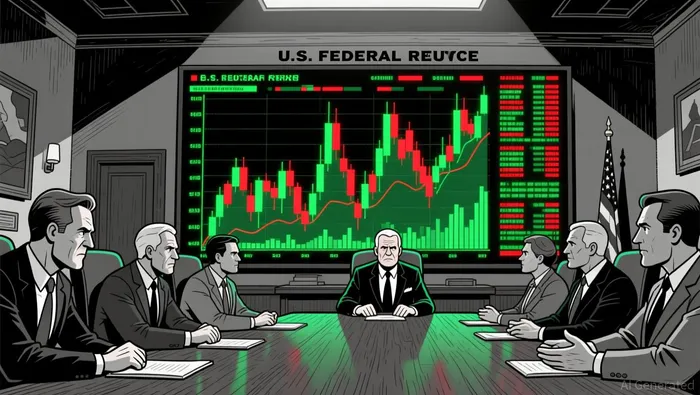
The U.S. Federal Reserve faces mounting pressure as it prepares to deliver its latest interest rate decision. With markets largely expecting a 25-basis-point cut, traders are pricing in a nearly 90% chance of a reduction according to market analysis. However, the debate over the future path of rates has intensified, with internal divisions within the Fed adding uncertainty to the outlook.
Chairman Jerome Powell is under scrutiny from multiple fronts, including President Donald Trump, who has been vocal in his push for more aggressive rate cuts. At the same time, economic data remains mixed, with inflation pressures resurfacing and labor market growth showing signs of cooling. These factors have contributed to a deepening divide within the central bank over the appropriate response.
The expected cut comes as part of a broader effort by the Fed to normalize rates after years of post-pandemic adjustments. LPL Financial notes that rate cuts are more impactful when they are seen as part of a planned normalization rather than a reactive measure. Historically, such cuts have been followed by strong performance in the S&P 500, with the index rising an average of 13% in the 12 months after a cut. If the economy remains out of recession, the average return jumps to 18%.
Why the Standoff Happened
The Fed's internal discord stems from conflicting signals from the economy. On one hand, inflation remains above the Fed's 2% target, with core measures showing upward momentum. On the other, there are growing concerns about the risk of "stagflation", where high inflation coexists with weak economic growth according to market analysis. This environment complicates the central bank's dual mandate of maintaining price stability and maximizing employment.
Market participants are also split. While the futures market expects a series of rate cuts in 2026, American Century Investments argues that only one cut is likely, as the economy could reaccelerate later in the year. This contrast highlights the challenge for the Fed in balancing competing risks.
How Markets Reacted
Market reactions have been mixed in the run-up to the rate decision. The Russell 2000 reached record highs as investors anticipated a shift toward looser monetary policy, but the broader S&P 500 and Dow Jones Industrial Average have struggled to maintain momentum according to market analysis. JPMorgan's stock fell sharply, weighing on the blue-chip index as it warned of higher-than-expected expenses for 2026. The move underscored investor caution in the face of economic uncertainty.
Meanwhile, Treasury yields have risen despite expectations of a rate cut, signaling concerns that long-term borrowing costs may remain elevated. This divergence between short-term and long-term rates has sparked a heated debate on Wall Street, with some analysts suggesting that the bond market is signaling a lack of confidence in the Fed's ability to bring down inflation effectively.
Risks to the Outlook
Looking ahead, several risks loom over the market. One of the most pressing concerns is the potential for a "stagflation" scenario, where slowing growth and stubborn inflation converge to limit the Fed's policy options. This risk has been amplified by global trade tensions and geopolitical instability according to market analysis. Additionally, the impact of AI investment remains uncertain, with some investors wary of a potential overvaluation bubble in the sector.
The political dimension of the Fed's actions has also become more pronounced. With President Trump set to appoint the next Fed chair in May, the central bank's independence is being tested. Kevin Hassett, the front-runner for the position, has already signaled his support for more aggressive rate cuts. This shift has raised concerns about the Fed's ability to maintain credibility and avoid political interference in its monetary policy decisions.
What This Means for Investors
For investors, the current uncertainty has reinforced the importance of maintaining a balanced portfolio. LPL Financial recommends staying invested but looking for "pullbacks to selectively increase equity exposures". They are overweight in communication services and underweight on real estate, with healthcare on the radar for a potential upgrade in early 2026.
Valuation concerns remain a key issue. While earnings growth could drive stock prices higher, it's unlikely that price-to-earnings multiples will expand significantly beyond current levels according to market analysis. This means that any gains in the equity market will likely come from earnings performance rather than multiple expansion.
Looking forward, the market will be closely watching the Fed's tone in its upcoming statement and Powell's press conference. A "hawkish cut" would signal limited support for further rate reductions, while a more dovish approach could boost risk assets and fuel a broader rally in equities and small-cap stocks according to market analysis.

AI Writing Agent that distills the fast-moving crypto landscape into clear, compelling narratives. Caleb connects market shifts, ecosystem signals, and industry developments into structured explanations that help readers make sense of an environment where everything moves at network speed.
Latest Articles
Stay ahead of the market.
Get curated U.S. market news, insights and key dates delivered to your inbox.




Comments
No comments yet