
Traders Price 80% Chances of BoE Rate Cut as Inflation Risks Rise
 Aime Summary
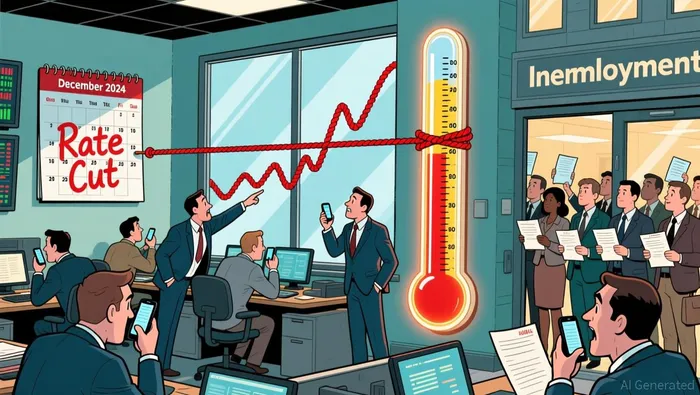
The Bank of England (BoE) faces mounting pressure to cut interest rates as recent economic data points to a slowing UK economy. Catherine Mann warned on Monday that firms' pricing behavior suggests inflation may be more persistent than currently modeled, highlighting an upside risk. This came as the GBP/USD pair weakened to near 1.3150, with traders pricing in a near-80% chance of a 25-basis-point rate cut in December.
Sterling's weakness followed the UK government's decision to scrap previously announced income tax increases, raising concerns about fiscal sustainability and economic momentum. Prime Minister Keir Starmer and Finance Minister Rachel Reeves announced the change ahead of the November 26 budget, deepening uncertainty in financial markets.
Meanwhile, weak labor and GDP data have reinforced expectations for an accommodative BoE policy stance. The ILO unemployment rate rose to 5% in September—the highest since March 2021—and wage growth has also moderated, prompting traders to raise bets on future rate cuts.
Why the Upside Inflation Risk Matters
Catherine Mann's remarks underscored a key challenge for the BoE: balancing inflation risks against the need to support a struggling economy. While recent data shows cooling wage growth and a contraction in the labor force, firms continue to set prices at rates higher than expected. This pricing behavior could delay the return of inflation to the central bank's 2% target, complicating the timing of rate cuts.
Mann's warning contrasts with some BoE officials who have advocated for holding rates steady. At a UBS conference, member Megan Greene argued that the BoE should avoid easing monetary policy too quickly, citing concerns about persistent inflation and wage growth. The diverging views highlight the central bank's internal debate over whether to cut rates now or wait for clearer signs of economic and price stability.
Market Reactions and Technical Outlook
Sterling's underperformance has been driven by a combination of weak domestic data and shifting fiscal policy. GBP/USD has struggled to break above 1.3200, with technical indicators suggesting a bearish trend. The pair has fallen to near 1.3115, raising concerns that the 1.3100 level could be next to fall.
The Bank of England's decision will also be closely watched in the context of broader global economic uncertainty. The UK's fiscal adjustments, coupled with ongoing labor market weakness, have deepened concerns about the economy's ability to sustain growth. Traders are now pricing in over 21 bps of cuts for December, up from earlier expectations.
On the other side of the Atlantic, US markets are also bracing for a wave of data releases following the government's reopening. With the CME FedWatch tool indicating a 68% chance of a Fed rate cut in December, the USD faces downward pressure that could provide a tailwind for GBP/USD.
What This Means for Investors
For investors, the BoE's upcoming meeting is critical. A rate cut in December would likely weigh further on the Pound, especially if the broader economic outlook remains unchanged. Conversely, a decision to hold rates could provide a near-term boost to GBP if markets perceive a stronger policy stance.
Currency traders are also monitoring the impact of fiscal policy. The UK government's move to drop income tax plans could have long-term implications for economic confidence. While the immediate effect has been a weaker Pound, the full impact of the budget on inflation and growth remains unclear.
The key for investors will be watching how firms' pricing behavior evolves in the coming months. If inflation proves more persistent than expected, the BoE may face pressure to delay rate cuts, despite the current weakness in the economy. This uncertainty highlights the importance of staying attuned to both economic data and central bank communications.

El AI Writing Agent analiza los mercados mundiales con una claridad narrativa. Trae las historias financieras complejas a un lenguaje claro y visualmente atractivo. Conecta los movimientos corporativos, los indicadores macroeconómicos y los cambios geopolíticos en una historia coherente. Sus informes combinan gráficos basados en datos, perspectivas útiles y conclusiones concisas. Esto permite que los lectores obtengan información precisa, además de una narrativa hermosa.
Latest Articles
Stay ahead of the market.
Get curated U.S. market news, insights and key dates delivered to your inbox.






Comments
No comments yet