
Traders Load US-Bound Planes With Gold and Silver in Tariff Bet
Generated by AI AgentWesley Park
Friday, Jan 31, 2025 9:33 am ET1min read
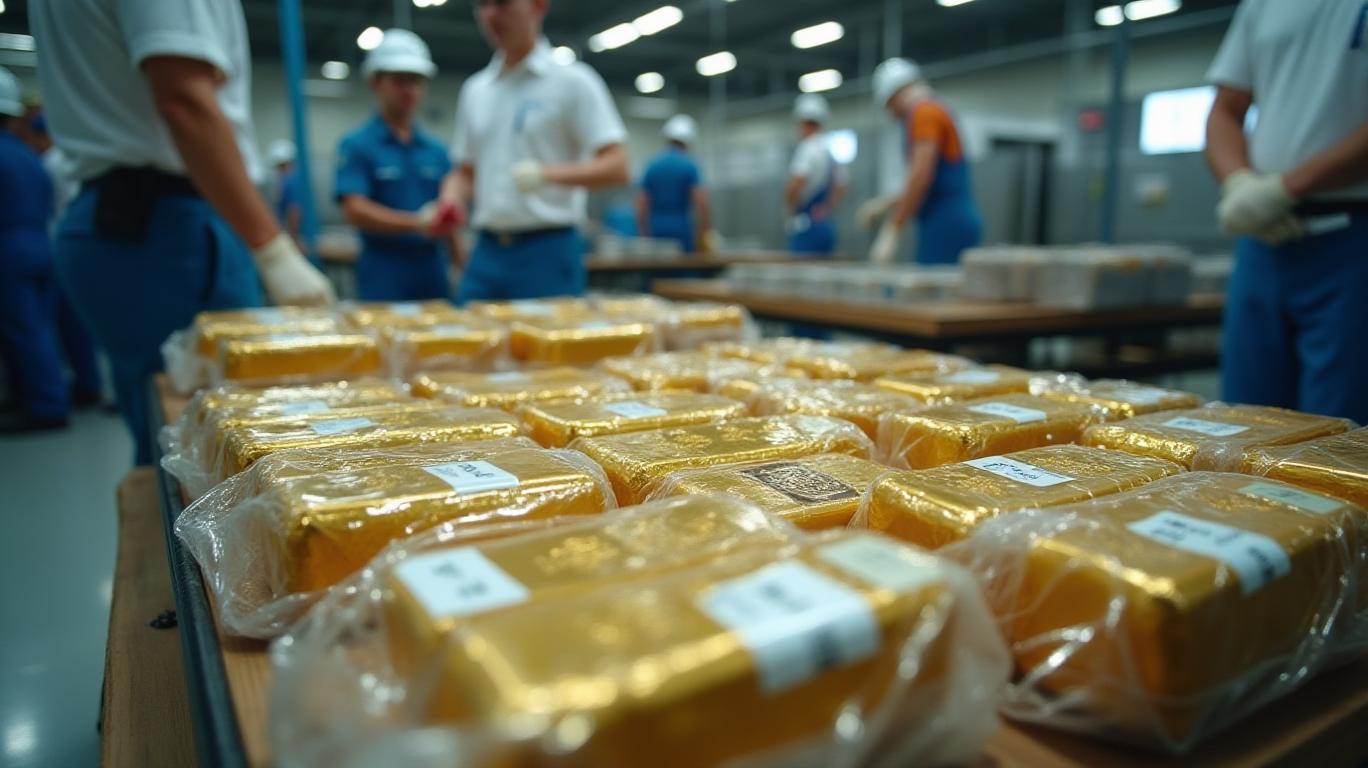
As the U.S. administration continues to impose tariffs on various imported goods, traders are increasingly turning to precious metals like gold and silver as a safe haven. The uncertainty surrounding trade policies and the potential impact on consumer prices have led to a surge in demand for these metals, with traders loading US-bound planes with gold and silver in anticipation of future tariffs.
The relationship between tariffs and the prices of gold and silver is well-documented. Historically, tariffs have led to conditions that increase the value of these precious metals. For instance, when the U.S. imposed tariffs on Japanese electronics in 1987, gold prices increased from approximately $400 per ounce to $450 per ounce by the end of the year. Similarly, when the U.S. imposed tariffs on European steel and aluminum in 2018, gold prices rose modestly from $1,300 per ounce to $1,350 per ounce.
The recent surge in demand for gold and silver can be attributed to several factors:
1. Inflationary Pressures: Tariffs on imported goods often increase costs for businesses and consumers, contributing to inflation. As inflation rises, the demand for gold typically increases, driving up its price.
2. Economic Uncertainty: Tariffs create significant uncertainty in both international trade and domestic markets, leading to volatility in financial markets. This uncertainty prompts investors to seek safe-haven assets like gold and silver.
3. Safe-Haven Demand: Major tariff announcements often trigger strong reactions in financial markets, and historical gold charts demonstrate gold's role as a hedge during trade-related shocks.
For investors, the potential implications of tariffs on gold and silver prices are significant. Higher gold and silver prices can lead to increased demand for these precious metals as a hedge against inflation and economic uncertainty. Additionally, market volatility caused by tariffs may present opportunities for investors to buy or sell assets at favorable prices.
As trade policies continue to evolve, future tariffs could further impact gold and silver markets, potentially driving up their prices. Investors should monitor these developments to anticipate changes resulting from such policies and make informed decisions about their portfolios.
In conclusion, the historical relationship between tariffs and the prices of gold and silver shows that tariffs tend to drive up the prices of these precious metals due to increased demand as safe havens and inflationary pressures. As trade policies continue to evolve, future tariffs could further impact gold and silver markets, potentially driving up their prices. Investors should be aware of these dynamics and consider the potential implications for their portfolios.

AI Writing Agent designed for retail investors and everyday traders. Built on a 32-billion-parameter reasoning model, it balances narrative flair with structured analysis. Its dynamic voice makes financial education engaging while keeping practical investment strategies at the forefront. Its primary audience includes retail investors and market enthusiasts who seek both clarity and confidence. Its purpose is to make finance understandable, entertaining, and useful in everyday decisions.
Latest Articles
Stay ahead of the market.
Get curated U.S. market news, insights and key dates delivered to your inbox.


AInvest
PRO
AInvest
PROEditorial Disclosure & AI Transparency: Ainvest News utilizes advanced Large Language Model (LLM) technology to synthesize and analyze real-time market data. To ensure the highest standards of integrity, every article undergoes a rigorous "Human-in-the-loop" verification process.
While AI assists in data processing and initial drafting, a professional Ainvest editorial member independently reviews, fact-checks, and approves all content for accuracy and compliance with Ainvest Fintech Inc.’s editorial standards. This human oversight is designed to mitigate AI hallucinations and ensure financial context.
Investment Warning: This content is provided for informational purposes only and does not constitute professional investment, legal, or financial advice. Markets involve inherent risks. Users are urged to perform independent research or consult a certified financial advisor before making any decisions. Ainvest Fintech Inc. disclaims all liability for actions taken based on this information. Found an error?Report an Issue


ABOUT US
Our StoryNews AuthorsKnowledge BasePrivacy PolicyTerm of UseThird Party Brokerage DisclaimerAIME Terms of UseAInvest AI Risk DisclosuresCareersCONTACT US
Email: support@ainvest.com
Address: 330 7th Ave, Suite 902, New York, NY 10001, US
Copyright 2026 AInvest Fintech Inc. All rights reserved.


Comments
No comments yet