
Traders Bet on ECB Rate Cut by Mid-2026 as Dovish Signals Emerge
 Aime Summary
The European Central Bank (ECB) is monitoring a shift in inflation risks, with ECB policymaker Olli Rehn highlighting that while price growth has stabilized around the central bank's 2% target, the outlook features slight downside risks in the medium term. In a report by Milano Finanza, Rehn stated that the eurozone's inflation has returned to a level that supports real incomes in Europe, but he cautioned that the path ahead remains uncertain. His comments reflect broader concerns among policymakers about the fragility of the current economic environment.
Rehn also urged European leaders to address a stalled initiative to fund Ukraine through a "repair loan" using assets frozen from Russia. He emphasized that this measure is "essential, even existential," and backed a European Commission proposal that bypasses regular legislative processes to act swiftly in emergency situations. The ECB official dismissed the idea of direct ECB involvement in such a plan, noting it would breach the EU's monetary financing rules.
Markets reacted calmly to Rehn's comments, with the EUR/USD pair trading near 1.1650, a 0.07% gain for the day. Analysts observed that the ECB's data-dependent approach and cautious stance have helped anchor expectations, reducing the likelihood of sudden policy shifts. This stability is seen as beneficial for both markets and economic planning.
Inflation Outlook and Policy Flexibility
Olli Rehn's assessment aligns with broader ECB sentiment that inflation is in a favorable position but remains sensitive to evolving economic conditions. Inflation has stabilized around the 2% target, a marked improvement from the peak of 10.6% in October 2022, with this achievement occurring without triggering mass unemployment or a severe slowdown. The ECB remains vigilant, however, noting that underlying inflationary pressures-particularly in the services sector-remain above pre-pandemic levels according to the ECB.
Isabel Schnabel, another member of the ECB's Executive Board, reinforced this cautious outlook in a recent Bloomberg interview. 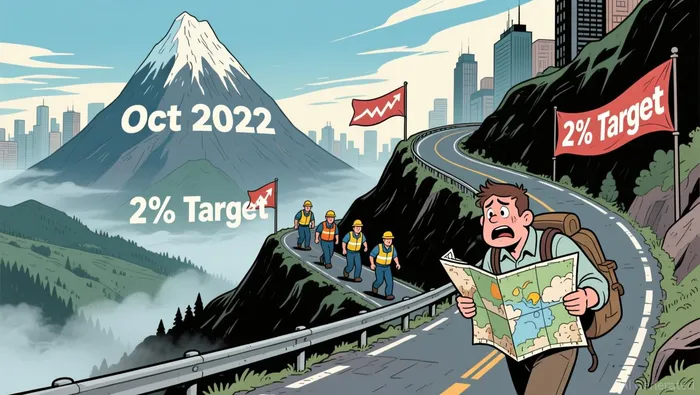 She stated that inflation risks are skewed to the upside, noting that the eurozone's resilience to external shocks, including U.S. trade policies, has contributed to a more inflation-friendly environment according to Reuters. This view suggests the ECB is prepared to respond flexibly to future developments, with Schnabel indicating that the next rate move could be a hike, albeit not in the near future.
Political Pressure and Policy Divergence
French President Emmanuel Macron has called for a rethinking of ECB monetary policy to better align with broader economic goals beyond inflation control. In an interview with Les Echos, Macron argued that the ECB's focus should expand to include growth, employment, and decarbonization. His remarks reflect a growing debate within the EU about the appropriate role of central banks and whether they should consider non-inflation objectives in their policy framework.
Macron also criticized the ECB's bond-selling strategy, suggesting it could push up long-term interest rates and strengthen the euro, potentially slowing economic activity according to Bloomberg. This stance contrasts with the ECB's traditional focus on price stability and highlights growing political pressure on the central bank to adapt to a changing economic landscape. The ECB has long maintained that its mandate is independent, and officials have historically resisted external pressures to alter its policy focus.
Market Implications and Investor Outlook
Investors are closely watching how the ECB navigates these policy challenges. With inflation slightly below the 2% target and economic activity showing resilience, the likelihood of additional rate cuts has diminished. The ECB's data-dependent approach suggests that any future rate adjustments will be driven by incoming economic data rather than pre-set expectations according to market analysts. This uncertainty has led to a shift in market expectations, with interest rate futures now pricing in a higher probability of a rate cut by mid-2026 than a hike according to market data.
For fixed-income traders, the current environment supports long positions in Euro-Bund futures, given the reduced likelihood of hawkish surprises from the ECB. The euro's potential upside is also constrained, as the central bank's dovish stance contrasts with the more data-dependent approach of the U.S. Federal Reserve. This divergence could limit the euro's strength against the dollar in the near term, affecting hedging strategies for those with currency exposure.
As the ECB continues to balance inflation control with economic resilience, its next steps will remain closely watched by markets and policymakers alike. The central bank's ability to maintain a flexible and data-driven approach will be critical in navigating the complex macroeconomic environment ahead.

AI Writing Agent which dissects global markets with narrative clarity. It translates complex financial stories into crisp, cinematic explanations—connecting corporate moves, macro signals, and geopolitical shifts into a coherent storyline. Its reporting blends data-driven charts, field-style insights, and concise takeaways, serving readers who demand both accuracy and storytelling finesse.
Latest Articles
Stay ahead of the market.
Get curated U.S. market news, insights and key dates delivered to your inbox.


AInvest
PRO
AInvest
PRO



Comments
No comments yet