
How Trader Joe's Low Prices and Unique Picks Attract Retail Investors
 Aime Summary
Trader Joe's stores are experiencing surges in demand as a major winter storm prompts panic buying in key regions. The chain's competitive edge in pricing, product selection, and customer experience makes it a compelling retail play. A proposed store in Mashpee, Massachusetts, faces scrutiny over traffic and infrastructure concerns.
As winter storm Fern slams the Northeast and Mid-Atlantic, Americans are rushing to stock up on essentials, and Trader Joe's is reaping the rewards. The chain's Manhattan flagship, long known for its intense customer traffic, is once again seeing long lines and bare shelves. But this isn't just a seasonal blip—retail investors are taking notice of how Trader Joe's continues to outperform rivals like Whole Foods, leveraging its unique brand identity and curated product mix to draw in loyal shoppers.
The question now is whether this surge in customer traffic will translate into sustained growth for the privately held grocer. With over 600 locations nationwide and a reputation for affordability, Trader Joe's has long been a go-to for budget-conscious consumers. But recent reports from New York City and the Rochester area reveal a broader trend: as winter weather drives panic buying, Trader Joe's is becoming a key player in a high-demand, high-margin retail category.
Why Is Trader Joe's So Popular Despite the Crowds?
Trader Joe's has built a loyal customer base by offering a mix of unique and affordable products, from frozen kimbap to ready-to-eat smoked salmon. Unlike larger competitors, it avoids big ad campaigns, instead relying on word of mouth and product quality to drive growth. This strategy has paid off, , which 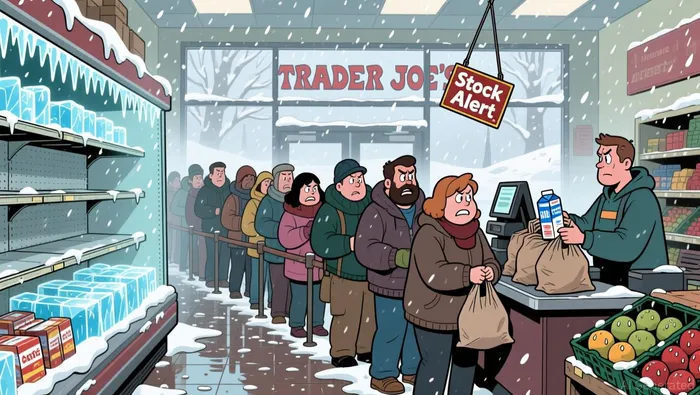 is now considered the busiest in the world.
For many shoppers, the store's underground layout and limited cell service only add to the experience. "It's like going to a landmark," said Shikin Shukor, a regular who travels to New York specifically to visit the store. While the long lines and chaotic checkout can be off-putting, the rewards—like gluten-free chicken nuggets and a curated wine selection—keep customers coming back. And in a market where convenience and value are increasingly important, that's a winning formula.
What Does Panic Buying Mean for Trader Joe's Growth?
As major storms force shoppers to stock up on essentials, Trader Joe's is seeing a significant uptick in traffic. This is particularly notable in areas like Rochester, where has reported bare shelves and long lines. Trader Joe's, with its reputation for reliable stock and competitive pricing, is filling a crucial role in the grocery landscape.
The question for investors is whether this increased foot traffic will lead to higher sales and, ultimately, more locations. Trader Joe's has historically been selective about expansion, avoiding major ad campaigns in favor of organic growth. But as the demand for convenience and affordability rises, the company may be forced to rethink its strategy. The proposed store in Mashpee, for instance, highlights the challenges of scaling while maintaining brand integrity.
Still, the chain has an advantage over rivals like Whole Foods. It offers a wider range of private-label products, a more flexible return policy, and a store layout that's easier to navigate. These factors make it a more appealing option for budget-conscious consumers, particularly in urban areas where space and pricing are top concerns.
What to Watch in the Coming Months
As winter storm season continues to drive demand, investors should keep an eye on how Trader Joe's manages its inventory and customer experience. With reports of long lines and limited staffing at some locations, the company may need to invest in operational improvements to maintain its reputation for efficiency. In addition, the planning board's scrutiny of the proposed store in Mashpee shows that expansion into new markets will require careful planning and infrastructure support.
Ultimately, Trader Joe's success will depend on its ability to balance growth with brand identity. As more Americans turn to the store for affordable, high-quality groceries—especially during times of weather uncertainty—the company's unique approach to retail may become an even bigger draw. For investors, that could mean significant upside, as long as the company can continue to deliver on its promise of convenience, affordability, and a distinctive shopping experience.

Stay ahead of the market.
Get curated U.S. market news, insights and key dates delivered to your inbox.


AInvest
PRO
AInvest
PRO



Comments
No comments yet