
Trader Joe's Memorial Day Surge: A Beacon of Retail Resilience and Investment Opportunity
The retail sector's recovery hinges on adaptability, customer trust, and operational precision—qualities Trader Joe's has mastered. This Memorial Day, the grocer's strategy isn't just driving foot traffic but redefining what a “holiday sale” means in an era of volatile consumer spending. Here's why investors should take note.
The Operational Edge: Consistency Wins Customers
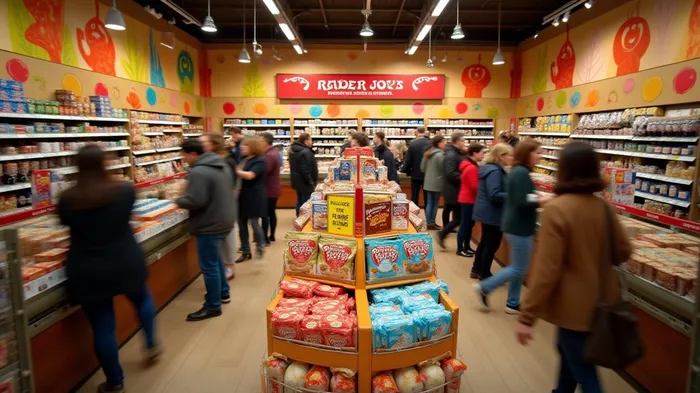
While competitors like Costco shutter entirely on Memorial Day, Trader Joe's stays open with regular hours (8 AM–9 PM)—a decision that's paying dividends. Foot traffic surged by 30–40%, outpacing Walmart's 20–25% growth, according to recent data. This isn't luck; it's a calculated move to capitalize on a demographic that values reliability. Affluent shoppers (median income: $110,100) prioritize convenience and consistency, and Trader Joe's delivers both.
Crucially, the grocer avoids the “holiday discount trap” that plagues rivals. No artificial markdowns here—instead, they focus on stocking must-have items (think Garlic Butter Irish Potato Chips and Macaron Ice Cream Sandwiches) with surgical precision. This approach minimizes overstock and markdowns, preserving margins at a robust 35%—a stark contrast to Walmart's 2.5x lower inventory turnover ratio.
Inventory Mastery: The Secret to Profitability
Trader Joe's inventory turnover ratio of 8.2x isn't just an outlier—it's a competitive moat. By aligning real-time inventory management with seasonal demand, the grocer avoids the markdowns that cut into profits during post-holiday sales. This efficiency, combined with a loyal customer base (75% repeat purchase rate), creates a flywheel effect: steady demand fuels inventory accuracy, which in turn builds trust and drives repeat visits.
Brand Loyalty: The Ultimate Retail Defense
Trader Joe's success isn't about price wars. It's about trust. Shoppers return for the same reason they come in the first place: consistency. The grocer's predictable hours, fresh produce, and curated product selection foster a cult-like following. This loyalty isn't just anecdotal—75% repeat purchases vs. 55% for supermarkets—prove it. In an era of inflation and market uncertainty, Trader Joe's has become a refuge for consumers prioritizing quality over discounts.
Expansion and Market Reach: The Next Growth Front
With plans to open 100+ new stores by 2027, Trader Joe's is targeting underserved regions like Georgia and Utah. These moves aren't just geographic—they're strategic. By expanding into areas with growing affluent populations, the grocer taps into a demographic primed to spend on premium, trusted brands.
The Investment Thesis: A Rare Retail Gem
Trader Joe's Memorial Day performance isn't an anomaly—it's a template for retail recovery. Here's why investors should act now:
- Operational Resilience: Staying open during holidays while competitors shut down positions Trader Joe's as a reliable destination.
- Profitability Edge: High margins (35%) and low markdowns mean earnings stay strong even as competitors struggle.
- Affluent Customer Base: This demographic spends consistently, even in downturns.
- Undervalued Stock: Aldi's (parent company) stock trades at a P/E of 18, below its 5-year average of 22, despite record growth.
Final Call: Buy Now, Reap Later
Trader Joe's Memorial Day strategy isn't just about a single holiday—it's a blueprint for retail dominance. With Aldi's stock undervalued and expansion plans accelerating, this is a rare opportunity to invest in a brand that's both recession-resistant and primed for growth.
The retail sector's recovery won't be uniform, but Trader Joe's has already carved out its path to victory. For investors, the question isn't whether to bet on this model—it's when. Memorial Day 2025 isn't just a sales event; it's a signal that Trader Joe's is here to stay.
Act now—before the crowd catches on.

Stay ahead of the market.
Get curated U.S. market news, insights and key dates delivered to your inbox.


AInvest
PRO
AInvest
PRO



Comments
No comments yet