
Trader Joe’s Expansion Surge: A Recipe for Market Dominance or Overextension?
Subheading: Can the grocery chain’s rapid growth keep pace with rising consumer demand and logistical challenges?
Lead: The Tarzana Opening as a Microcosm of Trader Joe’s Momentum
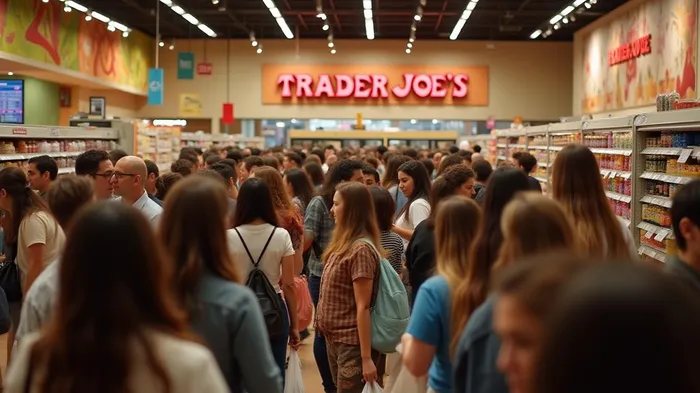
On May 6, 2025, Trader Joe’s opened its first store in Tarzana, California—a landmark event signaling the chain’s relentless expansion strategy. The crowd-packed grand opening, featuring signature items like Mandarin Orange Chicken and Cold Brew Coffee Concentrate, underscored a broader trend: Trader Joe’s is aggressively targeting underserved markets while launching innovative products to fuel growth. Yet behind this success lies a critical question: Can the grocer sustain its rapid expansion without compromising the quality and mystique that define its brand?
Body 1: The Expansion Playbook—21 Stores, 13 States, and a 9% Foot Traffic Boost
Trader Joe’s has positioned itself as the poster child of grocery chain growth, with 21 new store openings planned across 13 states in 2025 alone. This includes first-ever locations in Oklahoma City, New Orleans, and Exton, Pennsylvania, as well as culturally vibrant neighborhoods like Washington, D.C.’s Brookland district.
The chain’s focus on underserved markets is paying off. Retail analytics firm Placer.ai reported a 9% year-over-year foot traffic increase in March 2025, with states like Georgia, Utah, and Nevada seeing surges over 20%. This growth isn’t accidental. Trader Joe’s prioritizes high-traffic areas, such as tourist hubs (e.g., Myrtle Beach, SC) and college towns (e.g., near Tulane University in New Orleans), to maximize customer reach.
However, the strategy carries risks. New stores in states like Pennsylvania (Exton) and New Jersey (Woodbridge) will not sell alcohol, a key profit driver for most Trader Joe’s locations. This raises concerns about whether these branches can replicate the chain’s signature appeal—where 30% of sales reportedly come from wine and beer—without alcohol.
Body 2: The Product Pipeline—From Spicy Popcorn to Passion Fruit Tarts
While store expansion grabs headlines, Trader Joe’s real edge lies in its ability to reinvent snack culture with limited-time offers (LTOs). May 2025 saw launches like the Buffalo Ranch Popcorn ($3) and Sparkling Matcha Lemonade ($2), which blended bold flavors at budget-friendly prices. These products aren’t just novelties; they’re engineered to drive repeat visits.
Take the Tom Yum Seasoned Snack Mix ($3), which combines Thai-inspired spices with crunchy textures—a hit with “snackification” trends. Or the Pineapple Teriyaki Chicken Meatballs ($4.29), a fusion dish that caters to protein-focused consumers. These items aren’t just profitable; they reinforce Trader Joe’s reputation as a trendsetter in affordable gourmet foods.
The chain’s global flavor strategy is paying dividends. The Okonomiyaki Japanese Vegetable Pancake ($5), a frozen version of Osaka’s street food staple, and the Passion Fruit Meringue Tartelettes ($5) showcase how Trader Joe’s leverages cultural curiosity to differentiate itself from big-box retailers.
Body 3: The Elephant in the Aisle—Can Quality Outpace Scale?
Expansion and innovation are strengths, but they also test operational limits. Consider the alcohol availability dilemma: stores without wine and beer must rely more on grocery sales, which have thinner margins. Meanwhile, the chain’s reliance on just-in-time inventory—a hallmark of its “mystery” brand—could strain under higher demand.
Analysts warn of supply chain risks. A 2023 MIT study noted that Trader Joe’s “deliberate inefficiencies” (e.g., sourcing small-batch products) could backfire as scale grows. Yet the company’s 2025 +13% monthly foot traffic surge suggests consumers still prioritize its unique value proposition over convenience.
Conclusion: Trader Joe’s Future—A Recipe for Caution or Celebration?
Trader Joe’s is at a crossroads. Its 2025 expansion plans, fueled by a 9% foot traffic boost and $7.99 Tres Leches cakes that “sell out instantly,” signal confidence. But the chain must balance growth with operational rigor.
Investors should watch two metrics:
1. Alcohol sales performance in non-beverage stores to gauge alternative revenue streams.
2. Inventory turnover rates to assess whether just-in-time logistics can keep up with a 600+ store network.
For now, the data paints an optimistic picture. With 20+ new stores announced and a product lineup that blends affordability with exoticism, Trader Joe’s is well-positioned to dominate the $1.2 trillion U.S. grocery market. Yet as the chain’s CEO once quipped: “We’re not in the business of being everywhere—we’re in the business of being somewhere special.” The test of 2025 will be whether “special” can scale.
Actionable Takeaway: Monitor regional store performance and LTO success rates to gauge whether Trader Joe’s can sustain its mystique—or if it’s becoming just another big-box player.
Data sources: Placer.ai, Trader Joe’s official announcements, MIT Supply Chain Research Center.

Stay ahead of the market.
Get curated U.S. market news, insights and key dates delivered to your inbox.


AInvest
PRO
AInvest
PRO



Comments
No comments yet