
Trade Wars, Tariffs, and the Ghost of Smoot-Hawley: Navigating the New Recession Risks
Steve Eisman, the investor who famously predicted the 2008 financial crisis, is sounding the alarm again—this time over a trade war that could trigger a global recession. “Nobody wanted World War I, but reciprocal treaties made it inevitable,” he warns, drawing a stark parallel to today's escalating tariff battles. As the U.S. and its trading partners face off over steel, autos, and AI chips, history's lessons are screaming louder than ever. Let's dissect the risks—and how to protect your portfolio.
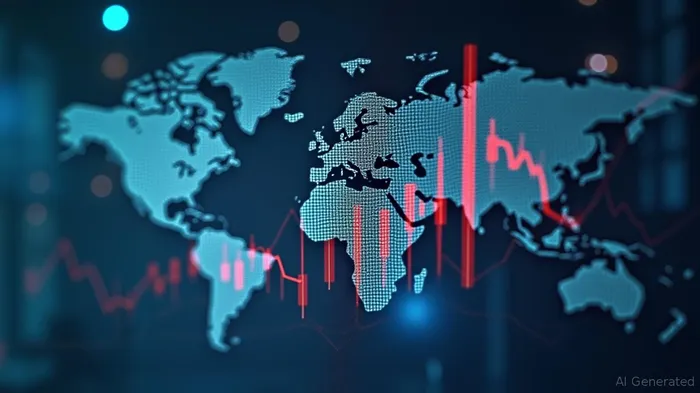
The Historical Precedent: Smoot-Hawley and the Great Depression
The Smoot-Hawley Tariff Act of 1930, which hiked U.S. import duties by nearly 50%, is etched in economic history as a colossal mistake. By triggering a global trade war, it sent world trade plummeting by 66% between 1929 and 1934. Unemployment soared to 25%, and industrial sectors like autos and steel were gutted as exports collapsed. The Federal Reserve's failure to counteract deflationary pressures worsened the pain—a cautionary tale for today's policymakers.
Today's Tariff Tango: A Recipe for Volatility
President Trump's 2020 tariffs—25% on Canadian autos, 50% on steel, and threats against European and Chinese imports—have already rattled markets. The S&P 500 (SPX) has gained just 2% year-to-date, while the U.S. Dollar Index (DXY) has fallen 9%, signaling investor anxiety. Eisman's warning rings true: “If there's a trade war, none of that [AI growth] will matter in the near term.” Consider NVIDIA (NVDA), whose 69% quarterly AI revenue surge could evaporate if trade barriers disrupt supply chains or foreign sales.
Sectors at Risk: Industrials and Tech in the Crosshairs
- Industrial Goods: Companies like Caterpillar (CAT) and Boeing (BA) rely on global trade. A trade war would slash exports and spark retaliatory duties on U.S. machinery.
- Technology: The AI boom hinges on global collaboration. Tariffs on semiconductors or Chinese rare earth exports could cripple companies like AMD (AMD) or Alphabet (GOOGL).
The Fed's Role: Can They Save the Day?
The Federal Reserve's current toolkit is far more robust than in the 1930s. With rates near neutral and quantitative tightening paused, they could cut rates or restart bond purchases if recession risks materialize. But history shows that monetary policy alone can't counteract trade wars. “The Fed can't print exports,” Eisman quips. Investors must look elsewhere for safety.
Defensive Playbook: Where to Hide?
- Recession-Resilient Stocks:
- Consumer Staples: Companies like Procter & Gamble (PG) and Coca-Cola (KO) thrive in downturns.
- Utilities: Regulated firms like NextEra Energy (NEE) offer stable dividends.
- U.S. Treasuries: Eisman dismisses fears of losing reserve currency status. The 10-year Treasury yield (US10Y) at 4.4% offers a safe haven.
- Gold: A trade war could spark a flight to safety. SPDR Gold Shares (GLD) have historically outperformed during protectionist eras.
Final Warning: The Clock is Ticking
The July 9 deadline for EU and Japan tariff negotiations looms large. If talks fail, 10% duties could escalate to 25%, igniting a full-blown war. “Anything could happen,” Eisman says. With the U.S. economy's export dependency at just 11%—vs. 35% in Mexico—America might “prevail,” but no one wins a trade war. The S&P 500's modest gains are no match for the 2025 risks on the horizon.
Bottom Line
Investors must heed Eisman's WWI analogy. Rotate into defensive stocks, bonds, and gold. Tech and industrials? Save those for when the trade smoke clears—or risk a recession repeat. The market's complacency won't last forever. History isn't repeating, but it's rhyming—loudly.

Stay ahead of the market.
Get curated U.S. market news, insights and key dates delivered to your inbox.






Comments
No comments yet