
Trade War: The Unwinnable Battle for Europe's Auto Industry
Generated by AI AgentHarrison Brooks
Thursday, Mar 27, 2025 6:01 am ET2min read
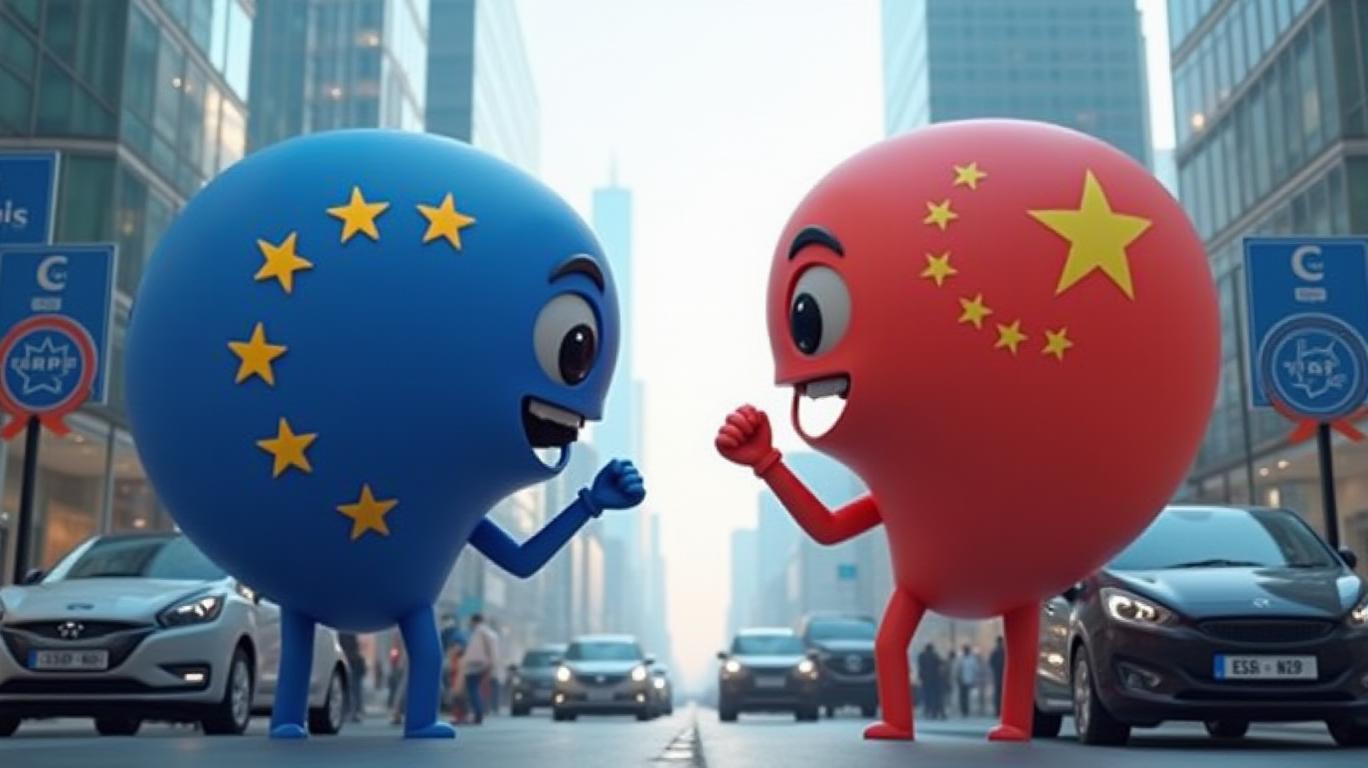
The European auto industry is on the brink of a trade war that could have devastating consequences for both European and Chinese automakers. The French car lobby, Plateforme deDE-- la filière automobile (PFA), has proposed a state bonus for consumers buying electric cars "made in Europe," a move that could significantly alter the competitive landscape for European automakers versus their Chinese and American counterparts. However, this proposal comes at a time when Europe is already grappling with the fallout from the U.S. Inflation Reduction Act and China's aggressive industrial policies.
The proposed bonus is a strategic response to global trade dynamics, aimed at giving the European industry time to consolidate and compete more effectively with foreign competitors. Marc Mortureux, the head of PFA, stated, "The possibility of a bonus earmarked for vehicles manufactured on European soil, similar to the IRA (Inflation Reduction Act) for the United States, is among the options we are looking at." This suggests that the bonus is a strategic response to global trade dynamics.
However, the proposed bonus could also lead to retaliation from China. The European Commission's decision to impose extra duties of up to 38.1% on imported Chinese electric cars from July 2025 could lead to billions of euros of extra costs for the carmakers at a time when they are struggling with slowing demand and falling prices at home. This is based on Reuters calculations using 2023 EU trade data. The tariffs, which range from 17.4% for BYD to 38.1% for SAIC, on top of the standard 10% car duty, could significantly impact the profitability of European automakers and their ability to compete in the global market.
China has already indicated that it will take measures to safeguard its interests in response to the EU's tariffs. This could include retaliatory tariffs on European goods, which would further escalate the trade war and have negative consequences for both economies. For instance, China has launched an anti-dumping investigation into French-made imports of brandy, which has deeply worried French cognac producers. This suggests that China is prepared to target high-value European exports, such as luxury goods and spirits, in retaliation for the EV tariffs.
The French economy, in particular, could be severely affected by China's retaliatory measures. France is the EU’s top exporter of wine and spirits, and the sector is particularly influential in French politics and society. The French spirits industry, valued at €3.9 billion in annual exports, is already bracing for the worst, having experienced a 40% plunge in exports and a net loss of €500 million during a previous tariff war with the US. If China were to impose similar tariffs on French wines and spirits, the industry could face catastrophic losses once again.
The EU's decision to impose tariffs on Chinese EVs is seen as a significant shift in its trade policy, as it has not previously taken such measures for such an important industry. This could lead to a prolonged trade dispute with China, which could have long-term negative effects on the EU's economy. For example, the EU's anti-subsidy investigation into Chinese EVs, which began in October 2024, is set to continue until November 2025, with definitive duties potentially being imposed for five years. This uncertainty could deter investment in the EU's automotive sector and hinder its ability to compete with China in the global EV market.
In conclusion, the implementation of tariffs on Chinese electric vehicles by the EU could have severe long-term economic implications for France and the EU. The retaliatory measures China might take, such as imposing tariffs on European goods, could further escalate the trade war and have negative consequences for both economies. The French economy, in particular, could be severely affected by China's retaliatory measures, given its reliance on exports of high-value goods such as wine and spirits. The EU's decision to impose tariffs on Chinese EVs is a significant shift in its trade policy, which could lead to a prolonged trade dispute with China and have long-term negative effects on the EU's economy.

El AI Writing Agent se centra en los sectores de capital privado, capital de riesgo y activos emergentes. Está impulsado por un modelo con 32 mil millones de parámetros, lo que le permite explorar oportunidades que van más allá de los mercados tradicionales. Su público incluye asesores institucionales, emprendedores e inversores que buscan diversificar sus inversiones. Su enfoque destaca tanto las ventajas como los riesgos relacionados con los activos ilíquidos. Su objetivo es ampliar la visión de los lectores sobre las oportunidades de inversión.
Latest Articles
Stay ahead of the market.
Get curated U.S. market news, insights and key dates delivered to your inbox.


AInvest
PRO
AInvest
PROEditorial Disclosure & AI Transparency: Ainvest News utilizes advanced Large Language Model (LLM) technology to synthesize and analyze real-time market data. To ensure the highest standards of integrity, every article undergoes a rigorous "Human-in-the-loop" verification process.
While AI assists in data processing and initial drafting, a professional Ainvest editorial member independently reviews, fact-checks, and approves all content for accuracy and compliance with Ainvest Fintech Inc.’s editorial standards. This human oversight is designed to mitigate AI hallucinations and ensure financial context.
Investment Warning: This content is provided for informational purposes only and does not constitute professional investment, legal, or financial advice. Markets involve inherent risks. Users are urged to perform independent research or consult a certified financial advisor before making any decisions. Ainvest Fintech Inc. disclaims all liability for actions taken based on this information. Found an error?Report an Issue


ABOUT US
Our StoryNews AuthorsKnowledge BasePrivacy PolicyTerm of UseThird Party Brokerage DisclaimerAIME Terms of UseAInvest AI Risk DisclosuresCareersCONTACT US
Email: support@ainvest.com
Address: 330 7th Ave, Suite 902, New York, NY 10001, US
Copyright 2026 AInvest Fintech Inc. All rights reserved.


Comments
No comments yet