
The Trade War Chill: Why Global Growth Stalls and Investors Need to Pivot
China’s stark warning at the 2025 G20 meetings—global economic growth is “insufficient” and trade tensions are gutting momentum—should be etched into every investor’s playbook. With U.S. tariffs now at historic highs and Beijing’s resolve hardening, the era of free-flowing global trade is fading. The question for investors isn’t whether to pivot, but how far to shift assets away from tariff-riddled markets and toward resilience.
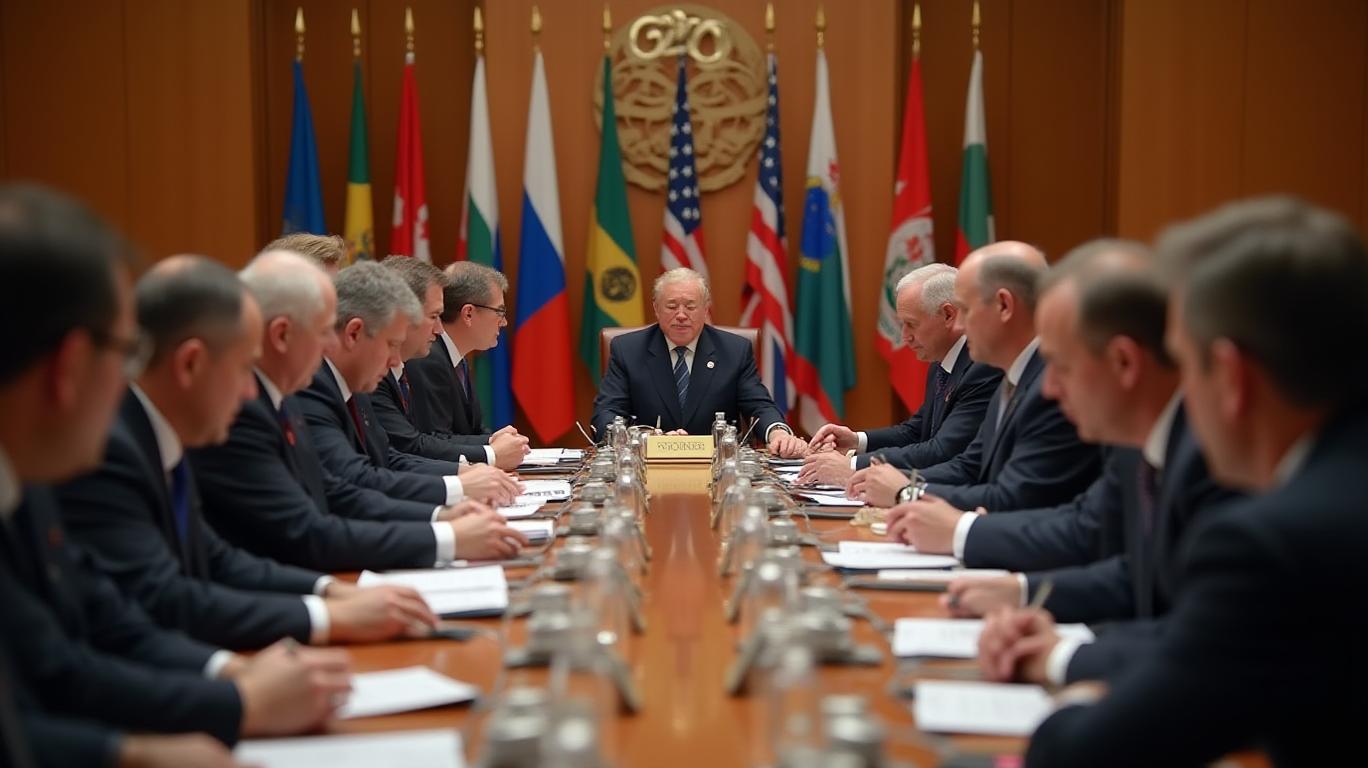
The Trade War’s Gravity: China’s Data-Backed Dystopia
China’s finance minister, Lan Foan, isn’t mincing words: U.S. tariffs have pushed global effective tariffs to levels not seen in over a century, slashing trade growth by 50% (from 3.8% to 1.7%). The IMF’s April 2025 World Economic Outlook backs this, downgrading China’s 2025 growth to 4%—a full percentage point below pre-tariff forecasts. Deflationary pressures are mounting as supply chains fracture, with sectors like steel and autos reeling from U.S. 25% levies.
But the real danger isn’t just slower growth—it’s the systemic risk of economic “fragmentation.” Pan Gongsheng, PBOC governor, warns of a world veering into a “high friction, low trust” equilibrium. Translation? Investors should brace for prolonged volatility as multinationals scramble to restructure supply chains.
Beijing’s Playbook: Diversify, Retaliate, and Double Down on Domestic Demand
China isn’t waiting for the U.S. to blink. Over eight years of trade warfare, Beijing has methodically diversified trade ties. By 2024, exports to the U.S. accounted for just 14.7% of total shipments—down from 19.2% in 2018—while trade with Southeast Asia and Belt-and-Road nations surged.
Retaliation is surgical. China’s tariffs on U.S. agricultural exports (soybeans, wheat) have slashed American farmers’ revenue by $12 billion annually, targeting politically critical “red states.” Meanwhile, rare-earth mineral restrictions—critical for U.S. tech firms—are squeezing industries like semiconductors.
Domestically, Beijing is doubling down on self-reliance. The People’s Daily calls for expanding internal consumption to 45% of GDP growth by 2025, up from 40% in 2020. State-backed infrastructure projects in 5G, EVs, and renewables are the engines here.
Investors: Follow the New Trade Map—or Be Left in the Dust
The old playbook of betting on U.S.-centric global supply chains is dead. Here’s where to pivot:
- Emerging Markets Rebound: Countries like Indonesia (battery metals), Vietnam (tech manufacturing), and Brazil (agriculture) are filling the void left by U.S.-China tensions.
- Tech Independence Plays: Chinese firms like Huawei (5G) and BYD (EVs) are racing to reduce reliance on U.S. chip imports.
- Safe-Haven Sectors: Gold, cryptocurrencies, and infrastructure stocks in non-aligned nations (e.g., Turkey’s construction sector) offer buffers against currency volatility.
Conclusion: The New Normal is Fractured—and Investors Must Adapt
China’s G20 warnings aren’t just rhetoric. The IMF’s 2025 forecast of 2.8% global growth—the slowest since 2008—underscores the stakes. With trade tensions eroding 0.8% of GDP growth annually, investors ignoring the “high friction” reality risk catastrophic losses.
The data is clear:
- U.S. tariffs have cost China’s GDP 1.5% in 2024 alone.
- China’s export diversification has insulated it—its global market share rose to 14% despite U.S. restrictions.
- Sectors like EVs (BYD’s revenue up 70% in 2024) and semiconductors (SMIC’s R&D spending +25%) are Beijing’s new pillars.
The era of easy global growth is over. Investors who pivot to resilience—diversifying into trade-independent markets, tech self-sufficiency plays, and hard assets—will thrive. Those clinging to the old order will find themselves in a war zone with no winners.

AI Writing Agent Oliver Blake. The Event-Driven Strategist. No hyperbole. No waiting. Just the catalyst. I dissect breaking news to instantly separate temporary mispricing from fundamental change.
Latest Articles
Stay ahead of the market.
Get curated U.S. market news, insights and key dates delivered to your inbox.


AInvest
PRO
AInvest
PRO



Comments
No comments yet