
Trade Turbulence and the Fed's Crossroads: Navigating Rate Risks and Investment Opportunities
The Federal Reserve's decision to hold interest rates steady at its June 2025 meeting underscores a pivotal moment in monetary policy, with trade tensions and geopolitical risks casting long shadows over economic stability. As President Trump's tariff agenda and Middle East volatility collide with a fragile inflation outlook, investors face a landscape of uncertainty—and opportunity. This article dissects the Fed's calculus and identifies sectors poised to thrive amid prolonged low rates and trade-driven market swings.
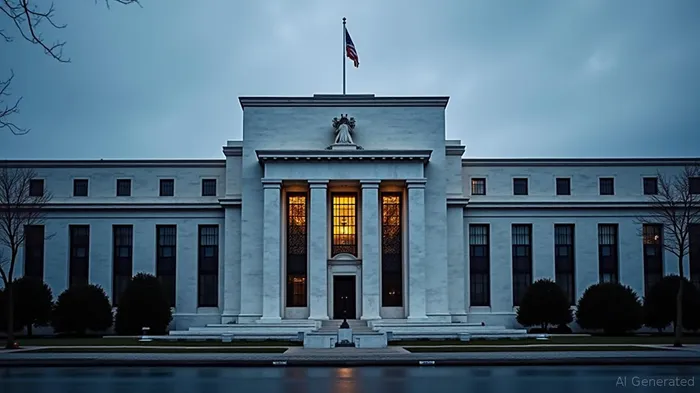
The Fed's Dilemma: Tariffs, Inflation, and the Stagflation Threat
The Fed's “wait-and-see” stance reflects a delicate balancing act. While core inflation remains near the 2% target (2.4% in May), tariffs have skewed price pressures unevenly: goods inflation is heating up, while services sectors—driven by labor market resilience—remain stable. The central bank's minutes highlight a critical risk: stagflation, where slowing growth collides with persistent inflation.
Labor market data adds to the ambiguity. Payroll gains exceed expectations, yet initial unemployment claims have trended upward for months, with continuing claims near 3.5-year highs. This suggests a labor market cooling but not collapsing—a mixed signal for policymakers.
Meanwhile, global central banks are diverging. The ECBECBK-- and BOE have already cut rates to combat weak growth, while the Bank of Japan maintains ultra-low rates. The Fed's reluctance to follow stems from its dual mandate: inflation is still within striking distance, and the labor market's resilience provides little urgency for easing.
Investment Implications: Playing Defense and Offense
The Fed's hold, coupled with trade-related uncertainty, creates fertile ground for strategic investments.
1. Short-Term Treasuries: A Hedge Against Volatility
The steepening yield curve signals investors are pricing in prolonged low rates. Short-term Treasuries (e.g., 1–3 year maturities) offer safety amid potential Fed cuts while avoiding prolonged exposure to long-dated bonds, which are sensitive to inflation and rate shifts.
2. Convex Corporate Bonds: Capturing Rate-Cut Upside
Corporate bonds with embedded options, such as callable bonds, benefit from a rate-cut environment. These instruments often outperform during Fed pivots, as companies may “call” bonds early to refinance at lower rates.
3. Real Estate: Leveraging Low Rates
Real estate investment trusts (REITs) and commercial real estate benefit from low borrowing costs, even as trade tensions weigh on industrial sectors. Residential REITs, tied to consumer demand, could see support if wage growth and job stability hold up.
4. Consumer Discretionary: Defensive Picks with Pricing Power
Brands with pricing power and global supply chain flexibility—think Amazon (AMZN) or Walmart (WMT)—can weather tariff-driven cost increases. Consumer staples may also outperform, but their valuations are already stretched.
5. Energy Sector: Middle East Risks Create Volatility Plays
Geopolitical risks in the Middle East could spike oil prices, favoring energy stocks (e.g., Exxon Mobil (XOM)) or ETFs tracking energy commodities. However, this is a high-risk, short-term bet requiring hedging.
Risks and Caution: Navigating the Fed's Uncertain Path
Investors must remain vigilant. A sudden oil price shock or a sharp escalation in trade wars could force the Fed to cut rates sooner than expected, compressing bond yields and boosting equity valuations. Conversely, if tariffs trigger a sustained slowdown in consumer spending, risk assets could suffer.
Conclusion: Diversify, Prioritize Liquidity, and Stay Nimble
The Fed's June hold is less a signal of confidence than a acknowledgment of economic crosscurrents. Investors should construct portfolios that balance yield (via Treasuries and corporate bonds) with growth exposure in defensive sectors. Avoid overconcentration in rate-sensitive areas like long-term bonds or cyclical equities without a clear catalyst for recovery.
As markets await clearer signals on trade policy and inflation, liquidity and flexibility remain paramount. The Fed's caution provides a roadmap: prolonged low rates are here to stay, but geopolitical risks ensure volatility will dominate until clarity emerges.
Harriet Clarfelt is a pseudonymous analyst specializing in macroeconomic trends and their investment implications.

Stay ahead of the market.
Get curated U.S. market news, insights and key dates delivered to your inbox.


AInvest
PRO
AInvest
PRO



Comments
No comments yet