
Trade Truce Brings Stability: Bullish on U.S. Retailers and Logistics in Post-Tariff Era
The recent stabilization in U.S.-China trade dynamics, marked by a modest rebound in June 2025 container imports from China, signals a strategic opportunity for investors in consumer discretionary sectors. Post-tariff truce resumption has created a window for cost reduction and supply chain optimization, positioning select retailers and logistics firms to capitalize on improved conditions. Let's dissect the data and trends to identify actionable investment opportunities.
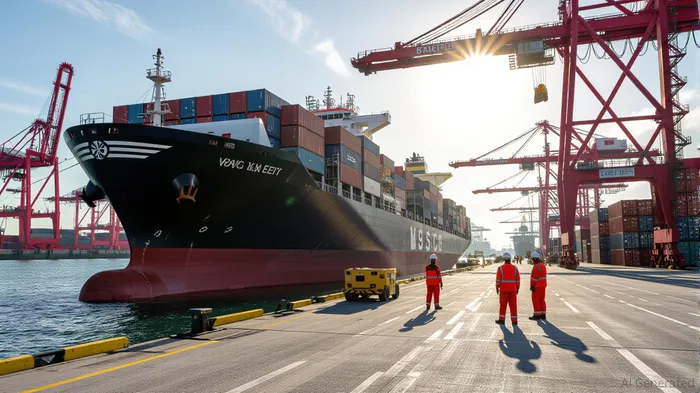
June 2025: A Fragile Stabilization in Trade Flows
U.S. container imports from China rose by 0.4% in June compared to May, reaching 639,300 TEUs—a slight rebound after months of steep declines. While this remains 28.3% below June 2024 levels, the monthly uptick suggests businesses are adapting to shifting trade policies. China's share of total U.S. container imports fell to a four-year low of 28.8%, reflecting diversification to Southeast Asia (e.g., Vietnam's imports grew 7.7% month-over-month).
Tariff Truce Dynamics: A Window for Cost Reduction
The May 2025 Geneva agreement temporarily reduced U.S. tariffs on Chinese goods to 30% and Chinese tariffs to 10%, easing pressure on retailers reliant on low-cost imports. While rare earths and advanced tech remain contentious, the truce has allowed businesses to re-enter Chinese markets for non-strategic goods. Analysts at Descartes SystemsDSGX-- note that companies are stockpiling ahead of the July 9 and August 10 tariff expiration deadlines, creating a short-term demand boost.
Consumer Discretionary: Winners and Risks
Bullish Case for Retailers:
- Cost Reduction: Companies like Walmart (WMT) and Target (TGT) stand to benefit from lower tariffs on everyday goods (e.g., apparel, home essentials), easing margin pressures.
- Consumer Sentiment: A 5.8% year-over-year growth in China's total exports (excluding U.S. markets) hints at global demand resilience, which could spill over into U.S. consumer spending.
Logistics Firms: C.H. Robinson (CHRW) and XPO Logistics (XPO) are well-positioned to handle the shift toward Southeast Asian supply chains, given their regional expertise and technology-driven route optimization.
Key Risks and Considerations
- Tariff Volatility: The July 9 and August 10 deadlines could reignite trade tensions, requiring investors to monitor diplomatic signals closely.
- Supply Chain Diversification Costs: Companies reliant on China may face higher costs if tariffs resurge, favoring firms with diversified sourcing (e.g., Home Depot (HD)'s Vietnam manufacturing partnerships).
Investment Strategy: Focus on Flexibility and Scale
- Buy Undervalued Retailers: Target retailers with diversified supply chains and exposure to tariff-exempt goods. For example, Costco (COST) benefits from bulk purchasing power and a focus on non-Chinese suppliers.
- Logistics Leaders: Invest in firms with strong Asia-Pacific networks. C.H. Robinson's 2024 expansion into Vietnam positions it to capture growth in Southeast Asian imports.
Conclusion: A Bullish Window for Select Plays
The June 2025 import rebound and tariff truce agreement highlight a fragile but actionable stabilization. Investors should prioritize retailers with diversified sourcing and logistics firms capable of navigating shifting trade routes. While risks remain, the current environment offers a compelling entry point for long-term gains in consumer discretionary sectors.
Stay nimble—monitor tariff deadlines and supply chain shifts—but lean bullish on companies positioned to thrive in this new trade equilibrium.

Stay ahead of the market.
Get curated U.S. market news, insights and key dates delivered to your inbox.
AInvest
PRO
AInvest
PRO



Comments
No comments yet