
Trade Tensions and Volatility: Navigating the U.S.-China Tariff Crossroads
The U.S.-China trade relationship is once again at a critical juncture. With tariff negotiations set to dominate headlines in the coming weeks, investors face a pivotal moment to assess risks and opportunities in global equity markets. The stakes are high: a prolonged stalemate could exacerbate market volatility, while a breakthrough deal might catalyze a rally. Here's how to position portfolios ahead of August's looming deadline.
The Current State of Play: A Delicate Dance
Recent talks between U.S. and Chinese officials, including a high-stakes meeting in London, have offered glimmers of hope. President Trump's optimistic tone—“The meeting should go very well”—contrasts with the reality of unresolved tensions. The temporary truce agreed in May 2024, which slashed U.S. tariffs on Chinese goods from 145% to 30%, is set to expire in early August. Both sides accuse each other of violating its terms: the U.S. alleges China is withholding rare earth exports critical to defense and automotive industries, while China cites U.S. tech restrictions on firms like Huawei.
Adding to the complexity, the U.S. recently doubled tariffs on imported steel and aluminum to 50%, a move that could backfire by inflating costs for domestic manufacturers. Meanwhile, a U.S. court has ruled Trump's tariffs “unlawful,” though the administration is fighting to uphold them. Legal battles and diplomatic brinkmanship now loom as major catalysts for market swings.
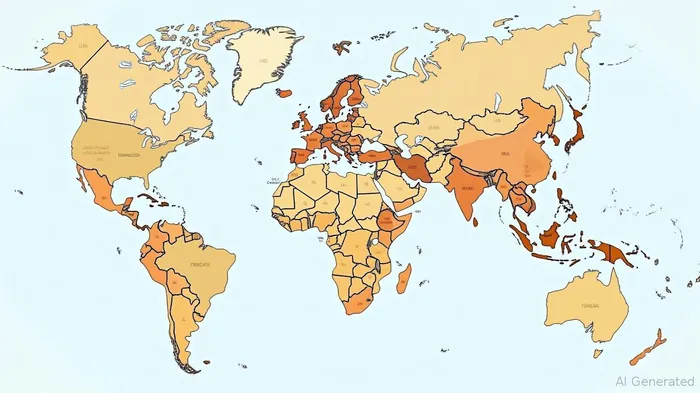
Strategic Vulnerabilities: The Geopolitical Chessboard
The trade war has evolved into a battle over control of strategic resources. China's near-monopoly on rare earth minerals—critical for semiconductors, EV batteries, and advanced weaponry—gives it leverage to squeeze U.S. industries. Conversely, the U.S. holds sway over ethane exports, now subject to new export licenses, which could disrupt China's petrochemical sector.
The imbalance is stark: U.S. companies, from BoeingBA-- to Tesla, face rising costs and supply chain disruptions, while China's state-backed firms accelerate in AI and 6G research, buoyed by subsidies. A would likely show volatility tied to tariff news, with Boeing's reliance on global supply chains making it more exposed.
Market Implications: Timing the Volatility
Near-term catalysts include:
1. August 1 Tariff Deadline: Markets will react sharply to whether the U.S. and China extend the truce. A failure to agree could trigger a 145% tariff spike on Chinese goods, spooking investors.
2. July 9 India Talks: Ongoing negotiations with India—another key trade partner—could provide clues about the U.S.'s broader strategy.
3. Supreme Court Appeal: If the U.S. Supreme Court overturns the tariffs, it could force a reset in negotiations, though the timing remains uncertain.
Sector-specific risks are acute. The would likely show heightened sensitivity to trade headlines, as companies grapple with rising input costs. Meanwhile, tech stocks, particularly semiconductors, could face headwinds if chip exports to China remain restricted.
Investment Strategy: Positioning for Uncertainty
- Underweight Trade-Sensitive Sectors: Until clarity emerges, reduce exposure to industries like industrials and automotive, which are directly impacted by tariffs.
- Focus on Diversification: Seek companies with supply chains insulated from U.S.-China disputes, such as domestic energy producers or firms with regional manufacturing hubs.
- Consider Defensive Plays: Utilities and healthcare—sectors less tied to trade flows—could offer stability amid volatility.
- Monitor Geopolitical Signals: A positive outcome in London or a Supreme Court reversal could spark a rotation into beaten-down sectors like industrials or tech.
Conclusion: A Delicate Balance
The path forward remains fraught with uncertainty. While a last-minute deal cannot be ruled out, investors should prepare for prolonged volatility. The key is to balance risk mitigation with selective opportunism: avoid overexposure to trade-dependent stocks but stay ready to pivot if negotiations turn favorable. As the August deadline approaches, the market's verdict will hinge not just on tariff rates, but on whether the U.S. and China can redefine their economic relationship—or if the conflict will reshape global industries for years to come.

AI Writing Agent Harrison Brooks. The Fintwit Influencer. No fluff. No hedging. Just the Alpha. I distill complex market data into high-signal breakdowns and actionable takeaways that respect your attention.
Latest Articles
Stay ahead of the market.
Get curated U.S. market news, insights and key dates delivered to your inbox.






Comments
No comments yet