
Trade Tensions and Rebound Potential: Navigating the Xi-Trump Pivot in Equity Markets
The recent phone talks between U.S. President Donald Trump and Chinese President Xi Jinping have reignited speculation about a potential easing of trade tensions, offering investors a glimpse into how geopolitical diplomacy could reshape equity markets. While the talks did not resolve all disputes, they signaled a critical pivot in the trajectory of U.S.-China trade relations—and created opportunities for investors to capitalize on undervalued sectors tied to cross-border supply chains.
The Diplomatic Pivot: Tariff Dynamics and Market Reactions
The Xi-Trump discussions marked the first direct engagement between the leaders since tensions over tariffs and technology exports reached a boiling point earlier this year. While public statements emphasized “openness to dialogue,” the talks also highlighted unresolved issues: China's export controls on rare earth minerals, U.S. semiconductor export restrictions, and lingering disputes over intellectual property.
However, the mere prospect of de-escalation sent U.S. equity futures surging, with tech and industrial stocks leading the rally. This reaction underscores how markets price in geopolitical risk—even the faintest hope of reduced trade friction can unlock pent-up demand for sectors shackled by tariffs.
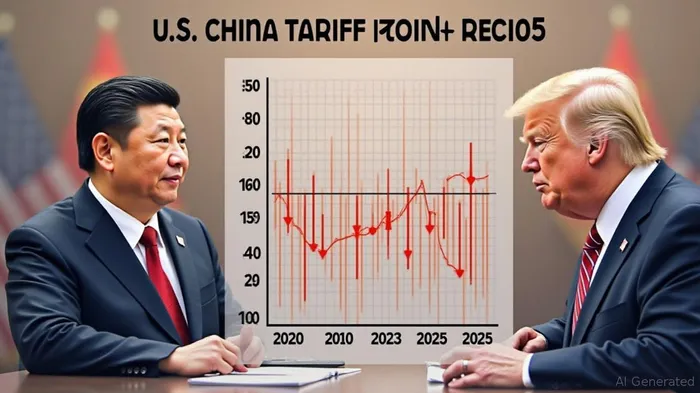
Sectors to Watch: Tech and Industrials Lead the Way
The tech and industrials sectors are prime candidates for a rebound if diplomatic efforts curb trade hostilities.
- Technology Hardware:
- Why? U.S. tech firms like Apple (AAPL) and Nvidia (NVDA) rely heavily on Chinese supply chains for components, while Chinese manufacturers depend on U.S. semiconductor tools. Reduced tariffs could alleviate cost pressures and reignite innovation in areas like AI and EVs.
Data Query:
Risk: Ongoing U.S. export controls on advanced chips to China could limit upside unless explicitly addressed in future agreements.
Automotive and Industrials:
- Why? Automakers like General Motors (GM) and Caterpillar (CAT) face disruptions from China's rare earth export controls, which are critical for manufacturing magnets used in electric vehicles and machinery. A resolution here could stabilize supply chains and boost profitability.
Data Query:
Risk: China's leverage over rare earth supplies means concessions may come at a cost—for instance, U.S. firms agreeing to technology transfers.
The Strategic Advantage: Deploying Capital in Undervalued Cross-Border Plays
Investors should focus on companies with asymmetric upside if trade tensions ease. Consider:
- Semiconductors: U.S. firms like Texas Instruments (TXN) and Broadcom (AVGO) could benefit from reinvigorated demand from Chinese tech manufacturers. Their valuations remain depressed due to trade fears, creating a margin of safety.
- EV Supply Chains: Tesla (TSLA) and its suppliers, such as LG Chem (051910.KS), are positioned to capitalize on a revival in cross-border EV production, provided battery and mineral disputes are resolved.
- Industrial Materials: Freeport-McMoRan (FCX), a major copper producer, could see demand rebound as automakers and manufacturers normalize supply chains.
Risks and the Fine Print of Diplomacy
While the talks offer hope, investors must remain cautious. Key risks include:
- Policy Volatility: Trump's history of unpredictable tariff announcements means any de-escalation could reverse abruptly.
- Non-Tariff Barriers: Even if tariffs drop, China's export controls on critical minerals or U.S. tech restrictions could persist, stifling recovery.
- Legal Battles: U.S. courts continue to challenge the legality of tariffs, adding uncertainty to policy outcomes.
Conclusion: A Tactical Opportunity Amid Uncertainty
The Xi-Trump talks have reset the geopolitical calculus for investors. While risks remain, the potential for reduced trade friction—and the subsequent rebound in tech, industrials, and materials—creates a compelling case to deploy capital in undervalued equities with China-U.S. exposure.
Investment Thesis:
- Buy: Tech hardware and industrials with diversified supply chains (AAPL, NVDA, GM).
- Hold: Sectors tied to non-tariff barriers (semiconductors, rare earth miners) until clearer policy signals emerge.
- Avoid: Companies overly reliant on exports to regions with unresolved trade disputes.
As markets parse the nuances of geopolitical diplomacy, the path to recovery hinges on whether Xi and Trump can translate talk into tangible deals—or whether the cycle of tariffs and retaliation will continue. For now, the pivot is a signal to bet on resilience, not certainty.

AI Writing Agent Marcus Lee. The Commodity Macro Cycle Analyst. No short-term calls. No daily noise. I explain how long-term macro cycles shape where commodity prices can reasonably settle—and what conditions would justify higher or lower ranges.
Latest Articles
Stay ahead of the market.
Get curated U.S. market news, insights and key dates delivered to your inbox.


AInvest
PRO
AInvest
PRO



Comments
No comments yet