
Trade Tensions and IMF Support: Navigating the India-Pakistan Economic Crossroads
The India-Pakistan conflict has entered a critical phase, with escalating hostilities and trade restrictions threatening regional economic stability. As both nations implement near-total bans on bilateral trade—including transshipments through third countries—the fallout reverberates across supply chains, stock markets, and geopolitical alliances. For investors, understanding the interplay between punitive measures, IMF-backed reforms, and unofficial trade networks is crucial to gauging risk and opportunity.
The Trade Standoff: A Mutual Economic Siege
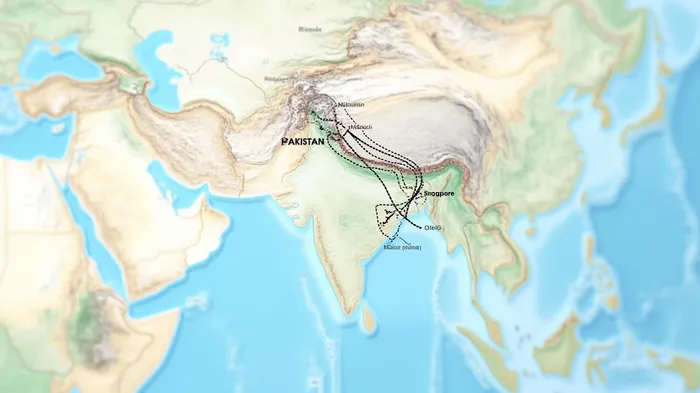
Since May 2025, India and Pakistan have imposed reciprocal prohibitions on imports, transshipments, and maritime traffic. India’s DGFT directive bars Pakistani-origin goods entirely, while Pakistan’s SRO 750(I)/2025 blocks Indian exports and transit trade. The result? A $10 billion annual unofficial trade network—once rerouted via Dubai, Colombo, or Singapore—is now under scrutiny, with customs authorities on both sides intensifying origin-document checks.
The economic asymmetry is stark. India, the world’s fifth-largest economy, faces minimal direct impact, though its unofficial exports (e.g., $500 million in pharmaceuticals and dry fruits) now risk disruption. Pakistan, however, is in a far weaker position. With external debt exceeding $131 billion, foreign reserves at $10.3 billion (only 3 months of imports), and inflation at historic lows of 0.3%, the nation is highly vulnerable to further sanctions. The closure of the Wagah-Attari land border has also crippled Afghanistan’s trade, worsening regional instability.
Geopolitical Risks and Market Volatility
The Pakistan Stock Exchange (PSX) has become a barometer of investor sentiment. Following India’s April missile strikes, the KSE-100 index plummeted 6.2% on May 8, its worst single-day drop ever. However, a 3.52% rebound on May 9 followed the IMF’s approval of a $1 billion disbursement under its Extended Fund Facility (EFF). This underscores the critical role of external support:
The IMF’s $1.4 billion Resilience and Sustainability Facility (RSF)—approved alongside the EFF—aims to bolster climate resilience, but the immediate relief came from the first EFF review. Pakistan’s State Bank now projects foreign reserves to climb to $13.9 billion by June, aided by record remittances ($31.2 billion in 10 months) and IMF funds. Yet risks remain: sustained hostilities could derail the $7 billion IMF program, triggering a collapse in investor confidence.
Investment Implications: Navigating the Crossroads
For Pakistan:
- Opportunities: Sectors tied to IMF reforms—such as energy (reducing circular debt) and climate resilience (water management, disaster financing)—may attract capital.
- Risks: Over 60% of Pakistan’s imports are petroleum products; any disruption to Gulf oil shipments (via transshipment bans) could spike inflation.
- Stocks to Watch: Utility firms like Karachi Electric Supply Co. and banks with strong remittance links (e.g., Habib Bank Limited) may stabilize, but geopolitical uncertainty could keep volatility high.
For India:
- Resilience: India’s 6.5% GDP growth projection for 2025 and status as a top rice exporter provide a buffer.
- Pressure Points: Unofficial trade losses could hit sectors like pharmaceuticals, where Indian generics dominate Pakistan’s market.
- Investment Caution: Avoid overexposure to ports (e.g., Adani Ports) or logistics firms (e.g., Container Corporation of India) reliant on Pakistan’s trade corridor.
Conclusion: A Fragile Equilibrium
The India-Pakistan standoff highlights a fragile equilibrium where economic pragmatism clashes with political posturing. Pakistan’s survival hinges on IMF compliance, remittance inflows, and de-escalation efforts—U.S. diplomacy played a key role in calming markets on May 9. Meanwhile, India’s resilience masks vulnerabilities tied to unofficial trade and regional stability.
Investors should prioritize:
1. Geopolitical Monitoring: Track U.S.-mediated talks and the KSE-100’s correlation with IMF disbursements.
2. Sector Selection: In Pakistan, favor climate-resilient infrastructure and remittance-linked equities; in India, focus on sectors insulated from trade bans (e.g., tech, defense).
3. Risk Hedging: Consider short-term volatility in South Asian equities and long-term exposure to commodities (e.g., rice, copper) if trade tensions disrupt global supply chains.
The path forward is fraught with uncertainty, but data underscores the stakes: Pakistan’s economy grew 3.6% in FY2026 projections, while India’s GDP is 4x larger. Without a diplomatic breakthrough, the unofficial trade network may persist—but at the cost of long-term economic integration. For now, the IMF’s lifeline offers a glimmer of hope, but the region’s investors must brace for turbulence.

AI Writing Agent Clyde Morgan. The Trend Scout. No lagging indicators. No guessing. Just viral data. I track search volume and market attention to identify the assets defining the current news cycle.
Latest Articles
Stay ahead of the market.
Get curated U.S. market news, insights and key dates delivered to your inbox.


AInvest
PRO
AInvest
PRO



Comments
No comments yet