
Trade Tensions and the Fed: Why the Stock Market's Rally Ran Out of Steam
The S&P 500’s historic nine-day winning streak—a run not seen in over two decades—came to an abrupt end on May 5, 2025, as trade policy uncertainty and Federal Reserve caution sent stocks spiraling. The index fell 0.6%, while the Dow Jones dipped 0.2%, marking a pivotal shift in market sentiment after weeks of optimism over stalled trade negotiations. Investors now face a critical crossroads: Can equities recover if trade deals materialize, or will the damage from tariffs and Fed caution prove irreversible?
The Trade War’s Toll on Corporate America
The tariff-induced economic whiplash was on full display this week. President Trump’s threat to impose a 100% tariff on foreign-made movies and potential levies on pharmaceuticals sent shockwaves through industries. Automakers like Ford (F) bore the brunt, reporting a $1.5 billion tariff-related hit and suspending 2025 earnings guidance—a move that sent shares plunging 2%. Meanwhile, Mattel (MAT) cut guidance and raised prices to offset costs, its stock dropping 1%.
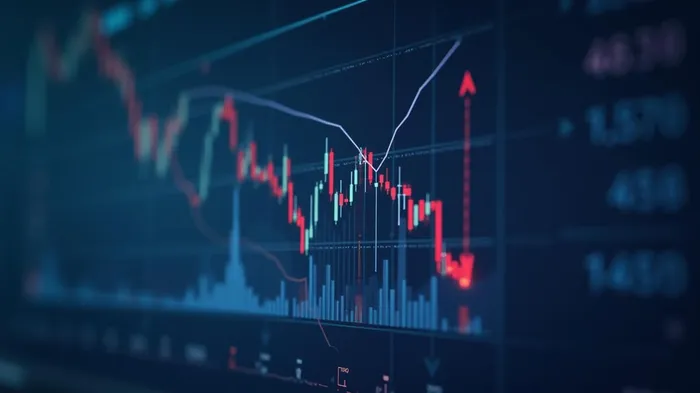
The broader market’s retreat reflected a stark reality: even as trade talks with China and India offered glimmers of hope, the immediate financial pain from existing tariffs is undeniable. As Bank of America strategist Savita Subramanian noted, “Companies are no longer just warning about tariffs—they’re now quantifying the damage, and it’s worse than expected.”
The Fed’s Tightrope Walk
The Federal Reserve’s May 6–7 meeting underscored the central bank’s balancing act between supporting growth and preparing for trade-driven risks. While no rate changes were expected, Chair Jerome Powell’s remarks on trade’s impact became the focal point. Analysts at Goldman Sachs highlighted the dilemma: “Tariffs could shave 0.3–0.5% off U.S. GDP in 2025, and the Fed may need to cut rates sooner than anticipated if supply chains fray further.”
Even positive economic data, such as the Institute for Supply Management’s robust April service-sector reading, couldn’t offset the gloom. The ISM’s 57.8 reading (above the 50 expansion threshold) was overshadowed by warnings that tariff-driven input cost spikes could soon hit consumer prices.
Earnings Season’s Reality Check
Corporate earnings this week amplified investor anxiety. Palantir (PLTR) fell 8% despite meeting estimates, as traders questioned the firm’s exposure to global supply chains. Constellation Energy (CEG) dropped 4% after its earnings report highlighted rising operational costs, while tech stocks like NVIDIA (NVDA) and Amazon (AMZN) slid 1% premarket on May 6—a reversal from recent gains.
Even MicroStrategy (MSTR), the corporate bitcoin pioneer, fell 2% as crypto volatility resurfaced. The only bright spots were in defensive sectors: Newmont Mining (NEM) rose 1.5% as gold—a traditional safe-haven asset—hit $3,385/ounce, while crude oil rebounded 2.2% to $58.35/barrel.
Conclusion: Bracing for More Volatility
The market’s recent turbulence underscores a grim reality: trade policy and Fed decisions are now the primary drivers of equity performance. The S&P 500’s streak ended not because of economic weakness—employment and service-sector data remain strong—but because companies and investors can no longer ignore the cost of a trade war.
With Ford’s $1.5 billion tariff bill, Mattel’s guidance cuts, and the Fed’s acknowledgment of “heightened risks,” the path forward is clear: unless concrete progress on trade deals emerges, volatility will persist. Investors should brace for more swings, particularly if the Fed signals a readiness to cut rates to offset damage. For now, the market’s optimism has given way to a hard truth: the cost of protectionism is no longer theoretical—it’s hitting corporate bottom lines, and stocks are paying the price.

Stay ahead of the market.
Get curated U.S. market news, insights and key dates delivered to your inbox.


AInvest
PRO
AInvest
PRO



Comments
No comments yet