
Trade Tensions Ebb, Markets Surge: Navigating the U.S.-China Tariff Truce
The Dow Jones Industrial Average’s 500-point surge on April 22, 2025, marked a pivotal shift in a month defined by geopolitical volatility. Amid escalating U.S.-China trade tensions, President Trump’s hints of tariff reductions and Treasury Secretary Scott Bessent’s private reassurances to investors catalyzed a rally that underscored markets’ hunger for stability. Yet beneath the surface, the fragile truce between the world’s two largest economies revealed a complex interplay of economic pragmatism and political posturing.
The Tariff Truce: A Fragile Catalyst for Market Relief
The turning point came on April 22, when President Trump signaled a potential rollback of the 145% tariffs on Chinese imports, calling them “very high” and stating they would “come down substantially.” These remarks, amplified by Bessent’s subsequent comments at a JP Morgan investor conference—where he described the tariffs as creating an “embargo” and hinted at de-escalation—ignited a 1.2% rebound in Dow futures. Asian markets mirrored the optimism: Hong Kong’s Hang Seng Index surged 2.5%, while Japan’s Nikkei 225 climbed 2%, reflecting the interconnectedness of global trade.
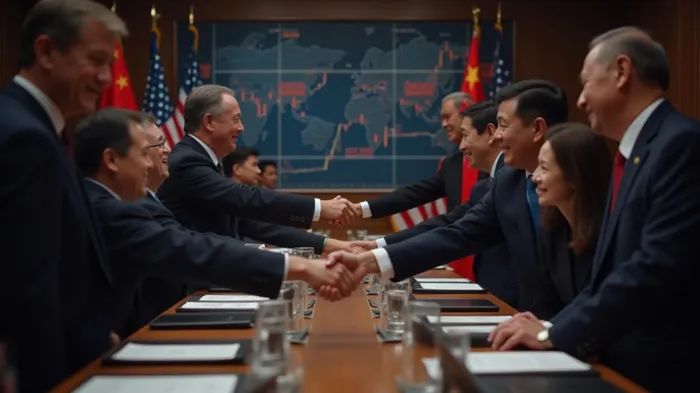
Yet the truce remains tenuous. While China quietly reduced tariffs on U.S. semiconductors and pharmaceuticals, it maintained public defiance, denying secret negotiations and raising its own tariffs to 125% on select U.S. goods. The White House, too, retained its tough rhetoric: Trump insisted tariffs would remain unless China offered “substantial concessions,” even as his administration explored exemptions for auto parts and consumer tech.
The Fed’s Delicate Balancing Act
Federal Reserve Chair Jerome Powell has long warned that tariff-driven stagflation—a toxic mix of high inflation and weak growth—could upend the U.S. economy. His fears found partial validation in Q1 2025 GDP data, which showed growth slowing to a mere 0.1% annualized rate, the weakest since 2022. Meanwhile, the Fed’s preferred inflation gauge, the core PCE price index, dipped to 2.5% year-over-year in March—a sign of cooling price pressures but still above the 2% target.
The Fed now faces a quandary: whether to stand pat or preemptively cut rates to cushion the economy against tariff-induced headwinds. Cleveland Fed President Beth Hammack summed up the dilemma, stating, “We must navigate difficult risks without a clear playbook.” The April 23 Beige Book report, which noted “softening demand” in manufacturing and retail, reinforced the urgency of this decision.
Corporate Earnings: Winners and Losers in the Tariff Crossfire
The earnings season underscored the uneven impact of trade tensions. Tech giants like Tesla (up 18% in early April) and Microsoft leveraged AI-driven growth and supply chain resilience to outperform, while sectors like semiconductors and consumer staples faltered. Intel’s Q2 revenue forecast missed expectations by 15%, citing “macroeconomic uncertainty,” while PepsiCo cut its full-year outlook, blaming tariffs for a 5% drop in shares.
Airlines, too, faced a reckoning: Southwest, American, and Alaska Airlines warned of plummeting domestic demand, attributing it to tariff-fueled economic anxiety. Their withdrawal of annual guidance highlighted the fragility of consumer confidence.
Conclusion: A Fragile Truce, a Cautionary Outlook
The April 2025 tariff truce offers a reprieve but not a resolution. Markets rallied on hopes of reduced trade barriers, yet the baseline 10% tariff and sector-specific levies remain in place, with both sides reserving the right to escalate anew. For investors, the lesson is clear: while short-term optimism is justified, the path forward is littered with risks.
The data underscores this caution. A 0.1% GDP growth rate signals an economy teetering on stagnation, while companies like Intuitive Surgical and PepsiCo highlight how tariffs are eroding profit margins. With the Fed’s tools constrained by conflicting inflation and growth signals, the onus remains on policymakers to navigate a path that avoids both stagflation and decoupling.
In this environment, investors would be wise to prioritize sectors with pricing power and global diversification—like tech leaders with AI moats—or to hedge against volatility through defensive stocks. The tariff truce may have eased immediate fears, but the dance between economics and politics is far from over.
Data sources: Federal Reserve Economic Data (FRED), Bloomberg, JP Morgan investor reports, and corporate earnings releases.

Stay ahead of the market.
Get curated U.S. market news, insights and key dates delivered to your inbox.


AInvest
PRO
AInvest
PRO



Comments
No comments yet