
U.S. Trade Protectionism Collides with Global Markets: India, Japan, and Crypto Suffer Fallout


 Aime Summary
Donald Trump's endorsement of a sweeping legislative proposal to impose tariffs of up to 500% on countries trading with Russia has sent shockwaves through global markets, with India and China emerging as the most vulnerable economies. The plan, backed by the U.S. president during a recent statement, aims to sever Moscow's financial lifelines and pressure Russia to end its war in Ukraine. According to Bloomberg, the measure could disproportionately impact India, which imported €3.1 billion worth of Russian energy in October alone, including crude oil, coal, and oil products. China, the largest buyer of Russian energy, imported €5.8 billion in the same period.
The potential tariffs follow an existing 50% levy on Indian imports, including a 25% surcharge for crude oil purchases, which has strained bilateral trade relations. India's Petroleum Minister Hardeep Singh Puri recently announced a strategic shift to diversify energy sources, including a 2.2 MTPA liquefied petroleum gas (LPG) import deal from the U.S. Gulf Coast. However, the new proposal threatens to disrupt India's energy strategy, particularly as private refiners have increased Russian crude procurement despite government assurances to reduce dependence.
Japan, another major U.S. trade partner, has already felt the ripple effects of Trump's policies. The country's economy contracted 1.8% in the July-September quarter, the first contraction in over a year, as U.S. tariffs depressed exports of automobiles and components. A 15% blanket tariff on Japanese goods, agreed to in a July trade pact, has eroded momentum in export sectors, according to Moody's economist Stefan Angrick. 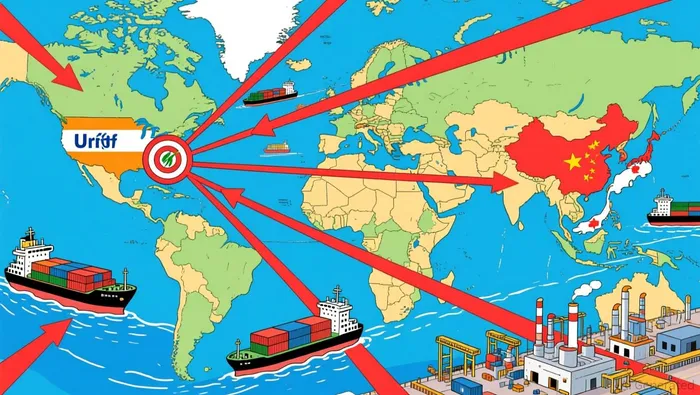 The move underscores Trump's broader trade agenda, which has increasingly prioritized domestic protectionism over multilateral cooperation.
Meanwhile, the cryptocurrency market has also faced turbulence. The Decentralized Finance (DeFi) sector lost over $36 billion in total value locked (TVL) since October, with major protocols like AaveAAVE-- and Lido experiencing declines of up to 40%. EthereumETH-- (ETH), the second-largest cryptocurrency by market capitalization, has fallen to $3,609, reflecting waning institutional interest and ETF outflows. Analysts link the DeFi slump to broader macroeconomic pressures, including Trump's aggressive trade policies, which have dampened global investor sentiment.
The economic ramifications extend beyond energy and crypto. A recent report by ResearchAndMarkets projects the global Energy Management Systems (EMS) market will grow at a 16.4% CAGR, reaching $219.3 billion by 2034, driven by smart grid integration and AI-enabled efficiency solutions. However, Trump's tariffs and geopolitical tensions could complicate adoption, particularly in energy-dependent economies like India and Japan.
As the U.S. intensifies its economic pressure on Russia, the global economy braces for further disruptions. With trade partners like India and Japan already reeling and crypto markets in freefall, the path forward remains fraught with uncertainty.

Stay ahead of the market.
Get curated U.S. market news, insights and key dates delivered to your inbox.


AInvest
PRO
AInvest
PRO



Comments
No comments yet