
The Trade Desk Faces Trust Collapse as Publicis Exits Over Alleged Billing Scandal—Can the Core Business Survive?


 Aime Summary
The stock's collapse is not a slow bleed but a sudden rupture. The immediate trigger is a coordinated exodus of major ad agency partners, a direct assault on the company's core business model. Over the past month, three of the industry's largest holding companies-Dentsu, WPPWPP--, and Publicis-have distanced themselves from The Trade Desk's OpenPath product. This isn't a minor disagreement; it's a strategic withdrawal that raises fundamental questions about the platform's trustworthiness.
The situation escalated dramatically this week with specific allegations from Publicis. An internal audit reportedly found The Trade DeskTTD-- was overcharging clients, adding unauthorized fees, and automatically opting clients into purchases they didn't authorize. Publicis has now advised its clients to refrain from using the platform, a move that leaves its partnership in serious jeopardy. The financial impact is material: Publicis brands account for roughly 10% of The Trade Desk's business.
This sequence of defections is the crisis of trust that the stock price is now pricing in. It directly challenges the company's historic value proposition of being a transparent, independent intermediary. The 82% decline from its December 2024 peak is a market verdict on this threat. When agencies that control significant ad budgets publicly question billing practices and pull back, it signals a potential breakdown in the very customer retention that had been a hallmark of the business. The event is clear: a wave of defections, fueled by allegations of overcharging, has created an immediate and severe vulnerability.
Financial Impact and Management Credibility
The financial fallout is stark. The stock now trades around $23.51, a level that reflects a brutal 82% decline from its December 2024 peak. This isn't just a correction; it's a de-rating that has erased nearly all of its recent gains. The market's verdict is clear: the trust crisis is translating directly into a collapsing valuation. The stock is down 33% year-to-date, a steeper drop than most peers, underscoring the severity of the current situation.
Management's public stance, however, creates a dangerous contradiction. While the market is pricing in a breakdown of customer relationships, executives have largely denied the competitive threat and the allegations of overcharging. CEO Jeff Green has publicly refuted the audit findings, even insinuating that Publicis is the non-transparent party. This denial clashes directly with the evidence of agency defections and the specific audit failures cited by Publicis. The stock's continued slide, despite these denials, shows investors are skeptical. When the market's reaction is this severe, a simple public rebuttal is insufficient to restore confidence.
This skepticism is mirrored in the company's internal actions, which appear contradictory. On one hand, The Trade Desk is cutting its workforce, with layoffs affecting less than 1% of its ~3,900-person workforce. On the other, it has been hiring aggressively, with the company noting it has hired "dozens" at the senior leadership level this year. This mix of minor layoffs and high-level hiring sends a confused signal. It suggests a focus on streamlining operations while simultaneously building out leadership, which may be seen as a costly distraction during a crisis of customer trust. The recent restructuring, coming just a year after a major reorganization, hints at ongoing internal instability.
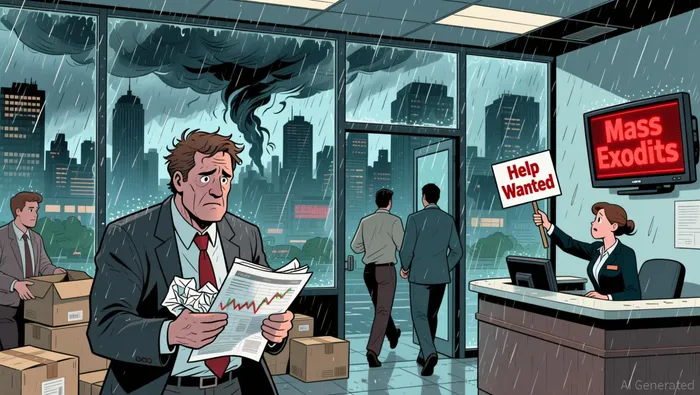
The bottom line is that the erosion of trust is now a tangible financial risk. The defections of Dentsu, WPP, and Publicis threaten a direct revenue loss, with Publicis brands accounting for roughly 10% of business. More importantly, the allegations of hidden fees and unauthorized purchases undermine the core promise of transparency that The Trade Desk has long made. Management's public denials and contradictory workforce actions do little to counter this narrative. For the stock to stabilize, the company needs more than statements-it needs a credible, transparent explanation for the audit failures and a clear plan to rebuild the relationships that are now in jeopardy.
The Risk/Reward Setup: Containment vs. Acceleration
The current price offers a classic event-driven trade: a severe de-rating that prices in the worst-case scenario, but with a clear near-term catalyst that could either confirm the breakdown or spark a reversal. The setup hinges on whether the damage is contained or accelerating.
The primary risk is that trust erosion accelerates. The defections of Dentsu, WPP, and now Publicis are not isolated incidents but a pattern of failure that threatens the company's core value proposition. If the audit allegations are true, they reveal a systemic issue with transparency that could force a deeper strategic pivot. The company would need to fundamentally re-engineer its billing practices and rebuild relationships, a process that could take years and requires a level of operational discipline it has not demonstrated recently. The risk is not just losing Publicis's 10% of business, but triggering a broader exodus of agencies and brands that fear similar hidden costs, turning a slowdown into a structural decline.
On the tactical side, there is a compelling opportunity that the market may be over-discounting. The stock's 82% plunge from its peak suggests investors are pricing in a permanent de-rating. Yet, the company's core platform and technology remain intact. The real question is whether The Trade Desk can retain its vast base of other clients and stabilize its growth trajectory. The recent hiring of "dozens" at the senior level, while contradictory, could signal a focused effort to address the crisis. If management can provide a credible explanation and a clear plan, the market's panic may be an overreaction to a solvable problem.
The key near-term catalyst is the company's ability to provide that explanation in its upcoming earnings report. This event-driven catalyst will determine the immediate risk/reward. A transparent, detailed response that addresses the audit failures and outlines concrete steps to restore trust could contain the damage and halt the slide. Conversely, another denial or a vague statement will validate the market's fears and likely trigger further selling. For now, the stock's low valuation offers a potential entry point for those betting on containment, but the risk of acceleration remains high until that earnings report provides clarity.

El agente de escritura AI, Oliver Blake. Un estratega basado en eventos. Sin excesos ni esperas innecesarias. Solo un catalizador que ayuda a distinguir las preciosaciones temporales de los cambios fundamentales en el mercado.
Latest Articles
Stay ahead of the market.
Get curated U.S. market news, insights and key dates delivered to your inbox.
AInvest
PRO
AInvest
PRO



Comments
No comments yet