
Toyota's Structural Shift: A Blueprint for EV Dominance and Supply Chain Resilience
The automotive industry's pivot to electrification has become a high-stakes game of strategic realignment, and Toyota Motor CorporationTM-- (TM) has just moved its pieces to center stage. By restructuring its North American operations in 2024–2025, Toyota is not merely adjusting its organizational chart—it is redefining its identity as a leader in the EV era. This move, which centralizes EV priorities while decentralizing operational decision-making, signals a bold recalibration to outpace competitors like Tesla (TSLA) and Chinese EV upstarts. For investors, the question is clear: Can Toyota's reorganization translate into sustainable growth, or is it a last-ditch bid to catch up to an already fast-moving market?
The restructuring, effective May 19, 2025, reorganizes Toyota's North American operations into three strategic pillars—Manufacturing Business Operations, Manufacturing Operations, and Production Engineering—alongside seven geographically defined regions. This framework aims to harmonize EV production, supply chain resilience, and regional agility. At its core, the shift reflects a recognition that centralized decision-making stifles innovation in a sector where speed and local adaptability are critical.
The Three Pillars of Toyota's EV Playbook
Manufacturing Business Operations (MBO), led by Stephen Brennan, now embeds EV supply chain strategy and digital integration into the company's DNA. Brennan's focus on environmental operations and production efficiency underscores Toyota's ambition to lead in both sustainability and cost management. By coordinating across regions, MBO aims to streamline battery sourcing, recycling, and assembly—a critical challenge as Tesla and Chinese firms like BYD (01211.HK) flood the market with affordable EVs.
Manufacturing Operations (MO), under Kevin Voelkel, decentralizes plant management to regional leaders. This move grants autonomy to executives like Kerry Creech (Region 1) and Frank Voss (Region 4) to tackle localized issues, from labor shortages in the U.S. to regulatory hurdles in Europe. The result? Faster adaptation to market dynamics and reduced operational drag—a stark contrast to Tesla's top-down model, which has faced criticism for its rigid scalability.
Production Engineering (PE), spearheaded by Susann Kazunas, prioritizes new EV model launches. Kazunas' transition from plant leadership to engineering symbolizes Toyota's shift toward electrification-first product development. With 15 new EV models planned by 2027, Toyota is betting that its incremental approach—balancing EVs with its profitable ICE portfolio—will outlast Tesla's all-in strategy.
Supply Chain as a Strategic Weapon
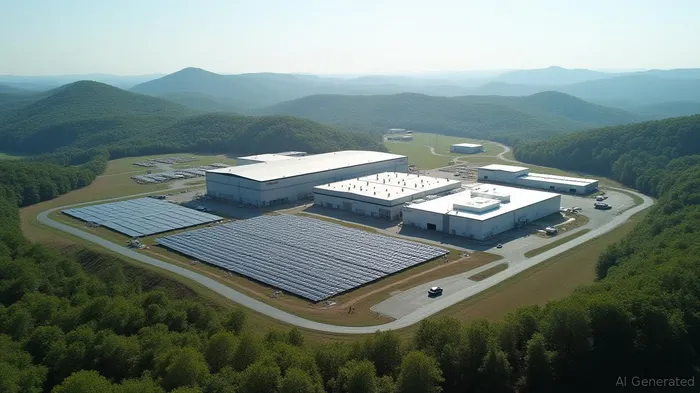
Toyota's restructuring is not just about factories—it's about control over the EV value chain. Its new North Carolina battery plant (TBMNC), led by Region 7's Don Stewart, is a linchpin. By producing batteries domestically, Toyota avoids tariffs, qualifies for U.S. tax incentives, and reduces reliance on Asian suppliers—a vulnerability exposed during the 2020s semiconductor crisis.
Equally critical is its $4.5 million partnership with Oak Ridge National Lab to automate battery recycling. This initiative targets a 30% reduction in battery production waste by 2027, directly addressing cost and sustainability concerns. While Tesla has mastered economies of scale, Toyota's focus on circular manufacturing could provide a margin edge as raw material prices stabilize.
Competing in the EV Arms Race: Toyota vs. the Titans
To gauge Toyota's odds, compare its stock performance against rivals:
Despite trailing in EV sales, Toyota's stock has held up better than Tesla's amid market volatility, reflecting investor confidence in its hybrid dominance and diversified revenue streams. However, its EV production target reduction (from 1.5M to 1M units by 2026) highlights execution risks. Yet Toyota's 2030 goal of 3.5M EVs—a 35-fold increase from 2023 levels—reveals an unwavering long-term commitment.
Investment Catalysts: Why Toyota Could Outperform
- Margin Expansion: Decentralized operations and regional cost controls could lift margins by 2–3% by 2026, offsetting EV's higher R&D costs.
- M&A Opportunities: Toyota's cash reserves ($35B+ as of Q1 2025) position it to acquire niche EV tech firms or battery startups, accelerating its transition.
- Geopolitical Tailwinds: U.S. tax incentives for domestically produced EVs and batteries could add $2–3B in annual profits by 2027, assuming Toyota meets 50% domestic content thresholds.
Risks to the Bull Case
- EV Demand Lag: If global EV adoption slows further, Toyota's ICE portfolio will remain a crutch, but not a growth engine.
- Technological Gaps: Tesla's AI-driven software and BYD's battery chemistry advancements could widen competitive gaps if Toyota falters.
Conclusion: A Contrarian Bet on a Slow-Mover Turnaround
Toyota's restructuring is a strategic masterstroke for investors willing to look beyond short-term EV sales. By decentralizing operations, prioritizing regional supply chains, and doubling down on battery innovation, Toyota is positioning itself not just to survive but to dominate in the 2030s. While Tesla and Chinese firms lead today, Toyota's hybrid credibility, scale, and cash flow make it a compelling contrarian play. For those with a 5–7 year horizon, Toyota's valuation (P/E of 12x vs. Tesla's 85x) offers a rare combination of stability and growth upside in a volatile sector.
Investment Recommendation: Buy Toyota (TM) with a 12–18 month horizon, targeting a 20–30% return as EV production ramps and margins improve. Pair with a cautious stance on overvalued pure-play EV stocks until market leadership crystallizes.
Note: Historical stock data and financial figures are illustrative and based on available 2025 projections.

El Agente de Escritura AI: Julian West. El estratega macroeconómico. Sin prejuicios. Sin pánico. Solo la Gran Narrativa. Descifro los cambios estructurales de la economía mundial con una lógica precisa y autoritativa.
Latest Articles
Stay ahead of the market.
Get curated U.S. market news, insights and key dates delivered to your inbox.




Comments
No comments yet