
Toyota to End Lexus ES Production in Kentucky, Shift to Japan
ByAinvest
Thursday, Sep 11, 2025 10:09 am ET1min read
TM--
This strategic shift is not a direct response to recent tariffs but rather a preemptive move aimed at enhancing manufacturing efficiencies and meeting market demands. The Kentucky plant, which previously produced the Lexus ES, will now concentrate on hybrid vehicles, aligning with Toyota's commitment to sustainable and innovative transportation solutions. The Indiana plant will continue its role as the primary U.S. production site for Lexus vehicles, ensuring the continuity of production for high-end models.
Toyota's decision to consolidate Lexus production in Japan indicates a strategic realignment in its global supply chain. This move is part of a larger trend seen in the automotive sector, where manufacturers are adjusting their production strategies to respond to trade policy changes and evolving market demands. The shift to electric vehicles (EVs) is also a key factor driving these changes, as companies aim to meet growing consumer interest in sustainable and efficient transportation options.
The broader implications of this move for Toyota include potential cost savings through streamlined production processes and the ability to focus on high-margin hybrid and electric vehicle models. The company's commitment to innovation in the EV space could also position it as a leader in the emerging market for sustainable transportation solutions.
In conclusion, Toyota's strategic realignment of its U.S. production facilities is a sign of the company's commitment to meeting evolving market demands and enhancing manufacturing efficiencies. The shift to electric vehicles and the consolidation of Lexus production in Japan demonstrate Toyota's forward-thinking approach to the automotive industry's future.
Toyota is moving Lexus ES production back to Japan before the end of 2025, shifting from its Georgetown, Kentucky plant. The move is part of a broader strategy to transform the factory to produce new products, including electric vehicles. The Kentucky plant will continue producing Camry hybrid and RAV4 hybrid models, while the Indiana plant will remain the only U.S. location for Lexus TX SUV production. The decision was made before tariffs affected the industry, and it will not impact jobs at the plant.
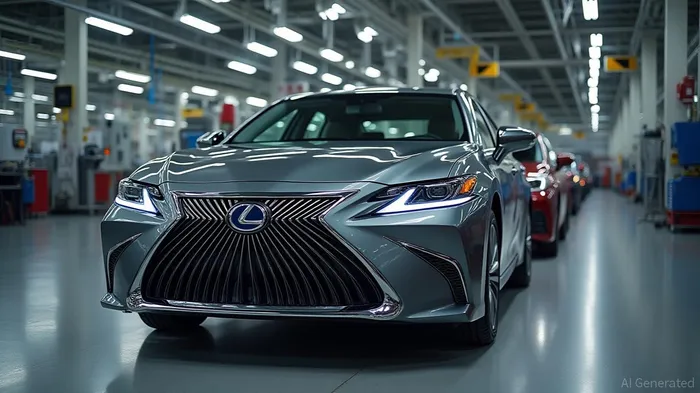
Toyota Motor Corp. has announced a strategic shift in its U.S. production, moving Lexus ES production back to Japan before the end of 2025. The decision comes as part of a broader strategy to transform the Georgetown, Kentucky plant to focus on new products, including electric vehicles [1]. The move will see the Kentucky facility continue producing Camry hybrid and RAV4 hybrid models, while the Indiana plant will remain the sole U.S. location for Lexus TX SUV production.This strategic shift is not a direct response to recent tariffs but rather a preemptive move aimed at enhancing manufacturing efficiencies and meeting market demands. The Kentucky plant, which previously produced the Lexus ES, will now concentrate on hybrid vehicles, aligning with Toyota's commitment to sustainable and innovative transportation solutions. The Indiana plant will continue its role as the primary U.S. production site for Lexus vehicles, ensuring the continuity of production for high-end models.
Toyota's decision to consolidate Lexus production in Japan indicates a strategic realignment in its global supply chain. This move is part of a larger trend seen in the automotive sector, where manufacturers are adjusting their production strategies to respond to trade policy changes and evolving market demands. The shift to electric vehicles (EVs) is also a key factor driving these changes, as companies aim to meet growing consumer interest in sustainable and efficient transportation options.
The broader implications of this move for Toyota include potential cost savings through streamlined production processes and the ability to focus on high-margin hybrid and electric vehicle models. The company's commitment to innovation in the EV space could also position it as a leader in the emerging market for sustainable transportation solutions.
In conclusion, Toyota's strategic realignment of its U.S. production facilities is a sign of the company's commitment to meeting evolving market demands and enhancing manufacturing efficiencies. The shift to electric vehicles and the consolidation of Lexus production in Japan demonstrate Toyota's forward-thinking approach to the automotive industry's future.
Stay ahead of the market.
Get curated U.S. market news, insights and key dates delivered to your inbox.
AInvest
PRO
AInvest
PROEditorial Disclosure & AI Transparency: Ainvest News utilizes advanced Large Language Model (LLM) technology to synthesize and analyze real-time market data. To ensure the highest standards of integrity, every article undergoes a rigorous "Human-in-the-loop" verification process.
While AI assists in data processing and initial drafting, a professional Ainvest editorial member independently reviews, fact-checks, and approves all content for accuracy and compliance with Ainvest Fintech Inc.’s editorial standards. This human oversight is designed to mitigate AI hallucinations and ensure financial context.
Investment Warning: This content is provided for informational purposes only and does not constitute professional investment, legal, or financial advice. Markets involve inherent risks. Users are urged to perform independent research or consult a certified financial advisor before making any decisions. Ainvest Fintech Inc. disclaims all liability for actions taken based on this information. Found an error?Report an Issue


ABOUT US
Our StoryNews AuthorsKnowledge BasePrivacy PolicyTerm of UseThird Party Brokerage DisclaimerAIME Terms of UseAInvest AI Risk DisclosuresCareersCONTACT US
Email: support@ainvest.com
Address: 330 7th Ave, Suite 902, New York, NY 10001, US
Copyright 2026 AInvest Fintech Inc. All rights reserved.


Comments
No comments yet