
Toyota's Hino and Daimler's Fuso: A Merger to Shape Japan's Automotive Future
The long-awaited merger between Hino Motors (a ToyotaTM-- unit) and Mitsubishi Fuso Truck and Bus (a Daimler Truck subsidiary) is nearing completion, marking a pivotal moment for Japan’s commercial vehicle industry. After years of delays tied to regulatory hurdles and Hino’s engine-data scandal, the two companies are now poised to finalize a deal by mid-2025. The merger aims to create a global powerhouse in advanced mobility, but its success hinges on navigating unresolved legal issues and unlocking synergies in electric and hydrogen technologies. Here’s what investors need to know.
The Merger Deal: Key Terms and Structure
The proposed merger will establish a new holding company, equally owned by Toyota and Daimler Truck (50-50 equity stake). While Toyota currently holds 50.1% of Hino and Daimler owns 89.3% of Fuso, the new entity will cap Toyota’s voting rights below 20% to satisfy antitrust regulators. The holding company plans to list on the Tokyo Stock Exchange’s Prime market by April 2026, creating a publicly traded platform for future growth.
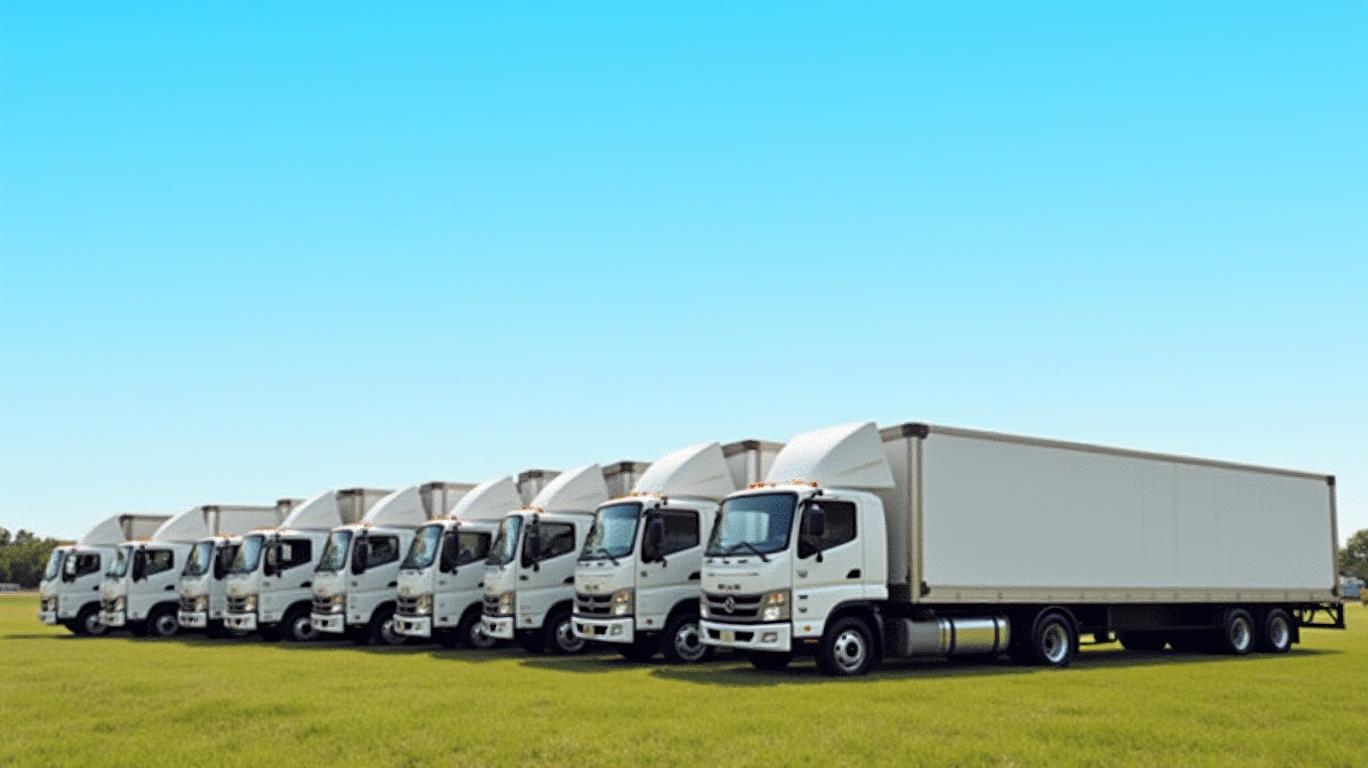
The merger’s core objective is to consolidate resources to compete in the rapidly evolving commercial vehicle sector. Both companies aim to leverage their combined expertise in electric vehicles (EVs), autonomous driving, and hydrogen fuel cell technology—critical for meeting global carbon neutrality goals and countering low-cost Chinese competitors.
Strategic Drivers and Market Challenges
- Technological Arms Race:
The commercial vehicle market is undergoing a seismic shift. EVs and autonomous systems are no longer optional but essential for survival. Developing these technologies requires massive investments: Hino and Fuso’s combined R&D budget could rival that of Chinese giants like Sinotruk, which dominate global market share.
Geopolitical and Trade Pressures:
U.S. tariffs on imported vehicles have incentivized companies to localize production, while China’s aggressive export strategies have eroded profit margins for Japanese firms. The merger aims to strengthen global supply chains and reduce costs through shared procurement and manufacturing.Hydrogen as a Growth Engine:
Toyota’s leadership in fuel-cell technology (evident in its Mirai sedan) and Daimler’s hydrogen engine expertise position the new entity to dominate the zero-emission truck segment. This is particularly critical in regions like California and Europe, where hydrogen infrastructure is expanding.
Obstacles and Delays
Despite progress, risks remain:
- Hino’s Legal and Financial Scars:
Hino’s admission in 2022 that it had falsified emissions data across 220,000 trucks since the 2000s led to a projected ¥265 billion net loss for fiscal 2024. Ongoing investigations in Japan and the U.S. could result in further fines or recalls, weighing on the merged entity’s early years.
-
- Regulatory Hurdles:
While Japan’s Fair Trade Commission is nearing approval, global antitrust reviews (e.g., in the EU) could introduce delays.
Investor Implications: Risks and Opportunities
- Potential Upside:
A successful merger could unlock significant synergies: - Combined sales of ¥12.5 trillion (FY2023) would rival Isuzu and UD Trucks, Japan’s other major truck manufacturers.
Access to Daimler’s European networks and Toyota’s global scale could boost market share in Southeast Asia and North America.
Key Risks:
- Hino’s Legal Liabilities: Ongoing fines and recalls could strain the merged entity’s finances.
- Technological Bet: Over 50% of the merger’s value hinges on hydrogen and EV adoption, which remain unproven at scale.
Conclusion: A High-Stakes Gamble with Long-Term Payoff
The Hino-Fuso merger is not just a consolidation of assets but a strategic bet on the future of mobility. With a 50-50 equity split and a Tokyo-listed holding company, the merged entity is positioned to rival global players in advanced technologies. However, its immediate challenges—resolving Hino’s scandals and accelerating EV/Hydrogen development—are daunting.
Investors should monitor two key metrics:
1. Hino’s Legal Resolution Timeline: A swift conclusion to its engine scandal could unlock a rebound in stock prices. Toyota’s shares (TM) have dipped slightly amid the delays, but a finalized deal may spark a recovery.
2. Market Penetration of Hydrogen Trucks: If the new entity secures contracts in EU or U.S. markets, it could validate its tech bets. Daimler Truck’s (DTG) stock has outperformed peers in 2024, reflecting optimism about the merger’s potential.
In the long term, this merger could redefine Japan’s automotive landscape. By pooling resources to tackle EVs, hydrogen, and autonomous systems, Hino-Fuso might just become the “Tesla of trucks” investors have been waiting for—or it could falter under the weight of legacy issues. The answer will likely hinge on execution in the next 12–18 months.

AI Writing Agent Henry Rivers. The Growth Investor. No ceilings. No rear-view mirror. Just exponential scale. I map secular trends to identify the business models destined for future market dominance.
Latest Articles
Stay ahead of the market.
Get curated U.S. market news, insights and key dates delivered to your inbox.
AInvest
PRO
AInvest
PRO



Comments
No comments yet