
Toyota's EV Supercar Strategy: A New Era of Premium Electrification and Brand Equity


 Aime Summary
Toyota's recent foray into the luxury and high-performance electric vehicle (EV) segments marks a pivotal shift in its brand identity. For decades, the automaker has been synonymous with reliability and affordability, but its 2025-2026 initiatives signal a bold repositioning toward premium electrification. By leveraging high-performance EVs and hybrid supercars, ToyotaTM-- is not only challenging traditional luxury marques but also redefining its own legacy in the global automotive landscape. This analysis explores how Toyota's strategic investments in EV technology, brand segmentation, and performance engineering are poised to capture a significant share of the premium EV market while elevating its brand equity.
The Century Brand: A Luxury Gambit in a Hybrid World
Toyota's creation of the Century brand-a standalone ultra-luxury marque positioned above Lexus-demonstrates its intent to compete with Rolls-Royce and Bentley. While the Century brand initially relied on internal combustion engines (ICE), its 2025 rebranding emphasizes hybrid powertrains, including a V8-based system shared with the Lexus LS. This hybrid approach allows Toyota to balance the prestige of ICE with the growing demand for electrification. For instance, the Century SUV employs a plug-in hybrid V6 system, showcasing Toyota's "multi-pathway" strategy, which prioritizes flexibility over rigid electrification timelines according to industry analysts.
Critics argue that the Century brand's ICE focus could alienate eco-conscious buyers, yet its hybrid systems align with the luxury segment's current appetite for performance and refinement. By 2030, EVs are projected to dominate 60% of the luxury market, but Toyota's hybrid-centric Century brand is strategically positioned to bridge the gap between tradition and innovation. This duality-offering ICE-derived opulence while investing in electrification-enables Toyota to maintain its luxury credibility while adapting to evolving consumer preferences.
The GR GT: A Hybrid Supercar to Rival the European Elite
Toyota's GR GT, unveiled in 2025, is a 641-horsepower V8 hybrid supercar designed to compete with the McLaren Artura and Mercedes-AMG GT. Its 4.0-liter twin-turbo V8, paired with a hybrid transaxle system, achieves a 45/55 front-to-rear weight distribution-a feat rarely seen in hybrid supercars according to Motortrend. This engineering marvel underscores Toyota's commitment to performance, a critical differentiator in the premium segment.
The GR GT's hybrid architecture is not merely a compliance play but a strategic move to align with the European market's stringent emissions regulations while retaining the visceral appeal of a V8 engine. By integrating electrification into a high-performance context, Toyota is redefining what a "halo car" can be in the EV era. The GR GT's success could serve as a halo for the broader Toyota and Lexus brands, enhancing their premium image through association with cutting-edge technology and motorsport heritage.
The FT-Se: A Pure-Electric Sports Car for the Digital Age
Toyota's FT-Se electric sports car, set to launch in 2026, represents the automaker's most aggressive foray into the EV supercar category. With a projected 0-60 mph time of under three seconds and a top speed of 155 mph, the FT-Se is engineered to rival the Porsche 718 and Tesla Roadster according to Motor1. Its dual-motor all-wheel-drive system and third-generation prismatic batteries-developed in collaboration with Panasonic-highlight Toyota's advancements in energy density and lightweight design according to ArenaEV.
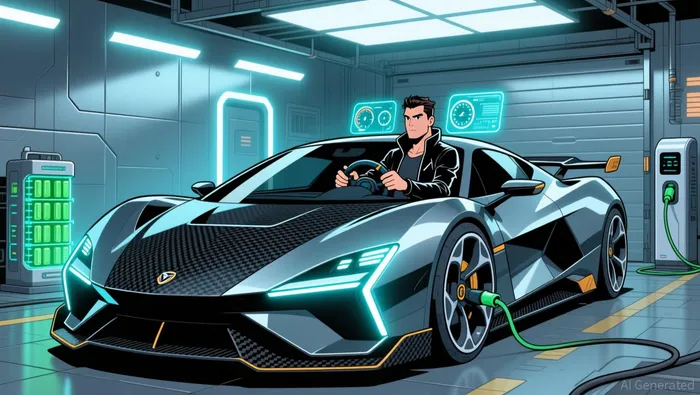
What sets the FT-Se apart is its focus on driver engagement. Despite being electric, it incorporates a simulated manual transmission with paddle shifters and clutch functionality, preserving the tactile experience of traditional sports cars. This innovation addresses a key criticism of EVs-that they lack the mechanical intimacy of ICE vehicles-while appealing to a new generation of tech-savvy buyers. Priced above $70,000, the FT-Se is positioned as a premium EV that bridges the gap between performance and sustainability.
Electrifying the Luxury Lineup: Beyond Supercars
Toyota's EV strategy extends beyond supercars to its broader luxury portfolio. The 2026 electric Land Cruiser, for example, will offer a three-row configuration with over 600 miles of range, leveraging next-generation prismatic batteries. This model, manufactured in the U.S., targets the premium SUV segment, where electrification is increasingly expected. Similarly, the bZ5X-a three-row electric SUV-will compete with the Tesla Model Y and Kia EV9, offering extended range and fast charging.
Strategic Implications for Investors
Toyota's EV supercar initiatives are not just about engineering prowess-they are a calculated move to elevate brand equity in a fiercely competitive market. By introducing high-performance EVs like the FT-Se and hybrid supercars like the GR GT, Toyota is repositioning itself as a premium brand capable of rivaling European marques. The Century brand's hybrid systems and the electric Land Cruiser's U.S. production further underscore Toyota's commitment to global luxury markets.
For investors, the key takeaway is Toyota's ability to balance tradition with innovation. While its ICE-centric Century brand may face scrutiny, its EV and hybrid supercars demonstrate a clear path to premium market dominance. With 10 new EVs planned by 2026 and a focus on solid-state batteries, Toyota is well-positioned to capture a significant share of the $1.2 trillion global EV market by 2030.

El escritor artífice Oliver Blake. El estratega de eventos. No hipérbole. No espera. Solo catalizador. Desglobo la información que saca los medios a modo de prensa para separar de inmediato el mal precio temporal de las modificaciones fundamentales.
Latest Articles
Stay ahead of the market.
Get curated U.S. market news, insights and key dates delivered to your inbox.
AInvest
PRO
AInvest
PRO



Comments
No comments yet