
Toyota's 2026 C-HR Electric SUV: A Stylish and Affordable Option
ByAinvest
Tuesday, Aug 26, 2025 3:43 pm ET2min read
TM--
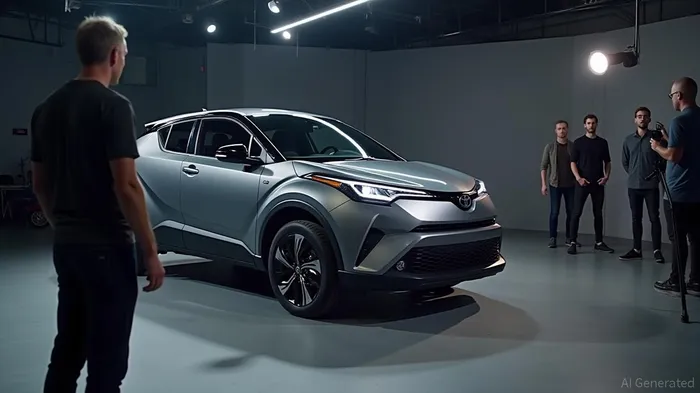
The C-HR has been spotted filming a commercial in Austin, Texas, and is expected to offer standard all-wheel drive (AWD) and a built-in NACS port for Tesla Supercharger compatibility. The interior will feature a 14" infotainment system with Toyota's Audio Multimedia System and support for Wireless Apple CarPlay and Android Auto.
Toyota's strategy of offering multiple powertrains aligns with its broader goal of achieving carbon neutrality by 2050. The company believes that concentrating resources on a single technology would be less inclusive and potentially slower in achieving carbon neutrality. Instead, Toyota is investing in a variety of technologies, including hybrid electric vehicles (HEVs), plug-in hybrid electric vehicles (PHEVs), battery electric vehicles (BEVs), and fuel cell electric vehicles (FCEVs) [1].
By 2025, Toyota aims to have at least 70 electrified products in its global portfolio, including 15 battery electric vehicles. The company is also committed to developing new battery technologies, such as solid-state batteries, to make electric vehicles more affordable and accessible. The C-HR's availability in various powertrain configurations is a reflection of Toyota's broader goal to ensure that each customer has access to the lowest possible CO2 emissions vehicle, irrespective of market, segment, or budget [1].
Toyota's approach to electrification is not limited to new vehicles. The company is also exploring ways to reduce the carbon emissions of existing vehicles, including those with internal combustion engines. Hydrogen fuel and renewable e-fuels made from hydrogen and biofuel are among the technologies being considered to minimize the carbon footprint of the world's existing fleet [1].
The C-HR's launch is part of Toyota's broader strategy to expand its global electrified portfolio and meet the needs of customers worldwide. By offering a range of powertrains and technologies, Toyota is positioning itself to be a leader in the transition to a low-carbon future. The company's success in Europe, where it has seen increased demand for low-emission solutions, demonstrates the effectiveness of its multi-technology approach [1].
References:
[1] https://mag.toyota.co.uk/electrification-across-entire-toyota-line-up-from-2025/
TSLA--
Toyota's new 2026 C-HR electric SUV is set to launch in 2026, featuring a stylish new look and a range of up to 290 miles. The compact crossover SUV has been spotted filming a commercial in Austin, Texas, and will be available with all-electric, hybrid, plug-in hybrid, and fuel cell powertrains. It will come with standard AWD and a built-in NACS port for Tesla Supercharger compatibility. The interior features a 14" infotainment system with Toyota's Audio Multimedia System and Wireless Apple CarPlay and Android Auto support.
Toyota has announced plans to launch the 2026 C-HR electric SUV, marking a significant milestone in its ongoing electrification strategy. Set to debut in 2026, the compact crossover SUV will feature a stylish new look and a range of up to 290 miles. The C-HR will be available in all-electric, hybrid, plug-in hybrid, and fuel cell powertrain configurations, underscoring Toyota's commitment to a multi-technology approach [1].The C-HR has been spotted filming a commercial in Austin, Texas, and is expected to offer standard all-wheel drive (AWD) and a built-in NACS port for Tesla Supercharger compatibility. The interior will feature a 14" infotainment system with Toyota's Audio Multimedia System and support for Wireless Apple CarPlay and Android Auto.
Toyota's strategy of offering multiple powertrains aligns with its broader goal of achieving carbon neutrality by 2050. The company believes that concentrating resources on a single technology would be less inclusive and potentially slower in achieving carbon neutrality. Instead, Toyota is investing in a variety of technologies, including hybrid electric vehicles (HEVs), plug-in hybrid electric vehicles (PHEVs), battery electric vehicles (BEVs), and fuel cell electric vehicles (FCEVs) [1].
By 2025, Toyota aims to have at least 70 electrified products in its global portfolio, including 15 battery electric vehicles. The company is also committed to developing new battery technologies, such as solid-state batteries, to make electric vehicles more affordable and accessible. The C-HR's availability in various powertrain configurations is a reflection of Toyota's broader goal to ensure that each customer has access to the lowest possible CO2 emissions vehicle, irrespective of market, segment, or budget [1].
Toyota's approach to electrification is not limited to new vehicles. The company is also exploring ways to reduce the carbon emissions of existing vehicles, including those with internal combustion engines. Hydrogen fuel and renewable e-fuels made from hydrogen and biofuel are among the technologies being considered to minimize the carbon footprint of the world's existing fleet [1].
The C-HR's launch is part of Toyota's broader strategy to expand its global electrified portfolio and meet the needs of customers worldwide. By offering a range of powertrains and technologies, Toyota is positioning itself to be a leader in the transition to a low-carbon future. The company's success in Europe, where it has seen increased demand for low-emission solutions, demonstrates the effectiveness of its multi-technology approach [1].
References:
[1] https://mag.toyota.co.uk/electrification-across-entire-toyota-line-up-from-2025/
Stay ahead of the market.
Get curated U.S. market news, insights and key dates delivered to your inbox.
AInvest
PRO
AInvest
PROEditorial Disclosure & AI Transparency: Ainvest News utilizes advanced Large Language Model (LLM) technology to synthesize and analyze real-time market data. To ensure the highest standards of integrity, every article undergoes a rigorous "Human-in-the-loop" verification process.
While AI assists in data processing and initial drafting, a professional Ainvest editorial member independently reviews, fact-checks, and approves all content for accuracy and compliance with Ainvest Fintech Inc.’s editorial standards. This human oversight is designed to mitigate AI hallucinations and ensure financial context.
Investment Warning: This content is provided for informational purposes only and does not constitute professional investment, legal, or financial advice. Markets involve inherent risks. Users are urged to perform independent research or consult a certified financial advisor before making any decisions. Ainvest Fintech Inc. disclaims all liability for actions taken based on this information. Found an error?Report an Issue


ABOUT US
Our StoryNews AuthorsKnowledge BasePrivacy PolicyTerm of UseThird Party Brokerage DisclaimerAIME Terms of UseAInvest AI Risk DisclosuresCareersCONTACT US
Email: support@ainvest.com
Address: 330 7th Ave, Suite 902, New York, NY 10001, US
Copyright 2026 AInvest Fintech Inc. All rights reserved.


Comments
No comments yet