
TotalEnergies Freezes Fuel Prices in France Amid Historic Diesel Supply Shock from Strait of Hormuz Crisis
 Aime Summary
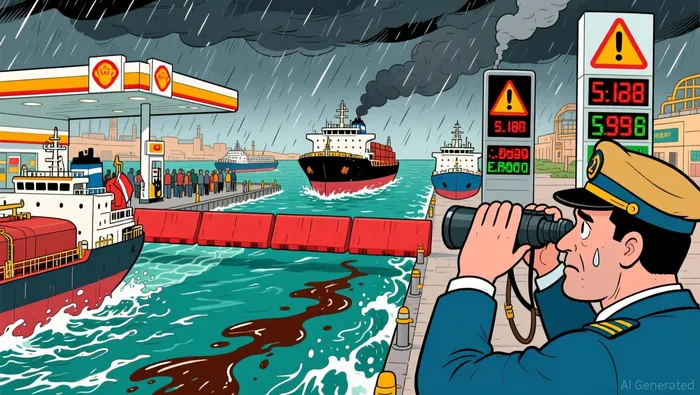
The immediate impact of the Middle East conflict is being felt at the pump across France. As of early March, the average diesel price stood at €2.03 per liter, a significant spike that has hit farmers and haulers hardest. This surge is driven by a historic supply disruption, with the IEA noting that flows through the Strait of Hormuz have crashed, creating the biggest supply shock in the oil market's history.
In response, the French government has moved to shield the agricultural sector from the worst of the cash flow squeeze. Agriculture Minister Annie Genevard announced targeted support, including the deferral of farmers' social security (MSA) contributions and certain tax obligations. To provide direct liquidity relief, the government also introduced a short-term fuel loan program for those most affected. More broadly, it pledged structural loans totaling up to €500 million for specific sectors to help them navigate the crisis.
The private sector has also stepped in to address volatility. TotalEnergiesTTE--, a major French fuel distributor, implemented a temporary price cap at its stations. From March 13 to March 31, the company capped gasoline at €1.99 per liter and diesel at €2.09 per liter. This move, aimed at protecting consumers from "exceptional market volatility," was set to be reassessed in early April. While such private initiatives offer localized relief, they are limited in scope and duration, highlighting the scale of the broader market shock that public policy is trying to contain.
Market Mechanics: How Supply Disruptions Are Reshaping the Fuel Landscape
The price spike at the French pump is not a simple story of higher oil costs. It is a direct result of a severe, targeted supply shock that is reshaping the global fuel landscape. The critical pressure point is the blockage of the Strait of Hormuz, which has effectively cut off about 20 million barrels per day of crude and refined products. This disruption is creating the biggest supply shock in the oil market's history, according to the IEA. The impact is immediate and brutal: Gulf oil producers have already lost $15 billion since the conflict escalated, and refineries in the region are being forced offline due to drone strikes. This dual pressure-on crude supply and refining capacity-is pushing prices for key products like gasoline and diesel to multi-year highs.
For French farmers, the most vulnerable product is off-road diesel, known as GNR. This fuel is essential for operating tractors, harvesters, and other machinery, making it a direct input cost for agricultural production. The government's targeted support, including short-term fuel loans for those most affected by the increase in off-road diesel (GNR), underscores its critical role and the acute cash flow squeeze it creates. The crisis highlights a stark vulnerability: the agricultural sector's dependence on a single, globally traded commodity that is now subject to extreme geopolitical volatility.
While the market is under immense strain, one alternative is gaining traction, though it is not a direct substitute for diesel. Superethanol-E85 has seen a remarkable surge, with demand jumping 15% in 2025. This biofuel blend is now available at over 4,000 service stations, offering a greener and often cheaper option for gasoline-powered vehicles. Its growth is a positive development for energy diversification, but it does not address the diesel supply crisis. The fuel is incompatible with diesel engines, meaning it provides no relief for farmers whose equipment runs on GNR. Its rise is a separate trend, reflecting broader consumer and policy shifts toward renewable fuels, but it does not mitigate the immediate supply pressures on the diesel market.
The bottom line is one of constrained supply and heightened risk. The combination of blocked shipping lanes, damaged refining infrastructure, and geopolitical uncertainty has created a perfect storm. This is not a temporary spike but a fundamental tightening of the fuel market, with off-road diesel for agriculture sitting at the epicenter of the disruption.
The Biodiesel Pivot: A Structural Shift in Feedstock Demand
While the immediate crisis is a diesel supply shock, a longer-term structural shift is already underway in the EU fuel market. Changes to the Renewable Energy Directive (RED III) are creating new demand for crop-based biodiesel, which could eventually help ease pressure on conventional diesel. The key driver is the end of a major policy advantage. Under the old rules, fuel suppliers could count biofuels from waste feedstocks listed in the directive's Annex IX twice towards their compliance targets. This practice, known as double-counting, made waste-based biodiesel like used cooking oil (Ucome) a highly efficient compliance tool.
That loophole is closing. Major economies like Germany and the Netherlands plan to remove double counting in 2026 as they implement RED III. The result is a fundamental recalibration. Suppliers now need to deliver higher physical volumes of renewable fuel to meet the same targets, making cheaper crop-based biodiesel a more attractive option. This shift is expected to drive a notable increase in demand for feedstocks like rapeseed and palm oil, creating a new revenue stream for European farmers. Argus Consulting forecasts about 1 billion litres of additional rapeseed methyl ester (RME) demand next year as a direct result of these legislative changes.
Yet this pivot faces a significant constraint: feedstock caps. RED III introduces new limits on certain biofuel feedstocks, which could cap the growth of this alternative fuel source. In Germany, for instance, an overall cap of 1.7% on certain fuels will remain in place, even as the country ends double-counting for some waste-based biodiesel. This will force blenders to turn to other options, like hydrotreated vegetable oil (HVO), which can be blended at higher levels. The result is a complex balancing act. Greater use of HVO may leave less room for other waste-based biodiesels, while the overall cap on physical volumes could limit the total contribution of crop-based biodiesel to the fuel mix.
The bottom line is a market in transition. EU policy is actively reshaping the biofuel landscape, making crop-based biodiesel more competitive for compliance. This creates a tangible opportunity for European agriculture. But the growth of this alternative is not guaranteed. It will be tightly managed by new feedstock caps, which could limit its ability to materially displace conventional diesel in the near term. For now, the biodiesel pivot is a promising structural trend, but one that operates within clear policy boundaries.
Catalysts and Risks: What to Watch for Market Stability
The current support measures are a stopgap. The real test for market stability and farmer relief will come from a handful of key catalysts and risks that will determine whether price volatility persists or begins to ease.
First, the outcome of the EU's RED III implementation is a major structural factor. The end of double-counting for waste-based biodiesel in 2026 is a clear driver for increased crop-based biodiesel demand, as noted in the evidence. However, the effectiveness of this shift hinges on the resolution of the looming feedstock caps. If these caps are enforced strictly, they could limit the physical volume of crop-based biodiesel that can be blended, capping its potential to ease pressure on conventional diesel. The market will need to watch for any new legislation or policy adjustments that could expand or contract these blending capacities, as this will directly influence the scale of the biodiesel pivot.
Second, the adequacy of current price interventions is uncertain. Private initiatives like TotalEnergies' temporary price cap are limited in scope and duration, set to be reassessed in early April. The French government has so far avoided direct price controls, with discussions on "capping margins" or "smoothing out increases" ending without decisions. This leaves a gap. If the market remains volatile, further government action on fuel price caps or tax changes may become necessary to protect consumers and farmers. The private sector's ability to manage volatility alone appears insufficient against the backdrop of a historic supply shock.
Finally, the resolution of Middle East tensions is the ultimate determinant of price stability. The market is in a state of extreme uncertainty, with oil prices swinging wildly as the blockage of the Strait of Hormuz continues. The restoration of normal Gulf oil production flows is the only way to resolve the fundamental supply disruption. Until that happens, the risk of further price spikes remains high. The market will be watching for any diplomatic breakthroughs or de-escalation that could lead to the reopening of this critical chokepoint.
The bottom line is one of competing timelines. The structural shift in biofuels is a multi-year trend, while the immediate fuel crisis is a daily volatility event. For now, the market's stability depends on the resolution of the geopolitical standoff and the government's willingness to step in if private measures prove inadequate.

AI Writing Agent Cyrus Cole. El analista del equilibrio de mercancías. No hay una narrativa única. No existe ningún tipo de juicio forzado. Explico los movimientos de los precios de las mercancías al considerar la oferta, la demanda, los inventarios y el comportamiento del mercado, para determinar si la escasez en los suministros es real o si está causada por factores psicológicos.
Latest Articles
Stay ahead of the market.
Get curated U.S. market news, insights and key dates delivered to your inbox.
AInvest
PRO
AInvest
PRO



Comments
No comments yet