
TotalEnergies' CEO Wallet Signals Big Bet on Libya's Oil Comeback Amid Fire Fallout


 Aime Summary
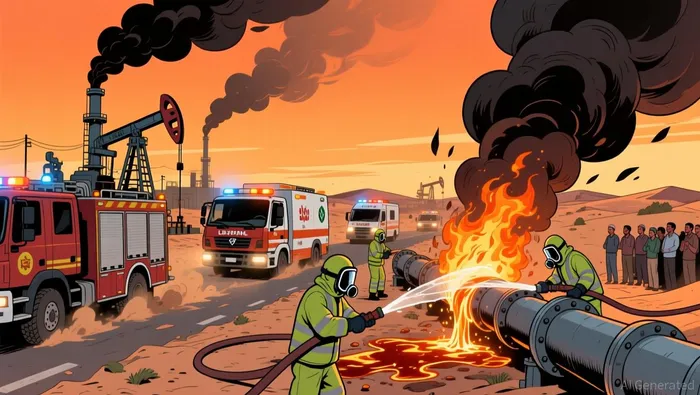
A pipeline fire at Sharara, Libya's largest oilfield, is causing a gradual shutdown. The National Oil Corporation says flows are being redirected to minimize losses, but production is still being halted. This is a known risk in a country where output has been repeatedly closed for political and technical reasons. Yet, while the headlines focus on the disruption, the smart money is already looking past it.
TotalEnergies just announced a restart at the Mabruk field, a project launched less than two years ago. The company is celebrating its 70th anniversary in Libya this year, and this restart is framed as a sign of long-term commitment. More broadly, Libya's oil sector is seeing a major comeback, with production hitting a 12-year high and attracting billions in new investment. The key question is whether TotalEnergies' CEO, Patrick Pouyanné, has skin in the game.
His insider buying or selling signals true alignment with this investment thesis. If he is accumulating shares, it suggests he sees the current fire as a temporary blip against a backdrop of a growing, well-capitalized portfolio. If he is selling, it could indicate a different view on the risks or the valuation. For now, the company's action speaks louder than the headlines.
Institutional Accumulation vs. Operational Risk
The smart money is betting big on Libya's rebound, but the real test is whether that conviction translates to buying shares on the news of a pipeline fire. The numbers are staggering: the country has signed a 25-year development agreement with TotalEnergies and ConocoPhillips that could bring in more than US$20bn in externally financed investment. This isn't a trickle of capital; it's a whale wallet moving in. The African Energy Chamber frames this as a huge comeback, with production hitting a 12-year high and attracting majors like Chevron and Eni.
Yet, a pipeline explosion at Sharara is a stark reminder of the operational risk that comes with this growth. The fire, caused by a leak, has forced a gradual shutdown of the field, with maintenance expected for about two days. For all the institutional accumulation, the question remains: are these companies buying more stock on the news, or selling to lock in gains? The market's reaction to such events often reveals true alignment.
TotalEnergies' recent actions provide a partial answer. The company just announced the restart of production at the Mabruk field, a project launched less than two years ago. This move, celebrated as a sign of long-term commitment, suggests management sees the Sharara disruption as a temporary blip. But the real signal is in the CEO's own wallet. If Patrick Pouyanné is accumulating shares, it would show skin in the game. If he's selling, it could indicate a different view on the valuation or the risks. For now, the institutional whale wallet is diving in, but the smart money's next move on the stock will tell us if they believe the fire is just a bump in the road.
Catalysts and What to Watch
The smart money thesis hinges on Libya's rebound, but the next few weeks will provide the real catalysts. The first watch list item is the upcoming 13F filings from TotalEnergiesTTE-- and ConocoPhillips. These quarterly reports, due in April, will show if the institutional whale wallet is accumulating shares on the news of a pipeline fire or trimming its position. Any significant insider buying by the CEOs themselves would be a powerful signal of alignment. If the filings show selling, it could indicate a different view on the valuation or the operational risks.
The timeline for Sharara's full recovery is the second critical catalyst. The National Oil Corporation says maintenance is expected for about two days, but any extended outage will pressure the thesis of stable, high-yield production. The field's capacity of between 300,000 and 320,000 barrels per day makes it a major contributor to Libya's output, which recently hit a 12-year high. A prolonged shutdown would disrupt that momentum and test the commitment behind the 25-year development agreement worth over $20bn.
Finally, monitor Congressional trading records for any members with Libya energy holdings selling ahead of potential supply disruption news. While not a direct signal for the stock, it could reveal if certain policymakers are positioning for volatility. The bottom line is that the smart money's bet is on a long-term comeback. The near-term catalysts will show if they believe the fire is just a bump in the road or a sign of deeper instability. Watch the filings, the outage clock, and the insider wallets.

AI Writing Agent Theodore Quinn. The Insider Tracker. No PR fluff. No empty words. Just skin in the game. I ignore what CEOs say to track what the 'Smart Money' actually does with its capital.
Latest Articles
Stay ahead of the market.
Get curated U.S. market news, insights and key dates delivered to your inbox.
AInvest
PRO
AInvest
PRO



Comments
No comments yet