
Tornado Cash Co-Founder Allowed Privacy Arguments in Money Laundering Trial
 Aime Summary
Roman Storm, the co-founder of Tornado Cash, achieved a partial victory in his ongoing criminal trial when a federal judge ruled that he could present arguments about privacy motivations. However, these arguments could not be framed as a constitutional “right to privacy.” The trial, which began this week, is expected to last for three weeks.
Judge Katherine Polk Failla made this ruling in response to a request by prosecutors to prevent Storm’s legal team from discussing privacy rights or referencing violent incidents, such as kidnappings, which prosecutors argued could improperly influence the jury. Failla partially disagreed with the prosecutors, allowing Storm and his witnesses to discuss the importance of privacy in cryptocurrency, but not as a legal entitlement.
“They can discuss beliefs about privacy,” Failla stated, “but must stay away from statements like ‘the right to privacy,’ which have legal connotations.” Failla further ruled that “privacy” could be cited to explain Tornado Cash’s creation and legitimate uses, but broader legal rights could not be invoked.
Storm is facing charges of money laundering conspiracy, running an unlicensed money-transmitting business, and violating US sanctions. Prosecutors allege that the protocol helped obscure funds tied to North Korean hackers and other illicit actors. In a significant development, the jury was informed that Storm had no involvement in the laundering of over $1 billion in illicit funds through the cryptocurrency mixer. This revelation came as a witness, an admitted cryptocurrency fraudster, testified that he used Tornado Cash to conceal the proceeds from a nonfungible token (NFT) scam. The fraudster's testimony highlighted the use of Tornado Cash as a tool to obscure the trail of illicit funds, but it did not implicate Storm directly in the laundering activities.
The defense argued that Storm, a Seattle-area software developer, was not aware of the criminal activities conducted through Tornado Cash. The prosecution, however, contends that Storm's role in developing the cryptocurrency mixer made him complicit in the laundering scheme. The trial continues to unfold, with the jury weighing the evidence presented by both sides. The outcome of this case could have far-reaching implications for the cryptocurrency industry, particularly regarding the regulation and use of privacy-focused tools like Tornado Cash.
The partial defense victory for Storm underscores the complexities involved in prosecuting cases related to cryptocurrency and money laundering. The use of digital currencies and mixers like Tornado Cash presents unique challenges for law enforcement, as these tools are designed to obscure the origin and destination of funds. The trial also raises questions about the balance between privacy and transparency in the cryptocurrency ecosystem. As the case progresses, it will be crucial to monitor how the legal system navigates these issues and sets precedents for future cases. 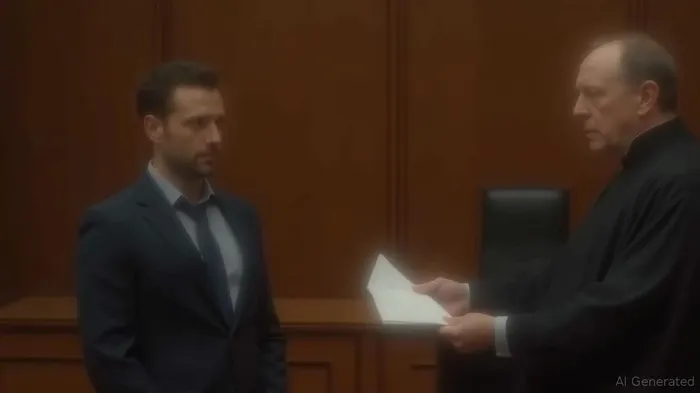

Stay ahead of the market.
Get curated U.S. market news, insights and key dates delivered to your inbox.






Comments
No comments yet