
Tornado Cash Defendant's T-Shirt Sparks Legal Clash Over Criminal Intent vs. Satire in Crypto Liability Case
 Aime Summary
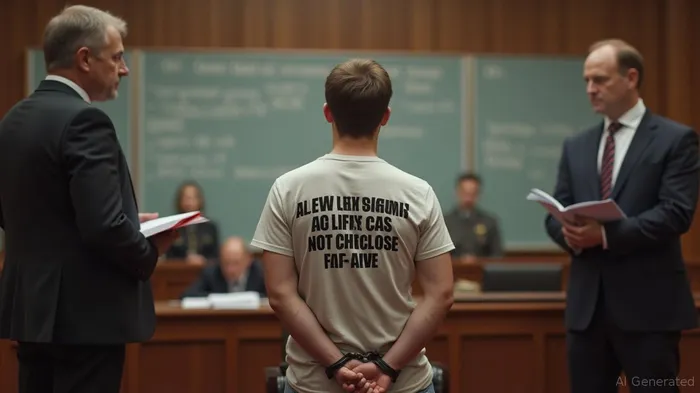
The Tornado Cash trial, centered on Roman Storm’s alleged role in developing a cryptocurrency mixing service, has taken an unconventional turn with the spotlight on a 2019 T-shirt bearing the phrase “I keep my Ether clean with Tornado.cash.” The garment, featuring a cartoon washing machine, became a flashpoint during opening statements in the U.S. District Court for the Southern District of New York. Prosecutors framed the shirt as evidence of Storm’s awareness of Tornado Cash’s role in laundering illicit funds, while his defense team dismissed it as “a meme, a joke in poor taste” [1].
Assistant U.S. Attorney Kevin Mosley emphasized the shirt’s symbolism, stating, “The defendant was profiting from a giant washing machine for dirty money,” and argued that Storm’s continued use of the platform after learning of its criminal exploitation demonstrated criminal intent [1]. Conversely, Storm’s legal representatives highlighted the cultural context, suggesting the shirt was a satirical nod to the protocol’s controversial reputation rather than an endorsement of financial crime. The defense revisited the T-shirt during a motion to exclude evidence related to hackers using Tornado Cash, reinforcing its argument that the platform’s association with criminal activity was not inherent to its design [1].
The case, which charges Storm with money laundering, conspiracy to operate an unlicensed money transmitter, and sanctions violations, has drawn attention to the legal challenges of prosecuting developers of decentralized technologies. Prosecutors cited Tornado Cash’s use in ransomware schemes and sanctions-busting to argue that the protocol facilitated illicit transactions. Storm’s team, however, likened the situation to blaming software developers for crimes committed by end-users, a comparison echoed by the Golem Foundation, which funded part of his defense. “This case really is like blaming the developers of banking apps for financial scams,” a spokesperson said [1].
The courtroom debate extends beyond the T-shirt, reflecting broader tensions between cryptocurrency innovation and regulatory frameworks. Tornado Cash, designed to obscure blockchain transaction trails, has been both praised for enhancing privacy and criticized for enabling anonymity-driven crimes. Storm’s decision not to testify, combined with the defense’s focus on cultural and technical context, underscores the difficulty of applying traditional legal standards to decentralized systems. Legal analysts note that the trial could set a precedent for how courts assess liability in cases involving open-source software, particularly when misuse is not directly attributable to the developers [1].
As the trial progresses, the T-shirt controversy highlights the intersection of humor, digital culture, and legal argumentation. While prosecutors aim to present it as a symbol of Storm’s criminal intent, the defense seeks to reframe it as a reflection of the protocol’s ambiguous public perception. The outcome may influence future litigation in the crypto space, where courts grapple with balancing innovation against the risks of financial misconduct.
Sources:
[1] Cointelegraph, [https://cointelegraph.com/news/tornado-cash-roman-storm-shirt-court](https://cointelegraph.com/news/tornado-cash-roman-storm-shirt-court)
[2] TradingView, [https://www.tradingview.com/news/cointelegraph:63b0fd28c094b:0-a-joke-in-poor-taste-tornado-cash-t-shirt-stirs-controversy-in-court/](https://www.tradingview.com/news/cointelegraph:63b0fd28c094b:0-a-joke-in-poor-taste-tornado-cash-t-shirt-stirs-controversy-in-court/)

Stay ahead of the market.
Get curated U.S. market news, insights and key dates delivered to your inbox.


AInvest
PRO
AInvest
PRO



Comments
No comments yet