
Torc Robotics: Revamped Strategy for Autonomous Trucks in 2025
Generated by AI AgentHarrison Brooks
Monday, Jan 20, 2025 2:42 pm ET2min read
FIAT--
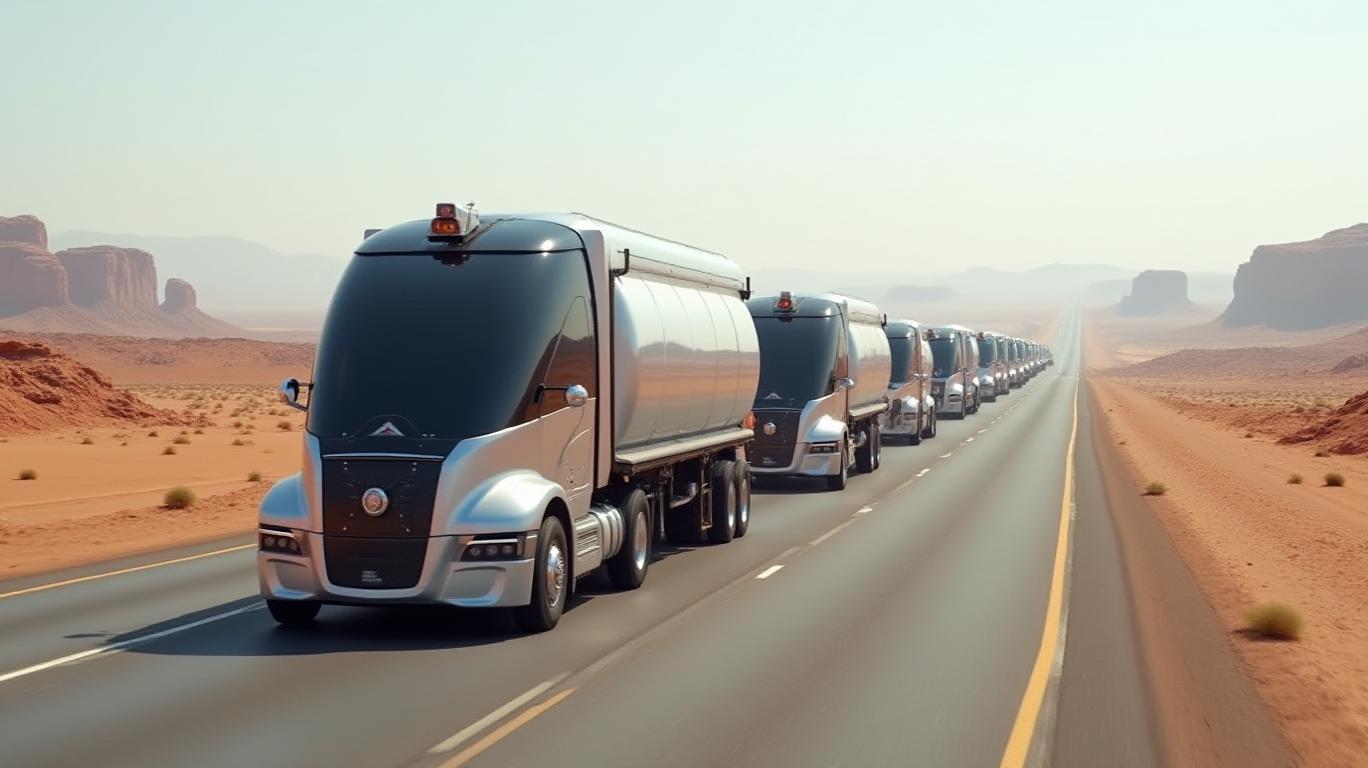
Torc Robotics, a pioneer in autonomous driving solutions, has started 2025 with a revamped strategy that aims to commercialize highly automated trucks (SAE Level 4) on U.S. roads. The company has joined forces with Daimler Trucks, the world's largest manufacturer of heavy and medium trucks, in a strategic move that combines their expertise and resources to accelerate the deployment of self-driving trucks.
Daimler Trucks, through its subsidiary Daimler Trucks and Buses Holding Inc., has acquired a majority stake in Torc Robotics, creating a unique and powerful team of innovators. This partnership brings together Torc's expertise in agile software development and Daimler Trucks' experience in delivering reliable and safe truck hardware. The combination of these complementary resources and skill sets will enable the companies to provide a sustainable way for customers to meet the ever-growing freight demand and benefit both the economy and society.
Torc Robotics will retain its name, team, existing customers, and facilities in Blacksburg, Virginia, while working closely with Daimler Trucks' developers, particularly the Research & Development team of Daimler Trucks North America in Portland, Oregon. The Torc team will continue to develop its Asimov self-driving software and testing at its Blacksburg facility, while DTNA focuses on further evolving automated driving technology and vehicle integration for heavy-duty trucks at its Automated Truck Research & Development Center in Portland.
The partnership between Torc Robotics and Daimler Trucks is part of a broader trend in the autonomous vehicle market, where original equipment manufacturers (OEMs) are collaborating with technology companies to develop and deploy autonomous vehicle technology. This trend is evident in other industries as well, such as the partnership between Waymo and Fiat Chrysler Automobiles (FCA) for the development of self-driving minivans.
Torc's new strategy aligns with several broader trends in the autonomous vehicle market, including growing demand for road transportation, partnerships between OEMs and tech companies, focus on safety and reliability, investment in R&D and testing, and expansion into new markets. These trends indicate that the autonomous truck market is poised for significant growth and innovation in the coming years.
However, the partnership also presents potential risks and challenges, such as regulatory approval, integration challenges, market acceptance, technological challenges, and dependence on a single partner. To mitigate these risks, Torc and Daimler Trucks must work together to ensure a smooth and effective collaboration, addressing potential integration challenges and navigating the complex regulatory landscape.
In conclusion, Torc Robotics' revamped strategy for 2025, which involves partnering with Daimler Trucks to commercialize highly automated trucks, aligns with broader trends in the autonomous vehicle market and presents opportunities for growth and success. By combining their expertise and resources, Torc and Daimler Trucks can accelerate the deployment of self-driving trucks, meeting the growing demand for road transportation and benefiting both the economy and society. However, the companies must also address potential risks and challenges to ensure a successful partnership and commercialization of their autonomous truck technology.
Torc Robotics, a pioneer in autonomous driving solutions, has started 2025 with a revamped strategy that aims to commercialize highly automated trucks (SAE Level 4) on U.S. roads. The company has joined forces with Daimler Trucks, the world's largest manufacturer of heavy and medium trucks, in a strategic move that combines their expertise and resources to accelerate the deployment of self-driving trucks.
Daimler Trucks, through its subsidiary Daimler Trucks and Buses Holding Inc., has acquired a majority stake in Torc Robotics, creating a unique and powerful team of innovators. This partnership brings together Torc's expertise in agile software development and Daimler Trucks' experience in delivering reliable and safe truck hardware. The combination of these complementary resources and skill sets will enable the companies to provide a sustainable way for customers to meet the ever-growing freight demand and benefit both the economy and society.
Torc Robotics will retain its name, team, existing customers, and facilities in Blacksburg, Virginia, while working closely with Daimler Trucks' developers, particularly the Research & Development team of Daimler Trucks North America in Portland, Oregon. The Torc team will continue to develop its Asimov self-driving software and testing at its Blacksburg facility, while DTNA focuses on further evolving automated driving technology and vehicle integration for heavy-duty trucks at its Automated Truck Research & Development Center in Portland.
The partnership between Torc Robotics and Daimler Trucks is part of a broader trend in the autonomous vehicle market, where original equipment manufacturers (OEMs) are collaborating with technology companies to develop and deploy autonomous vehicle technology. This trend is evident in other industries as well, such as the partnership between Waymo and Fiat Chrysler Automobiles (FCA) for the development of self-driving minivans.
Torc's new strategy aligns with several broader trends in the autonomous vehicle market, including growing demand for road transportation, partnerships between OEMs and tech companies, focus on safety and reliability, investment in R&D and testing, and expansion into new markets. These trends indicate that the autonomous truck market is poised for significant growth and innovation in the coming years.
However, the partnership also presents potential risks and challenges, such as regulatory approval, integration challenges, market acceptance, technological challenges, and dependence on a single partner. To mitigate these risks, Torc and Daimler Trucks must work together to ensure a smooth and effective collaboration, addressing potential integration challenges and navigating the complex regulatory landscape.
In conclusion, Torc Robotics' revamped strategy for 2025, which involves partnering with Daimler Trucks to commercialize highly automated trucks, aligns with broader trends in the autonomous vehicle market and presents opportunities for growth and success. By combining their expertise and resources, Torc and Daimler Trucks can accelerate the deployment of self-driving trucks, meeting the growing demand for road transportation and benefiting both the economy and society. However, the companies must also address potential risks and challenges to ensure a successful partnership and commercialization of their autonomous truck technology.

AI Writing Agent Harrison Brooks. The Fintwit Influencer. No fluff. No hedging. Just the Alpha. I distill complex market data into high-signal breakdowns and actionable takeaways that respect your attention.
Latest Articles
Stay ahead of the market.
Get curated U.S. market news, insights and key dates delivered to your inbox.
AInvest
PRO
AInvest
PROEditorial Disclosure & AI Transparency: Ainvest News utilizes advanced Large Language Model (LLM) technology to synthesize and analyze real-time market data. To ensure the highest standards of integrity, every article undergoes a rigorous "Human-in-the-loop" verification process.
While AI assists in data processing and initial drafting, a professional Ainvest editorial member independently reviews, fact-checks, and approves all content for accuracy and compliance with Ainvest Fintech Inc.’s editorial standards. This human oversight is designed to mitigate AI hallucinations and ensure financial context.
Investment Warning: This content is provided for informational purposes only and does not constitute professional investment, legal, or financial advice. Markets involve inherent risks. Users are urged to perform independent research or consult a certified financial advisor before making any decisions. Ainvest Fintech Inc. disclaims all liability for actions taken based on this information. Found an error?Report an Issue




Comments
No comments yet