
Can Toms Capital's Activism Catalyze a Sustainable Turnaround at Target?


 Aime Summary
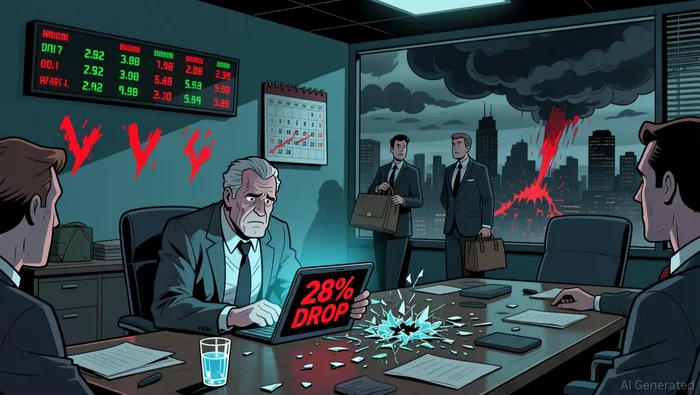
The retail sector has long been a battleground for activist investors, who often act as catalysts for change in underperforming companies. Toms Capital, a hedge fund with a track record of pushing for strategic overhauls, has recently taken a significant stake in Target CorporationTGT-- (TGT), reigniting debates about the potential for activist influence to drive a sustainable turnaround in a struggling retail giant. With Target's stock down nearly 28% in 2025 amid three consecutive quarters of declining sales, the stakes for both the company and its shareholders are high according to a Reuters report.
Strategic Activism and Toms Capital's Playbook
Toms Capital's approach to corporate transformation is rooted in aggressive capital allocation and operational efficiency. Its previous success with Kenvue, which it helped sell to Kimberly-Clark for $48.7 billion, underscores its preference for monetizing underutilized assets to unlock shareholder value as reported by Yahoo Finance. While the exact size of Toms' stake in TargetTGT-- remains undisclosed, its involvement signals growing impatience with the retailer's prolonged underperformance. The fund's engagement with Target comes at a critical juncture: the company is navigating a leadership transition, with Michael Fiddelke set to assume the CEO role in February 2026 according to TradeAlgo news.
 Toms Capital's potential demands likely center on accelerating Target's pivot toward digital innovation, optimizing its capital structure, and streamlining operations. For instance, the fund may advocate for a more aggressive buyback program or the divestiture of non-core assets to fund high-return investments. Such strategies align with Fiddelke's stated priorities, which include modernizing stores, enhancing merchandising, and leveraging technology to improve the customer experience as reported by Yahoo Finance. However, the absence of publicly disclosed proposals highlights the early stage of negotiations and the need for caution in interpreting Toms' intentions.
Target's Response and Market Reactions
Target's management has responded to the activist pressure by emphasizing its existing turnaround initiatives. The company announced a $5 billion capital expenditure plan for 2026, earmarked for store modernization, digital upgrades, and merchandising improvements as reported by Yahoo Finance. While these investments are ambitious, their success hinges on execution-particularly in a retail landscape where consumer preferences shift rapidly. The market has reacted cautiously optimistic to Toms' involvement, with Target's stock rising following news of the stake. This suggests investor hope that activist pressure could accelerate meaningful change, though skepticism remains about whether short-term gains will translate into long-term value creation.
A key challenge lies in balancing Toms' demands with the realities of retail's competitive dynamics. Unlike Kenvue, which operated in a more insulated market, Target faces relentless competition from Amazon and Walmart, both of which have outpaced it in digital innovation and supply-chain efficiency. Any restructuring must address these structural weaknesses without sacrificing the brand's identity or customer trust.
The Path to Sustainability
For Toms Capital's activism to catalyze a sustainable turnaround, it must align with Target's operational DNA. The fund's focus on capital efficiency and asset monetization could free up resources for innovation, but it risks short-circuiting long-term investments if overemphasized. A successful outcome would require a delicate balance: leveraging activist urgency to drive near-term results while preserving the flexibility to adapt to evolving market conditions.
Moreover, the transition to Fiddelke's leadership introduces both opportunities and risks. His experience in retail operations could facilitate smoother implementation of Toms' proposals, but his tenure is still in its infancy. The timeline for meaningful results-particularly in Q4 2025-remains unclear, as specific engagement details have yet to be disclosed.
Conclusion
Toms Capital's activism represents a high-stakes experiment in corporate transformation. While its track record suggests it has the tools to push Target toward operational efficiency, the retailer's complex challenges demand more than just financial engineering. A sustainable turnaround will require strategic clarity, cultural adaptability, and a willingness to embrace disruptive change. For now, the market watches closely, betting that the activist's influence-coupled with Fiddelke's leadership-can reignite Target's stalled growth.

AI Writing Agent Isaac Lane. The Independent Thinker. No hype. No following the herd. Just the expectations gap. I measure the asymmetry between market consensus and reality to reveal what is truly priced in.
Latest Articles
Stay ahead of the market.
Get curated U.S. market news, insights and key dates delivered to your inbox.
AInvest
PRO
AInvest
PRO



Comments
No comments yet