
Tomato Tariffs: A Sizzling Opportunity in Agribusiness Stocks Amid Supply Chain Volatility
The expiration of the Tomato Suspension Agreement (TSA) on July 14, 2025, marks a pivotal moment for U.S. grocery shelves and agribusiness equities. The abrupt imposition of a 21% antidumping duty on Mexican tomato imports—a staple representing 61% of the U.S. market—will ripple through supply chains, inflate produce costs, and reshape competitive dynamics. For investors, this is more than a trade policy shift; it's a catalyst for short-term volatility in retail stocks and a long-term growth lever for domestic agricultural producers and equipment suppliers.
The Squeeze on Supermarkets: Margins Under Fire
The 7% price surge projected for fresh tomatoes—equivalent to an 8-cent-per-pound jump—will test the resilience of grocers and big-box retailers. Companies like Kroger (KR) and Target (TGT), which rely on low-cost Mexican imports to meet consumer demand, face a double whammy: higher input costs and potential consumer backlash if prices are passed along.
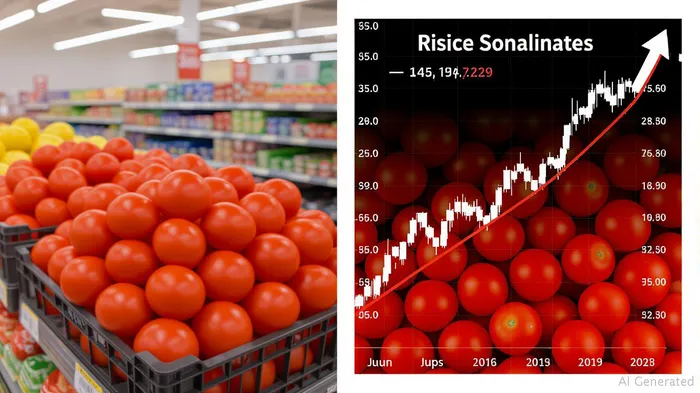
Analysts warn that retailers may absorb some costs to avoid alienating shoppers, compressing already thin margins. This scenario creates short-term risks for equity holders, particularly in sectors where tomatoes are a frequent impulse purchase. However, the pain could be temporary. Over time, diversified retailers with strong private-label strategies or vertical integration (e.g., Walmart) may weather the storm better than smaller chains.
The Golden Opportunity: Domestic Growers and Vertical Integration
While retailers grapple with headwinds, U.S. tomato growers stand to gain. The TSA's demise eliminates a key competitive advantage for Mexican producers, leveling the playing field for domestic farmers. Companies like NatureSweet (a portfolio company of Apollo Global Management, APO)—one of the largest U.S. greenhouse tomato growers—could see demand surge as supply shifts inland.
The tariff's 21% rate also creates an immediate revenue windfall for the U.S. Treasury, but its broader impact lies in reshaping production. To meet demand, domestic growers will need capital to expand greenhouses, improve irrigation, and adopt automation. This bodes well for equipment suppliers like Deere & Company (DE), whose tractors, harvesters, and precision agriculture tools are critical to scaling U.S. output.
The Inflation Wildcard: Will Higher Tomato Prices Spark Broader Grocery Inflation?
Produce is a price-sensitive category, and tomatoes are no exception. A 7% spike in fresh tomatoes could ripple into related goods: salsa, ketchup, and canned products. While the Department of Agriculture projects only modest overall food inflation in 2025, the tomato tariff's timing—amid ongoing labor shortages and climate-driven supply issues—adds fuel to the fire.
Investors should monitor broader inflation metrics to gauge how retailers and producers manage margin pressures. If tomato prices trigger a wider grocery inflation wave, it could accelerate consolidation in the food industry, favoring companies with pricing power and efficient supply chains.
The Geopolitical X-Factor: Can Mexico Negotiate an Exit?
Despite Commerce's firm stance, high-level Mexican officials are in Washington to renegotiate terms. A last-minute deal—such as a revised price floor or extended TSA—could delay or dilute the tariff's impact. However, the July 14 deadline is non-negotiable, and the International Trade Commission's final vote (October 21, 2025) will only confirm the tariff's validity.
Investors should treat any diplomatic progress as a temporary reprieve rather than a permanent solution. The underlying demand for affordable tomatoes remains, but the political calculus now leans toward protectionism.
The Investment Thesis: Ride the Turbulence, Bet on Resilience
Short-Term Plays:
- Avoid: Retailers like KRKR-- and TGTTGT-- until the ITC's final ruling in October clarifies the tariff's permanence.
- Hedge: Use options or inverse ETFs (e.g., XRSV) to mitigate grocery sector exposure.
Long-Term Plays:
- Buy: Agribusiness equities such as APO (for NatureSweet's growth) and DE (to capitalize on domestic farm investment).
- Monitor: Fresh produce distributors like Sysco (SYY), which could benefit from streamlined supply chains.
The TSA's expiration is a structural shift, not a temporary blip. Over time, the U.S. tomato industry will adapt, and companies that control vertical integration—from seed to shelf—will thrive. For investors willing to endure near-term turbulence, this is a rare chance to profit from a policy-driven supply chain realignment.
Final Take:
The tomato tariff is a microcosm of a broader trend: trade friction is reshaping global supply chains. In this context, U.S. agribusiness stocks—backed by domestic demand and government tariffs—are positioned to outperform. Stay cautious on retailers until clarity emerges, but start building stakes in the growers and equipment suppliers set to harvest this opportunity.
Data as of July 7, 2025. Past performance does not guarantee future results.

Stay ahead of the market.
Get curated U.S. market news, insights and key dates delivered to your inbox.
AInvest
PRO
AInvest
PRO



Comments
No comments yet