
The Tomato Price Surge: A Barometer for Climate-Driven Agricultural Volatility
 Aime Summary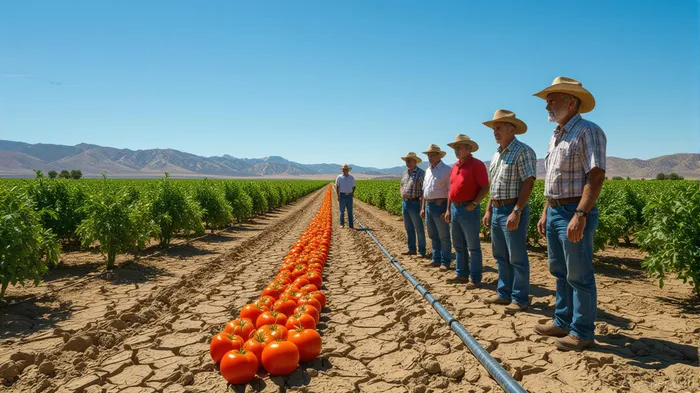
The global tomato market has become an unlikely barometer for the growing volatility of agricultural commodity prices, driven by climate-related disruptions. In 2025, prices for tomatoes—both fresh and processed—surged to record levels, with Italian plum tomatoes hitting €5.50/kg in November 2024 and Dutch greenhouse cherries reaching €3.50/kg, a 43% jump from their five-year average. These spikes were not random but the result of a perfect storm of climate shocks: droughts in California and Sicily, heatwaves in Egypt and India, and unseasonal rainfall across the EU. The crisis underscores a broader trend: climate risk is no longer a peripheral concern but a central factor reshaping global food supply chains and commodity investing.
Climate as a Catalyst for Agricultural Volatility
Tomatoes, a $60 billion global commodity, are uniquely sensitive to climate shifts. Droughts in key production regions like California (a 14% drop in processing tomato acreage) and China's Xinjiang (projected 42% decline in industrial output) have tightened supply. Meanwhile, heatwaves in India pushed prices to 400% of normal levels, while excessive spring rains in Spain and Portugal delayed planting by weeks. These disruptions are not isolated. Climate change has intensified the frequency and intensity of extreme weather, creating a new normal of unpredictability.
The ripple effects extend beyond farm gates. Rising energy and transport costs—linked to climate policies and geopolitical tensions—further inflate prices. For example, Dutch greenhouse operators, already grappling with heat stress, faced 30% higher energy bills to maintain optimal growing conditions. Similarly, Mexican Roma tomato exports to the U.S. faced delays due to hurricane-damaged infrastructure, compounding supply shortages.
Climate Risk as an Investment Signal
The tomato crisis aligns with a growing body of evidence that climate risk is a powerful predictor of agricultural commodity returns. A composite climate risk index (PC-CR), incorporating metrics like global warming, policy shifts, and natural disasters, has shown strong predictive power. For instance, a one-standard-error increase in PC-CR correlates with a 6–7% rise in annualized agri-commodity returns. This insight is reshaping investment strategies: investors are now willing to pay up to 295 basis points in annualized fees to access climate risk data, as it offers a unique edge over traditional economic indicators.
Investing in Climate-Resilient Agriculture
The tomato supply chain's fragility highlights the need for climate-resilient investments. Companies like Farmonaut, a leader in AI-driven crop monitoring and blockchain traceability, are gaining traction. By detecting blight and pest infestations before visible symptoms appear, Farmonaut helps farmers reduce yield losses—critical in an era where 80% of 2024 tomato yield declines were attributed to blight. Its blockchain platform also enhances supply chain transparency, a key differentiator in premium export markets.
Other strategies include:
- Precision Agriculture: Technologies like satellite-based irrigation and AI-driven nutrient management optimize resource use, reducing waste and boosting yields.
- Vertical Farming: Controlled-environment agriculture minimizes climate risks while enabling urban production, reducing food miles.
- Carbon Farming: Practices like regenerative agriculture and agroforestry sequester carbon, aligning with ESG criteria and opening revenue streams via carbon credits.
The global sustainable agriculture investment market is projected to exceed $30 billion by 2025, with precision agriculture growing at a 12.9% CAGR and vertical farming at 24.7%. Investors should prioritize companies that integrate climate risk analytics into their operations, such as those leveraging PC-CR data to hedge against supply shocks.
Policy and Market Adaptation
Governments are also playing a role. California's Healthy Soils Program, for example, funds carbon sequestration initiatives, while the EU's Farm to Fork Strategy promotes climate-smart practices. These policies create tailwinds for companies adopting sustainable technologies. However, emerging markets face challenges: in regions like Sub-Saharan Africa, lack of infrastructure leaves producers vulnerable to climate shocks, presenting both risks and opportunities for impact investors.
Conclusion: A Tomato-Sized Warning
The tomato price surge is more than a market anomaly—it is a harbinger of the broader volatility climate change will impose on agriculture. For investors, the lesson is clear: climate risk must be integrated into portfolio strategies. Allocating capital to climate-resilient technologies, supply chain innovations, and carbon-smart practices is no longer optional but essential. As the PC-CR index gains traction, those who ignore climate signals risk being left behind in a world where the only certainty is uncertainty.

Stay ahead of the market.
Get curated U.S. market news, insights and key dates delivered to your inbox.


AInvest
PRO
AInvest
PRO



Comments
No comments yet