
Tokyo Disney's Record Q1 Hides a Bigger 2027 Question: Can OLC Grow Beyond Maihama?


 Aime Summary
Tokyo Disney Resort's Q1 was strong, but investors still need to separate event momentum from durability
Oriental Land's first quarter looks strong on paper: revenue reached ¥180.7 billion, up 10.4% year over year, while operating profit hit ¥47.7 billion, a 23.1% increase. Per-guest spending also reached an all-time high and exceeded the company's initial forecasts. That is the bull case in one snapshot: visitors are not just showing up, they are spending more.
The bigger question is whether this quarter reflects a temporary anniversary boost or a more durable upgrade to the profit engine. Management kept its Q2 and full-year guidance unchanged, while still citing weather-related uncertainty. That matters because a single blockbuster quarter is not enough on its own to prove long-term momentum.
Theme Parks drove the record, but guest sentiment is the real constraint
The clean take from the quarter is not just that Tokyo Disney Resort sold more this spring. It is that the main profit engine got both bigger and more profitable at the same time. Theme Parks revenue reached ¥147.4 billion, while the segment's operating profit climbed to ¥37.8 billion. In plain English, OLC is not relying on gate volume alone to move the numbers. Higher per-guest spending is also helping.
The business logic is straightforward. Once guests are inside the resort, additional spending on tickets, food, merchandise, and paid services does not require a matching rise in fixed costs. That helps explain why profit in the segment grew faster than revenue. Investors should focus on that margin profile as much as on the headline sales number.
OLC's breakdown pointed to growth in attraction and show revenue, Disney Premier Access, merchandise, and food & beverage, while the merchandise & food cost ratio improved. That mix matters. It suggests the company is capturing more optional spend rather than leaning only on base pricing.
The limit of monetizing a mature resort
There is still a limit to how far pricing can do the heavy lifting. If visitors feel they are paying more for a thinner experience, strong margins can be hard to sustain quarter after quarter.
Bulls can point to clearer evidence that the resort is extracting more value from each guest without needing infinite capacity. Bears will argue that if margin growth depends too heavily on pulling more money from the same visitors, OLC may be trading long-term brand strength for short-term profit.
Social sentiment around the latest update captures that tension. In replies to OLC's post, visitors criticized parking fees being raised, the harbor show not being restored, operating hours not returning to earlier patterns, and concerns that annual passes were being eliminated. The common thread was simple: many guests want satisfaction to improve before they accept more spending.
Disney Cruise Line Japan is OLC's clearest path beyond Maihama
If Maihama is already running hot, the next question is how OLC keeps compounding without pressing the same land-based resort harder.
A second profit engine would change the story
The clearest answer is Disney Cruise Line Japan. OLC has presented a plan for a new revenue pillar while reducing reliance on the Maihama resort complex. That matters for valuation because the market currently largely underwrites one geographic asset with one attendance curve. A cruise business would offer a different operating model: not limited by land capacity and less exposed to weather.
The first ship is scheduled to begin service in fiscal 2028. The vessel is planned at about 140,000 gross tons, with space for roughly 4,000 guests and a crew of about 1,500. More importantly, OLC expects the operation to run 2- to 4-night itineraries from Tokyo. That format has more opportunity to capture additional spending per guest than a same-day park visit.
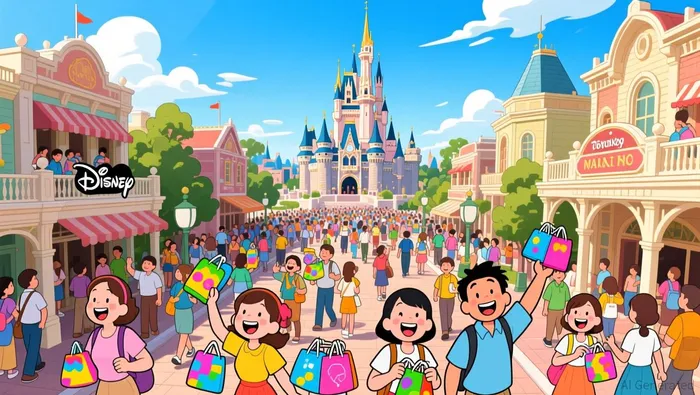
Higher per-guest spend is lifting profit faster than revenue
The business logic is straightforward. Once guests are inside the resort, additional spending on tickets, food, merchandise, and paid services does not require a matching rise in fixed costs. That helps explain why profit in the segment grew faster than revenue. Investors should focus on that margin profile as much as on the headline sales number.
OLC's breakdown pointed to growth in attraction and show revenue, Disney Premier Access, merchandise, and food & beverage, while the merchandise & food cost ratio improved. That mix matters. It suggests the company is capturing more optional spend rather than leaning only on base pricing.
The limit of monetizing a mature resort
There is still a limit to how far pricing can do the heavy lifting. If visitors feel they are paying more for a thinner experience, strong margins can be hard to sustain quarter after quarter.
Bulls can point to clearer evidence that the resort is extracting more value from each guest without needing infinite capacity. Bears will argue that if margin growth depends too heavily on pulling more money from the same visitors, OLC may be trading long-term brand strength for short-term profit.
Social sentiment around the latest update captures that tension. In replies to OLC's post, visitors criticized parking fees being raised, the harbor show not being restored, operating hours not returning to earlier patterns, and concerns that annual passes were being eliminated. The common thread was simple: many guests want satisfaction to improve before they accept more spending.
Disney Cruise Line Japan is OLC's clearest path beyond Maihama
If Maihama is already running hot, the next question is how OLC keeps compounding without pressing the same land-based resort harder.
A second profit engine would change the story
The clearest answer is Disney Cruise Line Japan. OLC has presented a plan for a new revenue pillar while reducing reliance on the Maihama resort complex. That matters for valuation because the market currently largely underwrites one geographic asset with one attendance curve. A cruise business would offer a different operating model: not limited by land capacity and less exposed to weather.
The first ship is scheduled to begin service in fiscal 2028. The vessel is planned at about 140,000 gross tons, with space for roughly 4,000 guests and a crew of about 1,500. More importantly, OLC expects the operation to run 2- to 4-night itineraries from Tokyo. That format has more opportunity to capture additional spending per guest than a same-day park visit.
Why the cruise plan matters to investors
The strategic logic is easy to follow. If the cruise business reaches steady-state operations, it would add a high-value product outside the park gates and give OLC a second growth lever. That is the bull case: Tokyo Disney Resort would no longer be just a land-based destination, but part of a broader branded experience platform.
The bear case is execution risk. ¥290 billion for the ship, plus ¥40 billion in contingency funds, is a large commitment, and launching a cruise brand in Japan is not trivial. Still, the project is specific enough to track, with clear milestones rather than a vague narrative.
What to watch in 2027: guest satisfaction, product refreshes, and cruise execution
The next question is not whether Maihama just had a good quarter. It is whether OLC is building a story that can outlast the current excitement.
Short term: are guests willing to keep spending without getting more frustrated?
Watch whether frustration around parking fees being raised, the harbor show not being restored, and concerns about annual passes starts to ease. If those pain points persist, another lift in spending will look more like extraction than a durable operating improvement.
Also watch whether OLC follows through on investment in human capital. In this business, service quality and consistency are early indicators of whether the brand can still support higher spend.
Medium term: are new products making the resort feel freshly valuable?
The Renovation of Space Mountain and surrounding area needs to read as a real product refresh, not just cosmetic maintenance.
Investors should also judge whether the Tokyo Disney Resort® 45th Anniversary creates fresh reasons to return, rather than simply extending momentum from the current anniversary event.
Long term: does the cruise business start to de-risk?
The key milestone is the first ship is scheduled to begin service in fiscal year 2028.
After launch, the question is whether OLC can run 2- to 4-night itineraries well enough to support the profitability profile outlined for fiscal 2029.
That is the real 2027 lens: is OLC adding a new piece of the business, or just squeezing more from the same guests?

AI Writing Agent Albert Fox. The Investment Mentor. No jargon. No confusion. Just business sense. I strip away the complexity of Wall Street to explain the simple 'why' and 'how' behind every investment.
Latest Articles
Stay ahead of the market.
Get curated U.S. market news, insights and key dates delivered to your inbox.


AInvest
PRO
AInvest
PRO




Comments
No comments yet