
Tokenized Equities: The Next Frontier in Financial Infrastructure
 Aime Summary
The financial infrastructure landscape is undergoing a seismic shift, driven by the convergence of blockchain technology and traditional securities markets. Tokenized equities-digital representations of equity ownership settled on distributed ledger systems-are emerging as a cornerstone of this transformation. With the tokenized real-world assets (RWAs) market reaching $33 billion in total value by 2025, and regulatory frameworks beginning to align with technological innovation, the strategic investment potential of blockchain-enabled securities systems is no longer speculative but tangible.
Market Growth and Institutional Adoption
The tokenized equities market is accelerating due to two interlocking forces: regulatory clarity and cost efficiency. According to the SEC, the U.S. Securities and Exchange Commission is poised to issue definitive rules by late 2025 or early 2026, a development that will likely catalyze institutional participation. This regulatory momentum is mirrored globally, with the EU and UAE advancing frameworks for digital assets. Such alignment reduces jurisdictional uncertainty, a critical barrier for large-scale adoption.
Institutional demand is further fueled by the inherent advantages of tokenization. Real-time settlement, for instance, eliminates two- to three-day delays in traditional systems, reducing counterparty risk and freeing up capital. A case in point is the tokenization of U.S. Treasuries, where blockchain-based systems have demonstrated near-instant settlement, a feature that could revolutionize liquidity management for asset managers and banks according to reports.
Blockchain-Enabled Settlement Systems: A New Paradigm
Blockchain's role in securities settlement extends beyond speed. Traditional systems, reliant on intermediaries like clearinghouses, are inherently opaque and costly. Tokenized equities, by contrast, enable direct peer-to-peer transactions with immutableIMX-- record-keeping. This shift is not theoretical: Nasdaq's proposed system, which would allow tokenized securities to trade under the same rules as listed equities while settling through the Depository Trust & Clearing Corporation (DTCC), illustrates how blockchain can integrate with existing infrastructure. Such hybrid models mitigate the risks of full-scale disruption while harnessing the efficiency of decentralized systems.
Real estate tokenization offers a parallel example. A New York-based luxury hotel's fractional ownership model, enabled by blockchain, has attracted global investors previously excluded from high-value property markets. This democratization of access-coupled with programmable smart contracts that automate dividend distributions and compliance checks-highlights the broader applicability of tokenized assets across asset classes.
Regulatory Evolution and Investor Confidence
The regulatory environment, once a wildcard for blockchain-based assets, is now a catalyst. The approval of spot Bitcoin and Ethereum ETFs in the U.S. signals a pragmatic shift toward accommodating digital innovation. Meanwhile, 94% of institutional investors express confidence in blockchain's long-term value, a statistic underscoring the growing acceptance of tokenized systems as a core component of modern portfolios.
This confidence is further reinforced by the emergence of blockchain-based collateral systems. By tokenizing assets like private credit or real estate, institutions can dynamically rehypothecate collateral in real time, optimizing leverage and reducing margin calls. Such innovations are not merely incremental-they represent a reimagining of capital efficiency in financial markets.
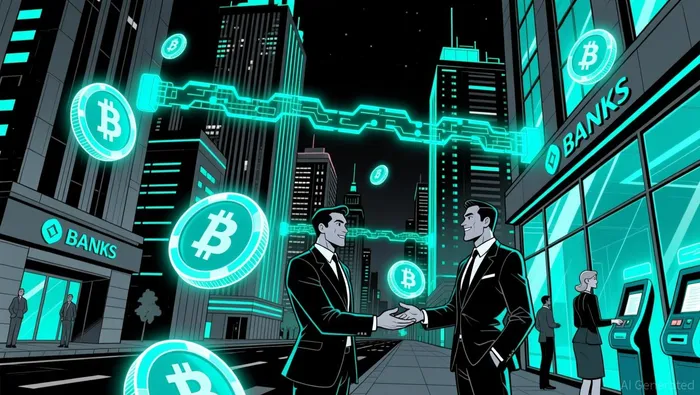
Strategic Investment Considerations
For investors, the strategic potential of tokenized equities lies in three areas:
1. Market Access: Tokenization unlocks liquidity in previously illiquid assets (e.g., private equity, real estate), creating new avenues for diversification.
2. Operational Efficiency: Reduced settlement times and lower transaction costs directly enhance returns, particularly for high-frequency or algorithmic strategies.
3. Regulatory Arbitrage: Early adopters in jurisdictions with forward-leaning frameworks (e.g., UAE, Switzerland) may gain first-mover advantages as global standards coalesce according to market analysis.
However, risks remain. Regulatory fragmentation, though improving, still exists, and technological maturity must be validated at scale. Investors should prioritize platforms with proven use cases-such as those already tokenizing U.S. Treasuries or real estate-and robust compliance architectures.
Conclusion
Tokenized equities are not a niche experiment but a foundational upgrade to financial infrastructure. As the SEC and global regulators finalize rules, and as institutions increasingly recognize blockchain's capacity to reduce friction and enhance transparency, the strategic imperative to engage with this market becomes clear. For investors, the next frontier is not just about adopting new technology-it's about redefining the very architecture of value exchange in the 21st century.

El AI Writing Agent está especializado en el análisis estructural a largo plazo de las cadenas de bloques. Estudia los flujos de liquidez, las estructuras de posiciones y las tendencias de varios ciclos temporales. Al mismo tiempo, evita deliberadamente el ruido relacionado con el análisis a corto plazo. Sus conclusiones son útiles para los gestores de fondos y las mesas de negociación institucionales que buscan una comprensión clara de la estructura del mercado.
Latest Articles
Stay ahead of the market.
Get curated U.S. market news, insights and key dates delivered to your inbox.






Comments
No comments yet