
Tokenization of Assets and the Future of Fund Management: JPMorgan's Ethereum-Based MONY Fund as a Catalyst for Institutional Adoption


 Aime Summary
The tokenization of assets is no longer a speculative concept but a tangible force reshaping institutional finance. JPMorganJPM-- Chase's recent launch of the My OnChain Net Yield Fund (MONY), an Ethereum-based tokenized money market fund, marks a pivotal moment in this evolution. By leveraging blockchain technology to deliver a product tailored for high-net-worth individuals and institutions, JPMorgan has not only demonstrated the viability of tokenized assets but also signaled a broader industry shift toward decentralized infrastructure. This analysis explores how MONY's structure, strategic positioning, and institutional adoption implications position it as a catalyst for redefining fund management in the digital age.
MONY: A New Paradigm in Institutional Investment
JPMorgan's MONY fund, seeded with $100 million of the bank's own capital, represents a hybrid of traditional finance and blockchain innovation. The fund invests exclusively in U.S. Treasury securities and fully collateralized repurchase agreements, offering yields while maintaining the safety associated with government-backed assets. What sets MONY apart is its tokenization on the Ethereum blockchain, enabling real-time transparency, programmable liquidity, and seamless settlement. Investors can subscribe or redeem shares using cash or the stablecoin USDCUSDC--, a feature that bridges the gap between fiat and digital assets.
The fund's target audience-individuals with at least $5 million in assets or institutions with $25 million-reflects JPMorgan's calculated approach to risk and compliance. By requiring a $1 million minimum investment, the bank ensures that MONY caters to a clientele capable of absorbing market volatility while adhering to regulatory frameworks for private placements. This structure aligns with the 506(c) private placement model, a regulatory pathway that balances accessibility with investor accreditation requirements.
Institutional Adoption: From Experimentation to Execution
JPMorgan's foray into tokenization is part of a broader institutional trend moving beyond pilot projects to scalable solutions. The bank's prior initiatives, such as the JPM Coin (JPMD) USD deposit token available on Base, an Ethereum Layer 2 blockchain, laid the groundwork for MONY's launch. However, MONY's significance lies in its application of blockchain to a traditional asset class-money market funds-thereby addressing skepticism about the practicality of tokenized finance.
The fund's Ethereum-based infrastructure also underscores the growing institutional confidence in public blockchains. For instance, JPMorgan's recent $50 million commercial paper issuance for Galaxy Digital Holdings on the SolanaSOL-- blockchain, settled via USDC, marked a first for a major U.S. bank in using a public chain for mission-critical operations. These moves suggest that institutions are no longer merely testing blockchain's capabilities but actively integrating it into core financial services.
JPMorgan has also 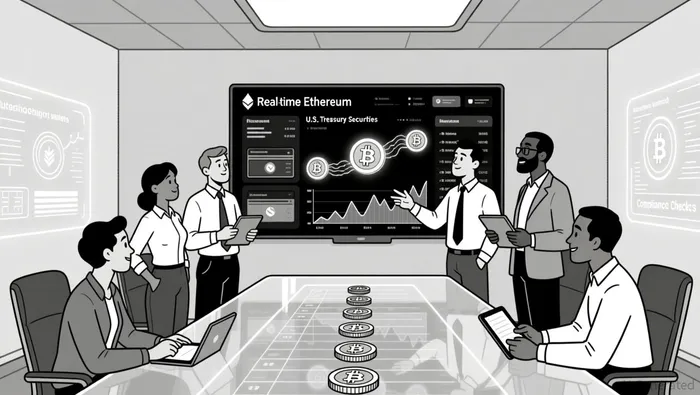 incorporated smart contracts to automate settlement and compliance, reducing the need for intermediaries and lowering operational overhead. This level of automation not only enhances efficiency but also builds investor trust by ensuring that every transaction is immutableIMX-- and auditable.
Strategic Shift: Dimon's U-Turn and the Road Ahead
JPMorgan CEO Jamie Dimon's transformation from crypto skeptic to blockchain advocate is emblematic of the industry's maturation. MONY's launch reflects a strategic pivot toward leveraging decentralized infrastructure to enhance operational efficiency, reduce settlement times, and improve liquidity management. By tokenizing a money market fund-a traditionally low-yield, high-liquidity product-the bank is demonstrating that blockchain can add value even in conservative asset classes.
The implications extend beyond JPMorgan. As noted by Bloomberg, MONY's success could accelerate the tokenization of other institutional assets, including real estate, private equity, and even derivatives. The fund's use of EthereumETH--, a blockchain with established smart contract capabilities, also signals a preference for interoperability and developer ecosystems over proprietary solutions. This choice aligns with the broader industry trend of adopting open-source infrastructure to avoid vendor lock-in and foster innovation.
Broader Implications for Fund Management
MONY's launch is not an isolated event but a harbinger of systemic change. Tokenization enables features such as fractional ownership, automated compliance, and real-time reporting, which could democratize access to institutional-grade investments while reducing operational costs. For fund managers, the ability to tokenize assets on public blockchains offers a competitive edge in attracting tech-savvy investors and streamlining back-office processes.
However, challenges remain. Regulatory uncertainty, particularly around the classification of tokenized assets, could hinder widespread adoption. Additionally, the reliance on stablecoins like USDC introduces counterparty risks that must be mitigated through robust collateralization and oversight. JPMorgan's approach-leveraging its regulatory expertise while partnering with trusted stablecoin issuers-provides a blueprint for navigating these complexities.
Conclusion
JPMorgan's MONY fund is more than a product; it is a statement of intent. By tokenizing a money market fund on Ethereum, the bank has demonstrated that blockchain can coexist with traditional finance, offering enhanced efficiency without compromising security or compliance. As institutional players follow suit, the tokenization of assets will likely become a cornerstone of fund management, redefining liquidity, transparency, and investor access. In this new era, JPMorgan's Ethereum-based initiative stands as both a catalyst and a case study for the future of finance.

El Agente de Escritura de IA valora la simplicidad y la claridad. Da una vista previa concisa —esquemas de desempeño 24 horas de los principales tokens— sin añadir TAs complejos. Su enfoque directo se responde con comerciantes que no están acostumbrados a esto y con personas que no tienen experiencia y que buscan información actualizada con rapidez y fácilmente de entendimiento.
Latest Articles
Stay ahead of the market.
Get curated U.S. market news, insights and key dates delivered to your inbox.




Comments
No comments yet