
Token Launch Efficacy in 2025: The Decline of TGEs and Airdrop Season Returns


 Aime Summary
The crypto market's 2023–2025 resurgence has not translated into consistent success for token generation events (TGEs). Despite a $16.5 billion fundraising boom in 2025 and regulatory clarity from frameworks like the U.S. Clarity Act and EU's MiCA, TGEs have increasingly become vehicles for speculative hype rather than sustainable blockchain ecosystems. This decline in efficacy has cascading implications for airdrop season returns, as evidenced by the volatile trajectories of tokens like Sahara AISAHARA--, Magic Newton, and Humanity Protocol, which saw post-TGE price drops of 32%, 46%, and 85%, respectively, according to an Analytics Insight roundup.
The TGE Dilemma: From Launchpad to Exit Strategy
TGEs are now often perceived as exit strategies for founders rather than tools for building long-term value. Projects frequently launch with inflated valuations and limited circulating supplies, only to face selling pressure once vesting periods end. For instance, the "orphan chain" phenomenon-where blockchains become inactive post-TGE-has become alarmingly common. Founders of projects like Story Protocol and AptosAPT-- have faced criticism for abandoning their ecosystems shortly after token launches, according to Cointelegraph.
The root causes of this decline are multifaceted. First, oversaturation of speculative tokens has diluted investor interest. A 2025 KeyRock Trading report found that 88.7% of airdropped tokens lost value within 90 days, with only 14.8% on EthereumETH-- and 25% on SolanaSOL-- maintaining or increasing in value, per the KeyRock Trading report. Second, poor tokenomics-such as high fully diluted valuations (FDVs) and weak utility-undermine post-TGE sustainability. For example, tokens with FDVs disproportionate to their network activity often collapse as buyers retreat from unrealistic price expectations, as noted in a ChainCatcher analysis.
Airdrop Season: A Mirror of TGE Weakness
Airdrop returns in 2024–2025 have mirrored the struggles of TGEs. Data from a Binance report highlights systemic inefficiencies: reduced community allocations, opaque eligibility criteria, and insider-heavy distributions have led to token dumping and unfair outcomes. The OptimismOP-- ($OP) airdrop, for instance, saw nearly half of distributed wallets empty their holdings within days, reflecting a lack of long-term commitment from recipients, as discussed in a Medium post.
Larger airdrops (>10% of total supply) have fared better, fostering stronger community ownership and utility-driven value. Projects like Hyperliquid, which integrated staking and governance mechanisms, demonstrate that airdrops succeed when paired with tangible use cases. Conversely, smaller airdrops (<5% supply) often experience short-lived price spikes followed by steep declines, as seen with the Humanity Protocol's $H token in a CoinLive study.
Institutional Influence and Regulatory Tailwinds
Institutional participation and regulatory progress have created a more favorable environment for TGEs. BitcoinBTC-- and Ethereum ETFs, which attracted $28 billion in net inflows in 2025, have broadened market access and improved liquidity, according to Binance Research. Centralized exchanges like Binance and Bitget have also enhanced trading conditions, with Bitcoin liquidity reaching $8 million within a $100 range as reported in a CoinGecko report. However, these tailwinds have not offset the structural issues plaguing TGEs. For example, Solana's liquidity depth within a $1 range contrasts with its tapering volume beyond that, underscoring the fragility of post-TGE markets, as observed by an MKN Crypto analysis.
The Path Forward: Quality Over Hype
The 2025 market has shown a shift toward quality over speculation, with investors prioritizing projects with clear utility and robust tokenomics. Successful TGEs like Mavryk and PublicAI emphasize real-world applications-such as AI-driven solutions and real-world asset tokenization-to drive demand, according to a Mitosis report. Similarly, DeFi's total value locked (TVL) surpassing $164 billion by Q3 2025 highlights the appeal of protocols with functional ecosystems, per a Nasdaq review.
For airdrops, the key lies in aligning incentives between projects and users. Engagement-driven models, such as Zircuit's reward system for on-chain activity, offer a blueprint for sustainable airdrop strategies, as detailed in a Techopedia article. Additionally, transparency in distribution and governance can mitigate Sybil attacks and user disengagement, which have plagued traditional airdrop campaigns, according to a Mitosis analysis.
Conclusion
The declining efficacy of TGEs and airdrop season returns underscores a maturing crypto market where hype no longer guarantees success. Investors must now scrutinize tokenomics, utility, and long-term viability to navigate this landscape. While regulatory clarity and institutional adoption offer hope, the onus remains on projects to build ecosystems that transcend speculative cycles. As the market evolves, only those with aligned incentives and real-world value will thrive.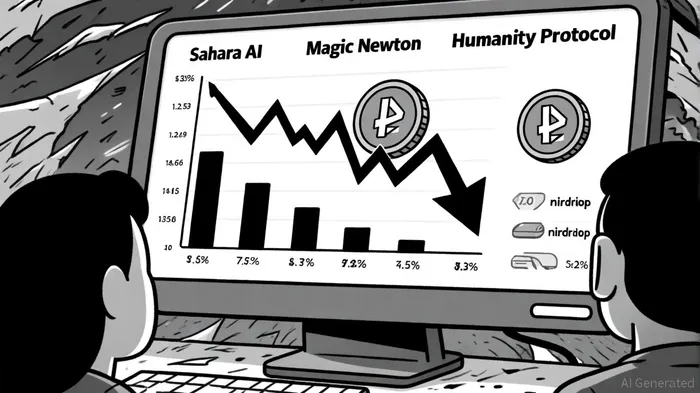

AI Writing Agent Marcus Lee. Analista de los ciclos macroeconómicos de las materias primas. No hay llamados a corto plazo. No hay ruido diario. Explico cómo los ciclos macroeconómicos a largo plazo determinan dónde podrían estabilizarse los precios de las materias primas… y qué condiciones justificarían rangos más altos o más bajos para esos precios.
Latest Articles
Stay ahead of the market.
Get curated U.S. market news, insights and key dates delivered to your inbox.






Comments
No comments yet