
Token Buybacks Reach $640 Million in 2026 as TRON Leads Counter-Cyclical Growth
 Aime Summary
- TRON reported counter-cyclical growth in H1 2026 by leveraging its dominant stablecoin liquidity position to drive DeFi value capture through buyback-and-burn mechanisms while expanding into AI applications.
- The network's circulating USDT supply surpassed $90 billion, cementing its role as a leading settlement network for digital dollars.
- Key DeFi protocols like SUN.io, JustLend DAO, and BitTorrent implemented recurring token buyback-and-burn mechanisms alongside product upgrades.
- TRON outperformed industry benchmarks by combining deflationary mechanics in DeFi with new growth vectors in Web3 AI.
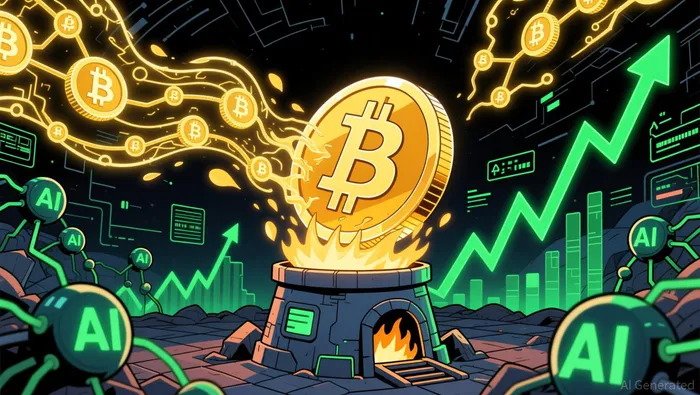
The crypto industry witnessed a significant shift in capital allocation strategies during the first half of 2026, with token buybacks reaching approximately $640 million in aggregate value. This surge in buyback activity was primarily driven by projects seeking to capture value from excess liquidity rather than relying solely on speculative price appreciation. TRONTRX-- emerged as a standout performer, achieving strong growth despite broader market pressures by executing a dual strategy of strengthening its DeFi foundation and expanding into the artificial intelligence sector.
How Does Stablecoin Dominance Fuel Token Buybacks?
TRON's growth strategy was anchored by its position as the leading settlement network for digital dollars. The circulating supply of USDT on the TRON network surpassed $90 billion, providing a massive liquidity engine that other networks struggled to match. This deep liquidity pool allowed key DeFi protocols to implement recurring token buyback-and-burn mechanisms, effectively reducing the total supply of tokens in circulation.
Protocols such as SUN.io, JustLend DAO, and BitTorrent were central to this deflationary approach. By consistently purchasing and burning their native tokens, these platforms aimed to increase scarcity and potentially support token prices. This strategy contrasted with traditional growth models that rely on aggressive token emissions to incentivize user participation. Instead, TRON's ecosystem focused on value capture from existing liquidity, creating a sustainable economic model even in a macro-driven liquidity cooldown.
Why Is AI Expansion Critical for DeFi Protocols?
While DeFi buybacks provided a stable economic foundation, TRON simultaneously expanded its footprint in the AI sector to drive new growth vectors. The network launched four flagship applications: Bank of AI, B.AI, BTTInferGrid, and AINFT. These projects aimed to integrate artificial intelligence capabilities directly into the Web3 infrastructure, attracting developers and users interested in the convergence of blockchain and AI technologies.
This expansion allowed TRON to diversify its revenue streams and reduce reliance on stablecoin transaction fees alone. By positioning itself at the intersection of DeFi and AI, the network sought to capture value from both sectors. The combination of deflationary mechanics in DeFi and new growth opportunities in Web3 AI enabled TRON to outperform industry benchmarks during a period of mixed market sentiment.
What Do Buybacks Mean for Investor Valuation Models?
The rise in token buybacks highlights a broader trend in cryptocurrency valuation. Traditional price forecasting models often rely on historical patterns and sentiment analysis, but they frequently overlook structural supply mechanics like token burns. With supply dilution being a common concern for many assets, buyback-and-burn mechanisms offer a counterbalance by actively reducing circulating supply.
Investors must weigh these structural changes when assessing future price targets. For instance, a token with a fixed market cap target becomes more valuable if its circulating supply is actively reduced through buybacks. This dynamic creates a more resilient value proposition compared to projects that rely solely on adoption rates or speculative demand. As the industry matures, deflationary tokenomics may become a key differentiator for long-term investment success.
The $640 million in token buybacks recorded in 2026 reflects a strategic pivot by major crypto projects toward sustainable economic models. By leveraging stablecoin liquidity and integrating emerging technologies like AI, projects like TRON are demonstrating that value capture can coexist with technological innovation. This approach offers investors a more predictable framework for evaluating project viability beyond short-term price volatility.

Blending traditional trading wisdom with cutting-edge cryptocurrency insights.
Latest Articles
Stay ahead of the market.
Get curated U.S. market news, insights and key dates delivered to your inbox.


AInvest
PRO
AInvest
PRO




Comments
No comments yet