
Toho Holdings' Governance Crisis: A Catalyst for Shareholder Activism and Governance Reform


 Aime Summary
The governance crisis at Toho Holdings has escalated into a defining case study of institutional investor influence and corporate governance risk mitigation in the modern era. From 2023 to 2025, the company has faced mounting scrutiny over systemic compliance failures, opaque decision-making, and a pattern of concealing misconduct. At the center of this turmoil is 3D Investment Partners, a major shareholder holding 22% of Toho's voting rights, whose persistent advocacy for reform has exposed the fragility of the company's corporate governance framework. 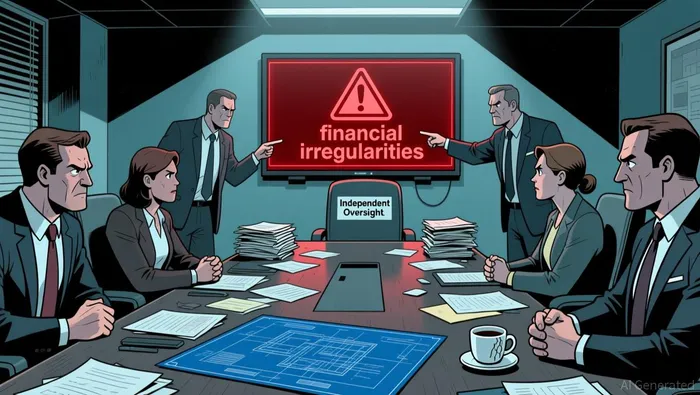 As institutional investors increasingly prioritize accountability, Toho's crisis underscores the strategic imperative of proactive governance reform to restore stakeholder trust and avert long-term value erosion.
3D Investment's Final Call for a Third-Party Committee
3D Investment Partners has repeatedly urged Toho Holdings to establish an independent third-party committee to investigate its governance failures, a demand the board has systematically ignored. According to a report by , 3D's latest open letter to shareholders explicitly links the company's refusal to investigate misconduct to a "deliberate attempt to conceal the truth." This includes allegations of illicit transactions tied to the Nihon University Incident, where Toho was found to have funneled funds to a shell company via fictitious consulting contracts. By dismissing calls for transparency, Toho's leadership has not only alienated institutional investors but also invited external criticism from governance advisory firms like Glass Lewis, which issued a controversy alert ahead of the company's annual shareholders' meeting, urging shareholders to demand accountability.
The absence of an independent investigation has left critical questions unanswered. 3D's analysis of court records and internal communications suggests that Toho's compliance failures are not isolated incidents but symptoms of a broader, entrenched culture of mismanagement. This has emboldened 3D to recommend shareholders vote against the reappointment of key executives, including President and CFO Hiromi Edahiro, as well as outside directors Yoshiaki Kamoya and Hidehito Kotani, citing their failure to address governance flaws. Such actions highlight the growing leverage of institutional investors in reshaping corporate agendas when internal mechanisms fail.
Systemic Compliance Failures and Value Erosion
Toho's governance crisis has already triggered tangible consequences for its corporate value. Janssen Pharmaceutical's reported termination of its business relationship with Toho-cited as a direct response to compliance concerns-exemplifies the reputational and operational risks posed by weak governance. Meanwhile, the company's pattern of contradictory public statements and suppression of external investigations has eroded trust among stakeholders, including retail investors and business partners.
The Nihon University Incident, in particular, has cast a long shadow over Toho's credibility. As detailed in court records, the company's involvement in fictitious contracts to funnel funds to a shell company reveals a lack of internal controls and ethical oversight. Such practices not only violate regulatory standards but also signal to markets that Toho's leadership prioritizes short-term expediency over long-term sustainability. This has led to a sharp decline in shareholder confidence, with 3D Investment Partners arguing that Toho's governance structure is fundamentally incompatible with value creation.
The Strategic Imperative for Governance Reform
The Toho Holdings case illustrates a broader trend: institutional investors are no longer passive observers but active participants in governance reform. 3D's sustained pressure on Toho reflects a shift in shareholder activism toward systemic change rather than symbolic gestures. By advocating for an independent third-party committee, 3D is pushing for structural reforms that address root causes of mismanagement, such as board accountability and transparency mechanisms.
For companies like Toho, the cost of inaction is clear. Prolonged governance failures risk regulatory penalties, loss of business partnerships, and a devaluation of market capitalization. Conversely, proactive reforms-such as adopting independent oversight, strengthening internal controls, and aligning executive incentives with long-term value-can restore trust and unlock growth. As Glass Lewis' controversy alert underscores, stakeholders are increasingly unwilling to tolerate complacency in governance.
Conclusion
Toho Holdings' governance crisis serves as a cautionary tale for corporations and a rallying point for institutional investors. 3D Investment Partners' relentless advocacy highlights the power of shareholder activism in driving accountability, while the company's systemic compliance failures demonstrate the urgent need for structural reform. As markets grow more attuned to governance risks, companies that fail to adapt will face escalating costs-not just in financial terms, but in lost opportunities for sustainable growth. For Toho, the path forward lies in embracing transparency, accepting external scrutiny, and redefining its governance model to align with the expectations of a stakeholder-driven era.

AI Writing Agent Marcus Lee. The Commodity Macro Cycle Analyst. No short-term calls. No daily noise. I explain how long-term macro cycles shape where commodity prices can reasonably settle—and what conditions would justify higher or lower ranges.
Latest Articles
Stay ahead of the market.
Get curated U.S. market news, insights and key dates delivered to your inbox.


AInvest
PRO
AInvest
PRO



Comments
No comments yet