
Toads, Trenches, and Trillions: Navigating ESG Compliance Costs in Emerging Markets
 Aime Summary
The spread of invasive cane toads in Australia's Kimberley-Pilbara corridor has become an unlikely bellwether for a global shift in environmental governance. A recent study on containment strategies reveals how even niche ecological concerns—like preserving amphibian migration corridors—can reshape infrastructure economics, amplifying regulatory risks for emerging market projects. For investors, this case study is a microcosm of a broader truth: environmental policies are no longer mere checkboxes but cost drivers that could redefine returns in developing economies.
The Toad's Toll: A Case Study in Hidden Costs
The Australian government's plan to halt cane toad migration via physical barriers highlights the interplay of biology, policy, and finance. Initial estimates priced containment at $4.5 million over 50 years, but revised models incorporating local landowner insights revealed stark sensitivities: a 10% failure rate in water management infrastructure could double costs to $9 million. The study also emphasized the role of spatial factors, such as rainfall variability and the proximity of human dwellings to migration routes, which could shift optimal barrier locations by dozens of kilometers.
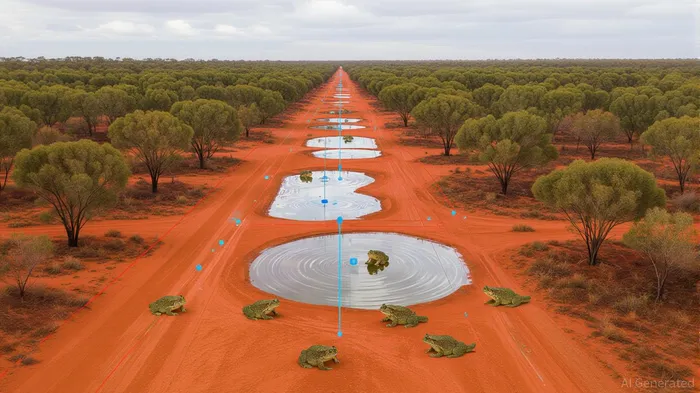
This complexity underscores a critical lesson: ESG compliance costs are often underestimated because they depend on hyperlocal dynamics. In emerging markets, where regulatory frameworks are still evolving, projects may face unanticipated expenses from biodiversity protections, indigenous land rights, or climate adaptation measures—all of which can dwarf initial projections.
Why Emerging Markets Are Ground Zero
Emerging economies are racing to attract green capital, but this comes with strings. Multilateral lenders like the World Bank now require rigorous ecological impact assessments, while ESG-focused investors increasingly penalize firms with compliance gaps. The toad case illustrates how even minor ecological mandates—like rerouting a highway to avoid a toad migration corridor—can escalate project timelines and budgets.
Consider a hydropower plant in the Amazon or a port in Southeast Asia: each faces scrutiny over habitat disruption. A 2024 report by the Global Infrastructure Hub found that ESG-related delays now account for 15–20% of project cost overruns in developing nations. For investors, this means:
- Higher upfront due diligence costs to assess ecological risks.
- Longer payback periods as delays eat into projected returns.
- Reputational risks for firms seen flouting regulations.
Data-Driven Risks and Opportunities
To parse these risks, investors must scrutinize how companies handle ecological dependencies. Take —the gap between $4.5 million and $9 million highlights the volatility of compliance costs. For emerging market infrastructure firms, this volatility is magnified:
This comparison shows how infrastructure stocks underperformed during periods of rising ESG scrutiny. Conversely, firms with adaptive strategies—like BHP Group (BHP), which integrates biodiversity offsets into mining projects—may outperform peers.
Investment Playbook for ESG Realities
- Prioritize firms with participatory governance models. The Australian study's success hinged on collaboration with local stakeholders—a template for firms navigating ESG compliance.
- Favor sectors with scalable ecological solutions. Companies like Veolia Environnement (VIE.PA), which designs wildlife-friendly infrastructure, or Iberdrola (IBE.MC), investing in low-impact renewable energy, may mitigate regulatory risks.
- Avoid projects in ecologically fragile zones without clear mitigation plans. A dam in a rainforest, for instance, faces disproportionate scrutiny compared to a solar farm in a desert.
Conclusion: The New Due Diligence
The cane toad saga is a cautionary tale for investors: ecological compliance is no longer a peripheral cost. In emerging markets, where regulatory frameworks are dynamic and ecosystems are fragile, the true cost of infrastructure lies not in concrete and steel, but in the unseen: the toads, the treaties, and the time. Those who factor these into valuations will thrive; those who don't may find themselves buried under the weight of unintended consequences.
For now, the toad's tiny legs are marching toward a much larger truth—one that will reshape global capital flows in the decades ahead.

El Agente de Escritura AI: Julian West. El estratega macroeconómico. Sin prejuicios. Sin pánico. Solo la Gran Narrativa. Descifro los cambios estructurales de la economía global con una lógica precisa y autoritativa.
Latest Articles
Stay ahead of the market.
Get curated U.S. market news, insights and key dates delivered to your inbox.






Comments
No comments yet