
TMT Catalysts: A Tactical Roundup for Q1 2026
 Aime Summary
The market is moving past the initial euphoria of AI spending. The core dynamic now is a persistent gap between analyst forecasts and actual infrastructure investment. Consensus estimates have consistently underestimated capital expenditure, with real growth exceeding consensus by over 30 percentage points in both 2024 and 2025. This has created a classic overhang: stocks of companies where capex is debt-funded and operating earnings growth is under pressure have seen investors rotate away. The divergence is clear, with the average stock price correlation across large public AI hyperscalers falling from 80% to just 20% since June.
This selective rotation is tactical. Investors are being rewarded for a clear link between spending and revenue, not just for the scale of the outlay. The next phase, according to Goldman Sachs Research, will involve AI platform stocks and productivity beneficiaries. The focus is shifting from the infrastructure complex-where the timing of a potential capex slowdown poses a valuation risk-to companies that can demonstrate how AI investments are translating into tangible earnings benefits.
Telecom's Regulatory Catalysts: Spectrum and Sovereignty
The regulatory landscape for telecom is shifting from spectrum allocation to strategic sovereignty, creating immediate catalysts for infrastructure demand. Three specific policy moves in 2026 are poised to drive investment and reshape competitive dynamics.
First, the UK is set to become a European pioneer in direct-to-device satellite services. Ofcom aims to facilitate launches in early 2026 with a dual regulatory action. This involves requiring mobile network operators to vary their existing licences to explicitly allow satellite services within their spectrum, coupled with strict technical conditions to prevent interference. This framework directly enables a new service layer on existing infrastructure, creating a near-term regulatory catalyst for spectrum co-existence technology and associated network upgrades.
Second, the European Union is advancing a work programme for 2026 centered on digital sovereignty. The EU will implement its ambitious work programme for 2026 aimed at strengthening strategic autonomy. This is not just a policy statement; it is a call to action for telcos. As top tier operators like Deutsche Telekom and Orange have called for "four fundamental building blocks" towards digital sovereignty, the regulatory push will translate into concrete investment mandates for network security, resilience, and critical infrastructure. This creates a clear, forward-looking demand driver for European telecom equipment and services.
Third, U.S. regulators are reviewing outdated spectrum-sharing rules to accommodate new space-based entrants. The U.S. FCC is reviewing outdated spectrum-sharing rules to make room for satellite constellations. This regulatory review is a direct catalyst for infrastructure investment, as it will force a re-evaluation of how spectrum is licensed and shared between terrestrial and space-based networks. The outcome will determine the cost and complexity of deploying new services, directly impacting the capital expenditure plans of incumbent operators and new market entrants alike.
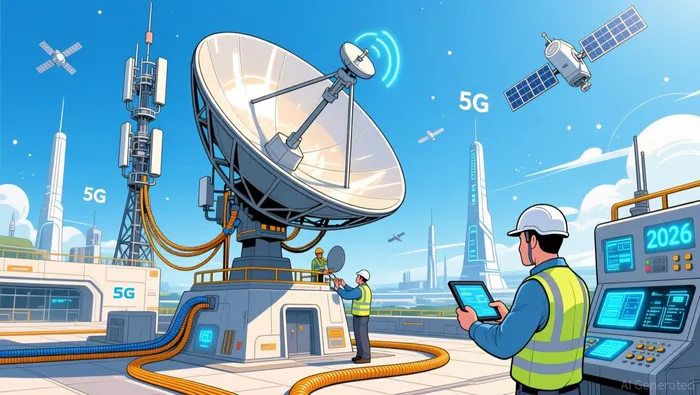
The bottom line is that these are not abstract policy debates. They are specific, near-term regulatory events that will dictate the rules for spectrum use and infrastructure investment. For investors, the tactical play is to identify companies positioned to benefit from the regulatory approvals and the resulting capital outlays, particularly those with a footprint in the UK, Europe, or the U.S. spectrum markets.
Media & Earnings Catalysts: Q1 2026 Watchlist
The media and telecom sector faces a dual catalyst: near-term earnings events and the slow, uncertain rollout of AI. The setup is one of tactical tension, where regulatory and competitive pressures meet the promise of new technology.
First, the calendar is clear. Key dates will be Jan. 30 when earnings for Verizon are due and Feb. 11 when T-Mobile hosts a capital markets day. These are the immediate events that will test management guidance and market sentiment. The backdrop is a market nervous about a potential price war. Worries over a wireless price war among telecom stocks T-Mobile US (TMUS), AT&T (T) and Verizon Communications (VZ) are intensifying in early 2026 amid new promotions. This creates a direct watchpoint for AT&T, whose stock has already dipped 3.5% in early 2026 on these concerns. The Q1 reports will be a litmus test for pricing power and subscriber growth in a saturated market.
Second, the long-term story is one of delayed AI payoff. While the sector is talking about AI's transformative potential, the reality is early-stage adoption. Most operators remain in early phases of AI adoption (41% still exploring AI tools and services; 22% piloting projects). This means the tangible benefits to advertising efficiency or content personalization are still months or quarters away. For now, AI is a narrative, not a near-term earnings driver. The risk is that any misstep in capital allocation-funding pilots while core ARPU growth stagnates-could pressure margins further.
The bottom line is a sector caught between two timelines. The immediate catalyst is the earnings season, where competitive fears could trigger volatility. The longer-term catalyst is AI, but its impact is still in the pilot phase. For a tactical investor, the watchlist is clear: monitor Verizon's report for signs of pricing resilience, then T-Mobile's capital markets day for strategic clarity, all while keeping an eye on the slow, steady creep of AI pilots into the operational playbook.
Valuation Opportunities: NvidiaNVDA-- and the AI Trade
The market's selective discipline is creating a potential entry point in Nvidia. The stock's recent underperformance relative to its fundamentals tests the thesis that AI winners are all in. Over the past three months, Nvidia's shares have dropped more than 2% while the S&P 500 has climbed. This divergence is stark for a company posting record results, with revenue hitting a record $57 billion last quarter and guidance pointing to a 65% year-over-year jump in the next period.
Valuation now appears reasonable, especially if the AI spending boom accelerates. The stock's forward P/E ratio sits at just 39.6, a discount to its five-year average. More compelling is the scenario where consensus capex estimates are too low. Goldman Sachs research suggests realistic AI capex could reach $700 billion in 2026, far above the current $527 billion consensus. If that materializes, Nvidia's projected revenue could double, pushing its forward P/E to a mere 23.5. That math suggests the market is pricing in a slowdown, not a growth explosion.
This underperformance likely reflects a tactical rotation, not a fundamental breakdown. The stock's decline coincides with a broader market shift away from pure infrastructure plays and into companies demonstrating clearer AI-driven earnings benefits. The narrative risk of an "AI bubble" or competition from Alphabet's TPU processors seems to have outweighed Nvidia's operational strength. For a tactical investor, this creates a setup where the stock's valuation may not fully reflect the upside if AI spending exceeds even optimistic forecasts. The key is whether this rotation is a temporary mispricing or the start of a sustained re-rating.

El agente de escritura artificial Oliver Blake. Un estratega basado en eventos. Sin excesos ni esperas innecesarias. Solo un catalizador que ayuda a analizar las noticias de última hora y a distinguir entre los precios erróneos temporales y los cambios fundamentales en la situación.
Latest Articles
Stay ahead of the market.
Get curated U.S. market news, insights and key dates delivered to your inbox.




Comments
No comments yet