
TMC's Deep-Sea Gamble: Riding the Critical Minerals Wave Amid Regulatory Crosscurrents
The Metals Company (TMC) has become the poster child of the deep-sea mining boom, its stock soaring 512.9% year-to-date as it navigates a labyrinth of regulatory risks, strategic partnerships, and environmental debates. The $85.2 million investment from Korea Zinc in June 2025—securing a 5% stake and warrants for further upside—has positioned TMCTMC-- as a linchpin in the U.S. critical minerals supply chain. But is this a structural shift in resource extraction, or a high-stakes bet on regulatory leniency? Let's dissect the opportunities and pitfalls.
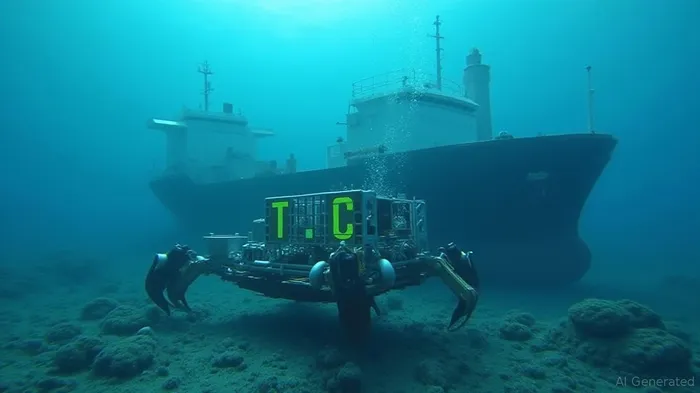
The Strategic Bet: Korea Zinc and the U.S. Supply Chain Play
Korea Zinc's investment isn't just capital—it's a vote of confidence in TMC's ability to commercialize seabed minerals. The partnership focuses on validating intermediate processing pathways for polymetallic nodules, which are rich in nickel, cobalt, copper, and manganese—critical for EV batteries and defense infrastructure. By aligning with a pCAM (precursor Cathode Active Material) tech leader, TMC is vertically integrating its supply chain, reducing reliance on Chinese dominance of mineral refining. This plays directly into U.S. strategic priorities under both Biden and Trump administrations, which aim to secure domestic control over minerals deemed vital for energy and national security.
The stock's 28.8% surge on the Korea Zinc news underscores investor optimism. But the real prize is the $7 warrant price embedded in the deal: if TMC's share price exceeds this threshold, Korea Zinc's stake could expand, creating a powerful incentive for TMC to deliver on its mining timeline.
Regulatory Crossroads: ISA vs. U.S. Permits
Here's the rub: TMC's permits are being sought under the U.S. Deep Seabed Hard Mineral Resources Act of 1980—a move the International Seabed Authority (ISA) calls illegal. The ISA, which governs the high seas under UNCLOS, has not yet finalized its Mining Code, leaving TMC in legal limbo. While TMC argues that U.S. permits offer a “predictable pathway,” the ISA's opposition could trigger diplomatic fallout. Over 30 countries support a moratorium on seabed mining until robust environmental safeguards are in place, and environmental groups like Greenpeace are mobilizing against what they call a “race to the bottom” in ocean governance.
The regulatory risk is real. If the ISA or other nations successfully challenge TMC's permits, the company could face lawsuits, reputational damage, or delays. Yet, TMC's gamble may pay off if the U.S. government backs it as a national strategic asset. President Trump's April 2025 Executive Order to “unleash offshore critical minerals” signals political tailwinds, even if the legal battle looms large.
Environmental Stakes: Can TMC Navigate the Green Divide?
The environmental debate is existential. The ISA's proposed Mining Code includes strict environmental standards, like protected Areas of Particular Environmental Interest (APEIs) covering 1.97 million km² of the Clarion-Clipperton Zone. TMC's plan bypasses these safeguards, risking irreversible ecological harm. Critics argue that seabed mining could disrupt fragile ecosystems and carbon sequestration processes.
Yet, the countervailing force is EV battery demand. Lithium-ion batteries require vast quantities of cobalt and nickel—minerals abundant in seabed nodules. By 2030, global EV adoption could require 3x the current supply of these metals. TMC's nodules, with their high-grade content, offer a cleaner alternative to land-based mining, which often involves deforestation and labor abuses. The question is whether TMC can prove its environmental stewardship meets—or exceeds—the ISA's standards, even if it's operating outside its framework.
The Investment Case: A High-Risk, High-Reward Structural Shift
TMC's stock has been a rollercoaster, but its 2025 performance (512.9% YTD vs. S&P 500's 12%) reflects a growing consensus: the energy transition needs seabed minerals. The company's partnerships, technological advancements (e.g., its $500M invested in seabed collection systems), and political backing all point to long-term growth. Brokerage targets average a 35% upside to current prices, assuming permits are secured.
But investors must weigh the risks:
- Regulatory Uncertainty: If the ISA or courts block TMC's permits, its valuation could collapse.
- Environmental Backlash: NGOs and governments could stoke consumer boycotts or divestment campaigns.
- Technical Hurdles: Mining at 4,000 meters depth is unproven at scale; cost overruns or accidents could derail timelines.
Final Verdict: A Growth Stock for the Brave
TMC is a speculative bet on two trends: the inevitability of seabed mining and U.S. geopolitical priorities. For investors with a high-risk tolerance and a long-term view of the energy transition, TMC offers asymmetric upside. The Korea Zinc deal and Trump's regulatory push reduce execution risk, while the $85M investment provides a “street cred” seal of approval.
However, this isn't a “buy and forget” stock. Investors should monitor three key triggers:
1. ISA's 30th Session (July 2025): Will the Mining Code finalize, or will TMC's unilateral approach gain legitimacy?
2. Environmental Litigation: Any lawsuits or moratoriums could stall progress.
3. Permit Approval Timeline: NOAA's review of TMC's applications (expected by late 2025) will be a make-or-break moment.
For the right investor—those willing to bet on TMC's strategic positioning and the structural demand for critical minerals—this is a compelling story. Just be prepared to weather the stormy seas of regulatory and environmental headwinds.

Delivering real-time insights and analysis on emerging financial trends and market movements.
Latest Articles
Stay ahead of the market.
Get curated U.S. market news, insights and key dates delivered to your inbox.
AInvest
PRO
AInvest
PRO



Comments
No comments yet