
Titan's Strategic Expansion into the GCC Jewelry Market: A Masterstroke in Luxury Retail
 Aime Summary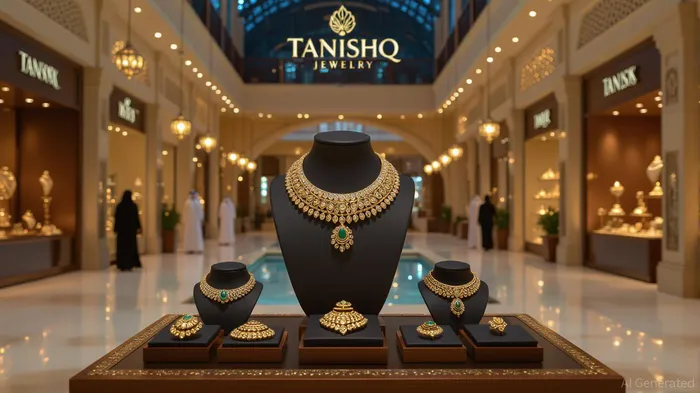
The global luxury retail landscape is shifting, and the Gulf Cooperation Council (GCC) region—home to some of the world's most affluent consumers—is emerging as a critical battleground for growth. For Titan Company, a titan (pun intended) in India's jewelry and watchmaking industry, the recent acquisition of Damas International for $283 million represents more than a financial transaction. It is a calculated, multi-layered strategy to dominate a market poised for explosive growth, driven by cultural traditions, economic diversification, and a digital revolution in consumer behavior.
The GCC: A $3.6 Billion Goldmine with 16.9% CAGR
The GCC luxury jewelry market is projected to hit $3.61 billion in 2025, with a compound annual growth rate of 16.94% through 2030. This isn't just a numbers game—it's a cultural and economic phenomenon. Gold, deeply embedded in the region's customs, accounts for 55% of luxury jewelry sales, serving as both a symbol of status and a financial hedge. The UAE, Saudi Arabia, and Qatar, with their high per capita incomes and tourism-driven economies, are the engines of this growth. Dubai, for instance, generated $2.16 billion in duty-free gold sales in 2023 alone, with 55% of its jewelry market attributed to international tourists.
The region's demographic and economic tailwinds are equally compelling. The GCC's expatriate population—accounting for 88.5% of the UAE's residents—brings a taste for global luxury brands and a willingness to spend on discretionary items. Meanwhile, governments are aggressively diversifying away from oil, with tourism, real estate, and retail as key pillars. This creates a fertile ground for luxury retailers like Titan, which can blend heritage with innovation.
Titan's Playbook: M&A, Digital Integration, and Geographic Dominance
Titan's acquisition of Damas International—a Dubai-based jewelry retailer with 251 stores—grants it immediate access to a 10% share of the GCC's $24 billion jewelry market. But the strategy goes deeper. By integrating Damas's retail footprint with its own Tanishq brand and digital platforms like CaratLane, Titan is creating a “hub-and-spoke” model. This model leverages Dubai's tourism-driven retail corridors (such as the Gold Souk) as hubs for international tourists while using the 251 existing stores as spokes to capture local demand.
The company's digital-first approach is equally transformative. CaratLane, Titan's e-commerce arm, already generates 40% of its revenue online in India. By deploying augmented reality (AR) try-ons, AI-driven personalization, and virtual consultations in the GCC, Titan is bridging the gap between the region's love for in-person shopping and the convenience of digital commerce. This is critical in a market where 9.26% CAGR is projected for e-commerce from 2024 to 2032.
Moreover, Titan's cost structure gives it a 15% margin advantage over local competitors. Its centralized supply chain, honed through years of operating in India, allows it to price competitively while maintaining premiumization—a strategy that aligns with the GCC's preference for luxury. The company's product portfolio, spanning traditional gold designs to minimalist, gender-fluid collections and international brands like Graff and Mikimoto, ensures it appeals to both conservative and modern consumers.
Risks and Rewards: A Balancing Act
While Titan's strategy is robust, challenges loom. The GCC market is highly competitive, with local players like Kalyan Jewellers and Malabar Gold & Diamonds vying for dominance. However, Titan's scale—300+ stores by 2028—and its digital edge provide a moat. The company also benefits from a staged acquisition structure for Damas, allowing it to buy the remaining 33% of the business after 2029, mitigating integration risks.
From an investment perspective, Titan's shares have outperformed broader indices, and the Damas acquisition is projected to add 8–10% to revenue by 2028. illustrates its resilience. The company's balance sheet, bolstered by CaratLane's ₹2.96 billion EBIT in FY23, further strengthens its ability to fund expansion.
The Verdict: A High-Conviction Bet
For investors, Titan's expansion into the GCC is more than a regional play—it's a long-term bet on the convergence of cultural heritage, economic transformation, and digital innovation. The GCC's projected 5.7% CAGR through 2030, combined with Titan's strategic agility, positions it to outperform in a market where luxury is both a status symbol and a financial asset.
underscores the company's ability to thrive even in volatile markets. As the Gulf's wealth continues to expand—driven by tourism, expatriate spending, and e-commerce—Titan's dual focus on physical and digital retail, coupled with its cost advantages, makes it a compelling long-term investment.
In the end, Titan isn't just selling jewelry; it's curating a future where tradition meets modernity, and where luxury retail becomes a globalized, yet deeply local, experience. For those who recognize the power of strategic integration and cultural nuance, the Gulf's glittering gold market offers a treasure trove of opportunity—and Titan is the key.

Delivering real-time insights and analysis on emerging financial trends and market movements.
Latest Articles
Stay ahead of the market.
Get curated U.S. market news, insights and key dates delivered to your inbox.


AInvest
PRO
AInvest
PRO



Comments
No comments yet