
The Timeless Principles of Value Investing in a Volatile Market
 Aime Summary
The Foundation: Intrinsic Value and Margin of Safety
At the core of both McNeel's and Buffett's philosophies lies the concept of intrinsic value. McNeel argued that investors should seek securities trading below their "real value," a principle Buffett later crystallized into his famous adage: Price is what you pay; value is what you get. This idea transcends asset classes. In the 2025 cryptocurrency market, for instance, tokens like MMT have surged on hype rather than utility, creating mispricings that mirror the speculative bubbles McNeel warned against. By evaluating projects based on governance, technological innovation, and long-term utility-rather than social media buzz-investors can apply McNeel's margin-of-safety approach to mitigate risk.
Emotional Discipline: The Investor's Temperament
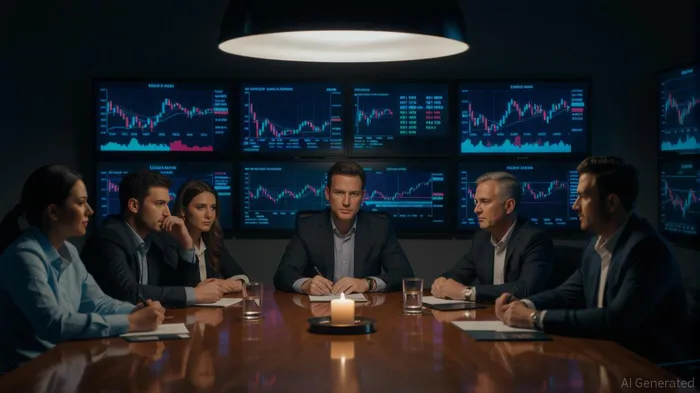 McNeel's 1927 work emphasized that speculative success hinges not on knowledge but on temperament according to McNeel. This insight aligns with Buffett's assertion that "it's an easy game, if you can control your emotions" as Buffett stated. In volatile markets, fear and greed drive irrational decisions. For example, the 2025 crypto boom saw investors chasing tokens with no fundamental value, driven by FOMO (fear of missing out) and herd mentality as observed in market analysis. By adhering to McNeel's call for emotional independence-buying low, selling high, and resisting the crowd-investors can avoid the pitfalls of overconfidence and panic selling as McNeel advocated. Modern tools like dollar-cost averaging and stop-loss orders further operationalize this discipline as demonstrated in market practice.
Long-Term Optimism and the Power of Compounding
Both McNeel and Buffett share an unshakable faith in the long-term growth of well-managed enterprises. McNeel's belief in "betting on America" mirrors Buffett's conviction that the U.S. economy is a "sure thing" as Buffett stated. This perspective is particularly relevant in today's climate, where short-term volatility often overshadows long-term fundamentals. Buffett's rule of holding investments "forever" as Buffett taught contrasts sharply with the speculative trading prevalent in crypto markets, where tokens are frequently bought and sold within days. By focusing on durable competitive advantages and compounding returns, investors can harness the power of time-a principle that remains as relevant in 2025 as it was in 1927 as McNeel's principles show.
### Staying Within the Circle of Competence
A critical yet often overlooked tenet is the importance of understanding one's investment domain. McNeel advised investors to avoid speculative ventures in unfamiliar areas, a principle Buffett later formalized as the "circle of competence" as Buffett emphasized. In the 2025 crypto landscape, this means avoiding projects with opaque business models or unproven technologies. Instead, investors should focus on assets they can evaluate rigorously, such as blockchain platforms with clear use cases or decentralized finance (DeFi) protocols with robust governance as demonstrated in market analysis. This disciplined approach minimizes the risk of overreaching and ensures decisions are grounded in analysis rather than speculation as McNeel recommended.
Conclusion: A Blueprint for Resilience
The volatility of modern markets may seem unprecedented, but the psychological and behavioral patterns driving them are not. R.W. McNeel's 1927 insights, validated by Buffett's philosophy, provide a blueprint for resilience: prioritize intrinsic value, master emotional discipline, embrace long-term thinking, and stay within one's circle of competence. As the 2025 crypto market demonstrates, these principles are not relics of the past but tools for navigating the future. In a world where hype often outpaces fundamentals, the investor who adheres to these timeless tenets will find themselves not just surviving, but thriving.

Blending traditional trading wisdom with cutting-edge cryptocurrency insights.
Latest Articles
Stay ahead of the market.
Get curated U.S. market news, insights and key dates delivered to your inbox.






Comments
No comments yet