
Timeless Investing Principles in a Modern Market
 Aime Summary
Intrinsic Value: The Foundation of Enduring Wealth
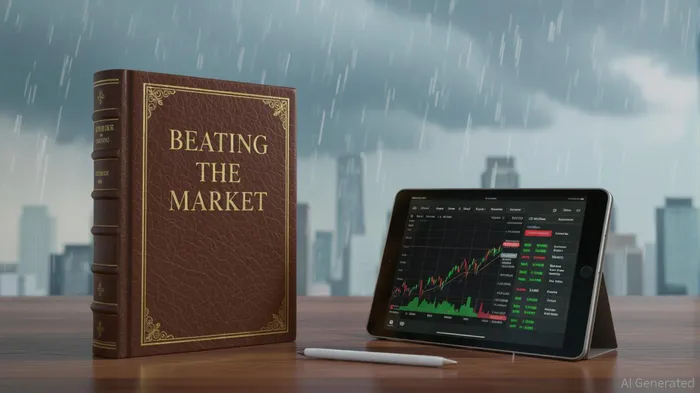
R.W. McNeel's 1927 book Beating the Market emphasized purchasing assets below their intrinsic value, a principle that aligns closely with Warren Buffett's mantra: "Price is what you pay. Value is what you get". McNeel argued that investors should prioritize the fundamentals of a business over market sentiment, a philosophy Buffett has refined over decades. For instance, during the 2008 financial crisis, Buffett invested $5 billion in Goldman Sachs' preferred stock and warrants, betting on the firm's intrinsic strength amid a collapsing market. Similarly, in 2025, Buffett's portfolio includes significant stakes in AppleAAPL--, Alphabet, and Amazon-companies that leverage AI to enhance their core operations while maintaining durable competitive advantages. These investments reflect a focus on businesses with strong cash flows and long-term value, even as AI reshapes their industries.
Emotional Discipline: The Investor's Greatest Asset
Both McNeel and Buffett stress the importance of emotional discipline. McNeel warned against "herd mentality", advocating for decisions based on analysis rather than fear or greed. Buffett's famous advice-"Be fearful when others are greedy, and greedy when others are fearful"-embodies this ethos. During the 2020 pandemic crash, Buffett reduced his airline holdings, recognizing the sector's structural risks, while maintaining patience in his core positions. This approach mirrors McNeel's emphasis on self-control, even as modern investors face AI-driven market swings that amplify short-term volatility. For example, Buffett's recent increase in Alphabet's stake-despite earlier skepticism-demonstrates his willingness to adapt to AI's infrastructure-driven potential while adhering to his core principles.
Retained Earnings and Compounding: The Power of Patience
McNeel and Buffett both champion the reinvestment of profits to fuel compounding growth. Buffett's investment in Coca-Cola in 1988, which has grown into a multibillion-dollar holding, exemplifies this strategy. Similarly, his 2025 investments in Apple and Amazon reflect confidence in their ability to reinvest AI-driven profits into innovation and market expansion. A 2025 report by Bitget highlights how Buffett's focus on retained earnings aligns with McNeel's belief that compounding is "the eighth wonder of the world." This principle remains critical in AI-driven markets, where companies like Alphabet and AmazonAMZN-- use retained capital to develop cloud infrastructure and AI tools that sustain their dominance as reported by Saxo.
Confidence in the U.S. Economy: A Shared Faith
McNeel's assertion that "faith in the United States of America" is a cornerstone of investment success finds a modern echo in Buffett's long-term bets on American institutions. From Coca-Cola to Apple, Buffett's portfolio underscores his belief in the resilience of U.S. businesses. This confidence is evident in his 2025 strategic pivot toward AI hyperscalers like Alphabet, which he views as critical to the nation's technological future. As geopolitical uncertainties persist, this alignment with American innovation continues to anchor Buffett's strategy, much like it did for McNeel a century ago.
Conclusion: Bridging the Past and Future
The principles outlined in Beating the Market and Warren Buffett's philosophy are not relics but living frameworks. In an era of AI-driven markets and rapid disruption, intrinsic value, emotional discipline, and compounding remain as vital as ever. Buffett's recent investments in Alphabet and Amazon illustrate how these timeless strategies can adapt to new technologies while preserving their core tenets. For investors, the lesson is clear: the future belongs to those who combine historical wisdom with the flexibility to embrace innovation.

Mezclando la sabiduría tradicional en el comercio con las perspectivas de vanguardia relacionadas con las criptomonedas.
Latest Articles
Stay ahead of the market.
Get curated U.S. market news, insights and key dates delivered to your inbox.




Comments
No comments yet