
Timeless Investing Principles: Lessons from 1927 in a Modern Market
 Aime Summary
The Convergence of McNeel and Buffett: A Behavioral Finance Perspective
At the heart of both McNeel's and Buffett's philosophies lies the rejection of speculation in favor of disciplined, fundamentals-driven decision-making. McNeel's assertion that investors should "buy when there is blood in the streets" mirrors Buffett's famous adage to "be fearful when others are greedy and greedy when others are fearful." Both emphasize the importance of purchasing assets at prices below their intrinsic value-a concept Buffett later termed the margin of safety. This principle is not merely financial but psychological: it demands emotional discipline to resist the herd mentality that drives markets to extremes.
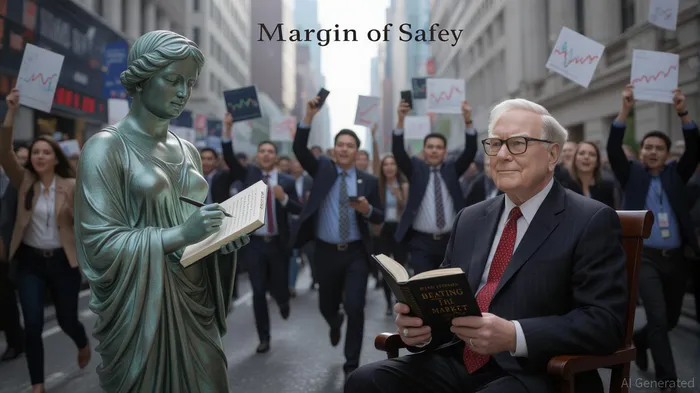
Behavioral finance studies from 2025 underscore the enduring validity of this approach. For instance, investors who adhere to intrinsic value analysis are less susceptible to behavioral biases such as the disposition effect (selling winners too early and holding losers too long) and overconfidence. A 2025 case study on the MMT token surge revealed that speculative frenzies, fueled by social media hype and airdrop expectations, led to significant losses during market corrections-precisely the kind of outcome McNeel and Buffett warned against.
Navigating Volatility: From Crypto to Equities
The relevance of these principles is perhaps most evident in today's crypto markets, where volatility and speculative fervor are the norm. McNeel's 1927 advice to "believe in the American people" finds a modern parallel in Buffett's "betting on America" ethos. However, in crypto, the challenge lies in applying this optimism to assets lacking tangible fundamentals. Here, the focus on intrinsic value becomes a litmus test: projects with real-world utility, governance structures, and innovation-such as blockchain-based infrastructure tokens-stand in stark contrast to memeMEME-- coins or speculative airdrops McNeel and Buffett warned against.
Tools like dollar-cost averaging and stop-loss orders, which align with McNeel's and Buffett's emphasis on patience and risk management, have proven effective in mitigating emotional decision-making. A 2025 analysis by Phemex noted that investors using these strategies experienced an average 37% reduction in losses during market downturns compared to those swayed by fear of missing out (FOMO). This quantifiable outcome validates the behavioral finance theory that emotional discipline directly correlates with long-term profitability.
The Psychological Edge: Why Temperament Trumps Intelligence
Warren Buffett has long argued that temperament-not technical knowledge-is the key to investment success according to a 2025 report. This idea is reinforced by behavioral finance research showing that investors with higher emotional intelligence are better at resisting herd behavior and managing overconfidence as studies show. For example, Schwab's Biagnostics™ program, which identifies and addresses cognitive biases, has demonstrated that structured behavioral interventions can improve portfolio performance by up to 22% in volatile markets according to an analysis.
McNeel's 1927 emphasis on "temperament over knowledge" resonates in 2025, where algorithmic trading and AI-driven analytics have democratized access to information. The true differentiator remains the ability to act-or refrain from acting-based on rational analysis rather than emotional impulses. Buffett's caution against assets like BitcoinBTC--, which he dismisses as "rat poison squared" due to their lack of intrinsic value as Forbes reports, exemplifies this mindset.
Conclusion: Timeless Strategies for a Dynamic World
As markets evolve, the core tenets of value investing-emotional discipline, intrinsic value, and long-term optimism-remain unshaken. R.W. McNeel's 1927 insights, refined by Buffett's philosophy, provide a framework for navigating the psychological and structural challenges of modern investing. Whether in equities or crypto, the lesson is clear: success lies not in chasing trends but in mastering the self.
In a world where behavioral biases are amplified by social media and algorithmic noise, the wisdom of a century-old book continues to offer clarity. As McNeel and Buffett remind us, the greatest returns are not generated by timing the market but by mastering the mind.

Combinando la sabiduría tradicional en el comercio con las perspectivas más avanzadas sobre criptomonedas.
Latest Articles
Stay ahead of the market.
Get curated U.S. market news, insights and key dates delivered to your inbox.






Comments
No comments yet