
It's Time to Pivot: Trump Tariff Risk Unwinds and Solid Fundamentals Could Reignite the Bull Market
The stock market just wrapped up a turbulent, shortened trading week. Despite better-than-expected Q1 earnings, investor sentiment remained shaky, weighed down by growing fears that President Trump's aggressive tariff stance could derail the economy. But as the broader picture begins to take shape, fundamentals remain intact—and it might be time for investors to pivot. A series of positive catalysts could pull hesitant bulls back into the game. And from a technical standpoint, the setup is beginning to turn more constructive.
We're still in a highly speculative environment. Investors continue to react more to macro headlines than company-specific alpha, hitting the trade button based on news or rumors. But at some point, the chaos will settle into order. As Fed Chair Jerome Powell put it, "markets are functioning." The S&P 500 has seen extreme volatility over the past three weeks—plunging 9%, rebounding 5.7%, then dipping another 1.5%—with the 0DTE crowd adding fuel to the fire. At the heart of this volatility is uncertainty over the future path of the economy.
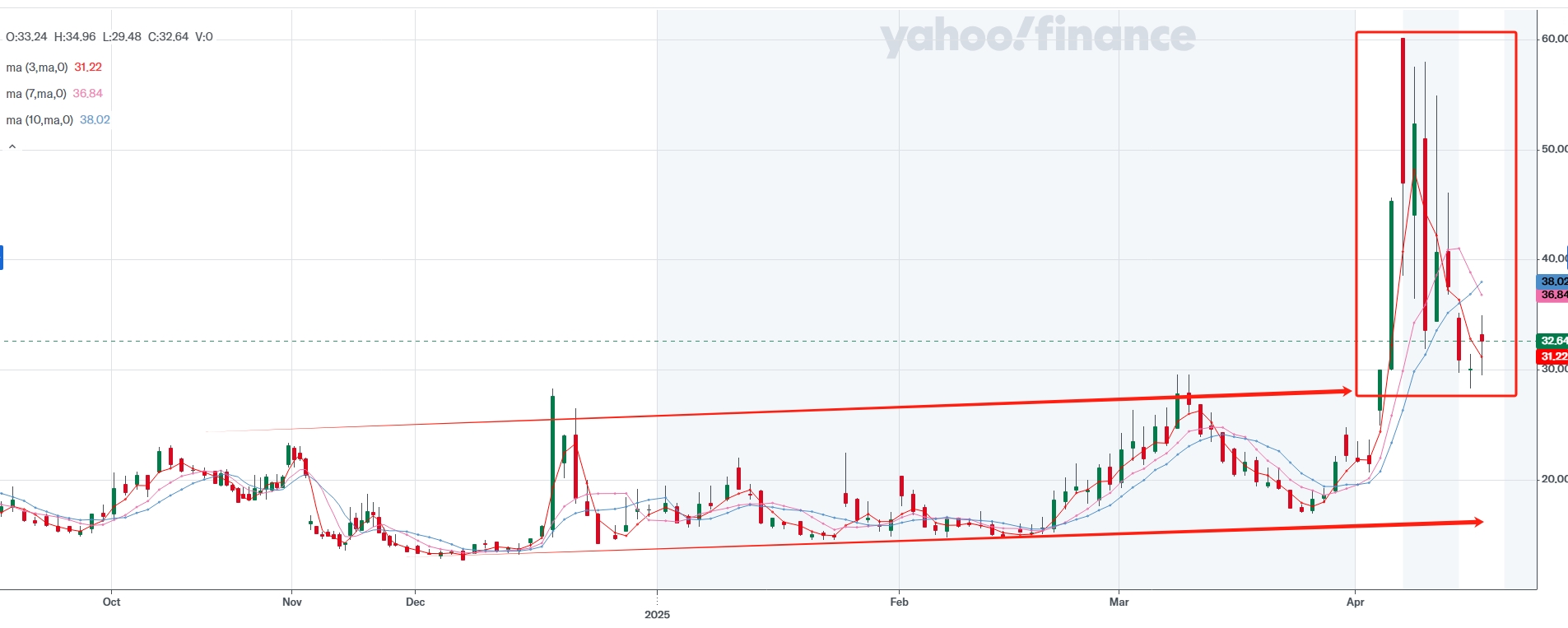
VIX Remains High
Yet recent developments from the Trump administration suggest the infamous "Trump put" might still be in play. Last week, Trump announced a surprise 90-day exemption on reciprocal tariffs just as Treasury yields surged—sending the S&P 500 to its biggest one-day gain since 2008. That move showed Trump is willing to show flexibility when market stress reaches critical levels.
And there's more. Trump's top economic adviser Kevin Hassett said the U.S. is closing in on trade deals with over 10 partners. Treasury Secretary Bessent emphasized that negotiations are underway with the top 15 trading partners. Talks with Japan have been fantastic, and ongoing discussions with the EU and South Korea are scheduled for next week. Trump also had a productive call with leaders in Mexico and Italy. We believe the first wave of trade deals could be announced soon. 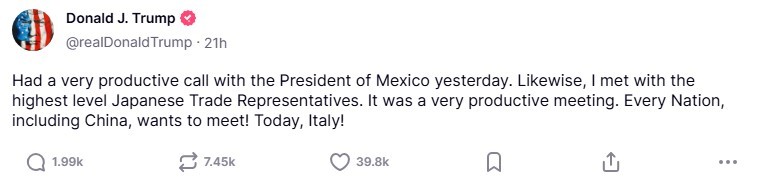
Still, tensions with China continue to weigh heavily. The U.S. has slapped a 145% tariff on Chinese imports, and China responded with 125% tariffs of its own—a destructive tit-for-tat that has shaken the global trading system. Adding to that, the U.S. has hit NvidiaNVDA-- with a $5.5 billion charge by restricting H20 chip sales to China, dampening tech sentiment even further. China is not only a major chip consumer but also a key player in global electronics manufacturing.
That said, the severity of these tariffs suggests both sides are holding cards close to their chest. China imports massive amounts of U.S. agricultural goods—a key base of Trump's political support. This mutual vulnerability creates room for negotiation. On Thursday, Trump hinted at softening the China tariffs, noting prices were reaching levels that people aren't going to buy. For the first time, he acknowledged that discussions are underway, and that a resolution could come in just weeks.
From a macro perspective, the upcoming trade agreements—with countries like Mexico, Japan, and South Korea—could significantly lift sentiment. A gradual thawing of U.S.-China relations would further support the market, especially since a full economic decoupling is neither sustainable nor desirable for either side.
On the fundamentals front, Q1 earnings are solid enough to outweigh macro concerns. The banking sector, led by JPMorganJPEM-- and Bank of AmericaBAC--, posted stellarSTEL-- results, buoyed by strong equity trading and interest income. These results reflect resilient consumer spending and stable credit quality.
Even in sectors more exposed to tariff risks, companies are holding strong. TSMC's earnings showed robust chip demand driven by the AI boom, maintaining mid-20% revenue growth and aggressive U.S.-based capital spending. Trump's admiration for domestic chip investment only strengthens this narrative. Netflix also beat revenue expectations, with ad-supported growth and stable forward guidance, signaling confidence despite the broader uncertainty.
Yet the market has not rewarded these results fairly. JPMorgan remains 17% off its all-time high. TSMCTSM-- shares rose a meager 0.05% on post-earnings day, still 33% below their peak. Even Broadcom, which primarily serves the U.S. market, saw its shares drop last Friday. These disconnects highlight the overhang of macro uncertainty, even in the face of strong fundamentals.
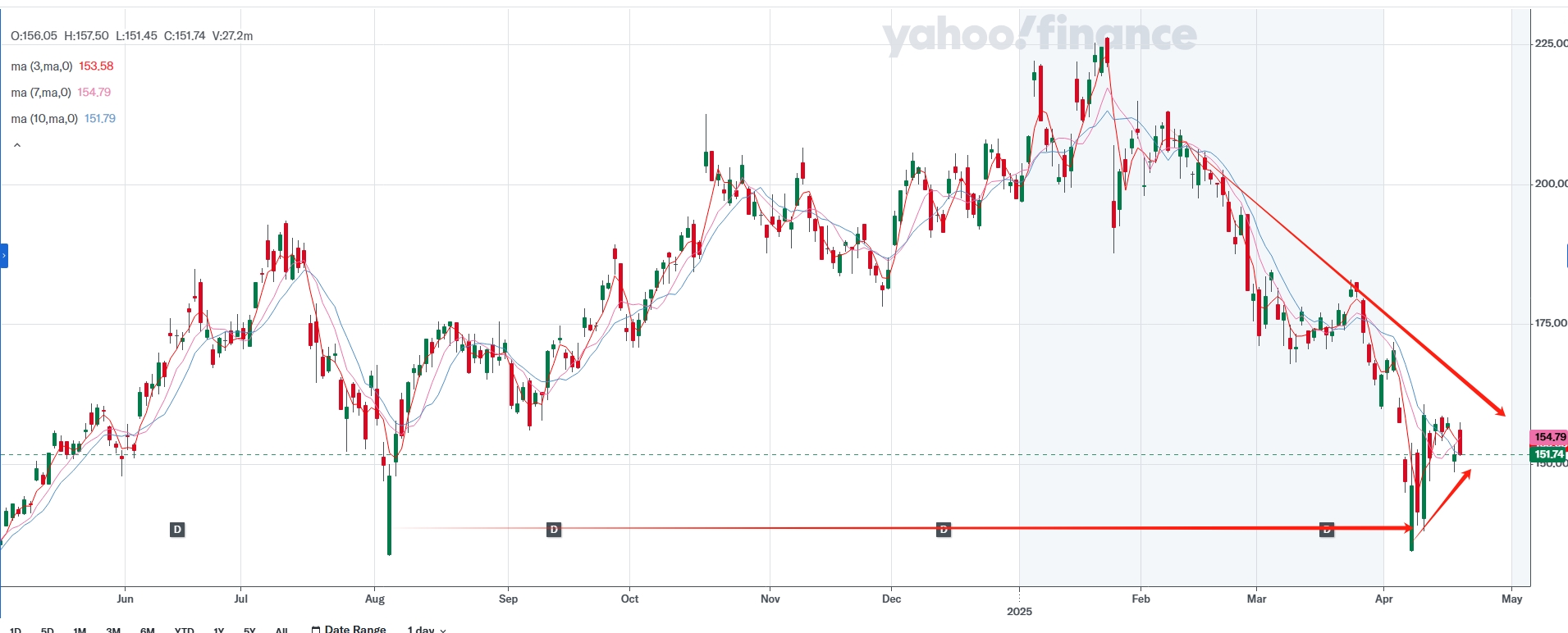
As sentiment improves, many of these undervalued, fundamentally strong stocks could see meaningful upside. With Trump's trade strategy becoming more transparent—especially as deals are inked and relations with China are re-established—fundamentals will begin to matter again.
Technically speaking, the S&P 500 nears an inflection point. The April 7 low appears to have formed a base. Despite this week's decline, the index is holding above the psychological 5,000 mark. If the next low holds higher, we could be forming a bullish short-term higher-low pattern. Longer-term, if the index reclaims 5,440—and ultimately 5,600—it would confirm a bullish continuation and signal the return of the bull market.
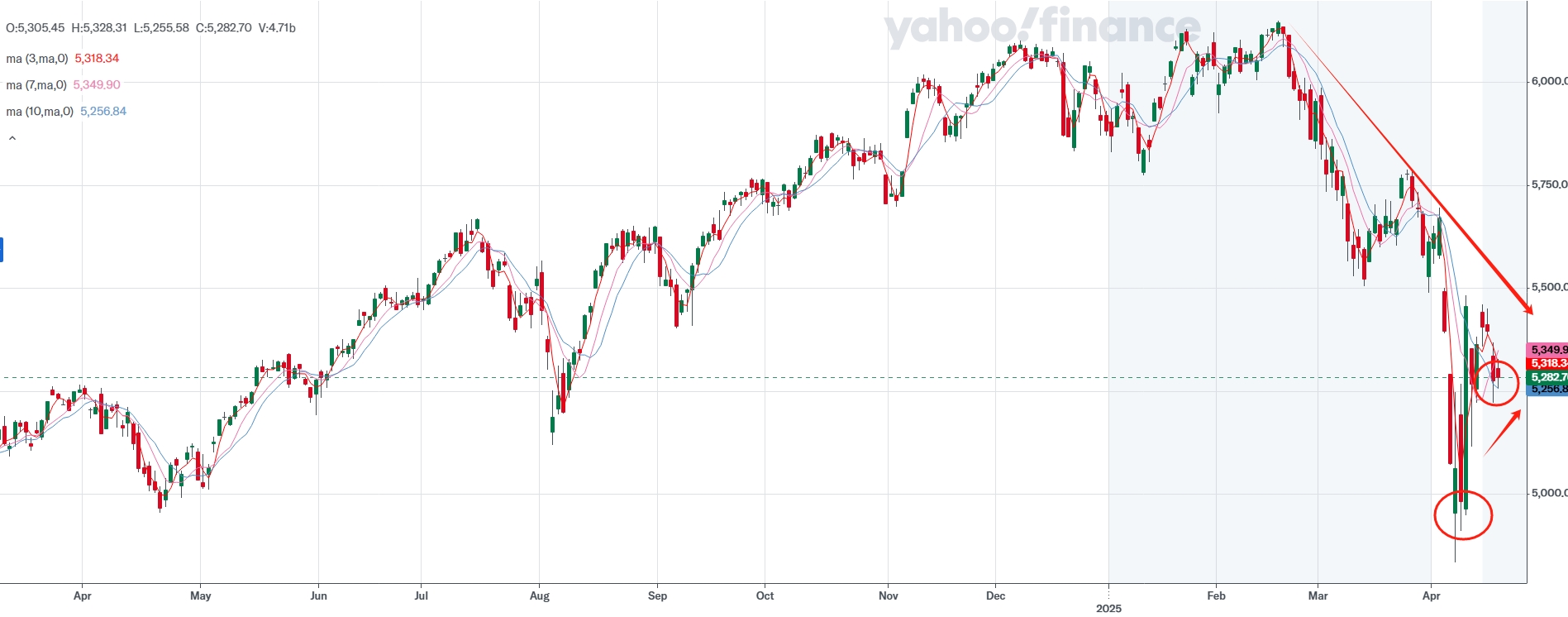
While technical indicators suggest a slightly ambiguous entry point, the combination of improving sentiment, more strategic clarity from Trump, and resilient earnings could present a solid buying opportunity. Long-term investors may soon begin to re-enter, buying the dip and holding quality names.
In the end, this speculative, volatile market will likely give way to a more rational, fundamentals-driven environment. The stage is set for a return to normalcy—and perhaps, a return to the bull market.

Independent investment research powered by a team of market strategists with 20+ years of Wall Street and global macro experience. We uncover high-conviction opportunities across equities, metals, and options through disciplined, data-driven analysis.
Latest Articles
Unlock Market-Moving Insights.
Subscribe to PRO Articles.
Already have an account? Sign in
Unlock Market-Moving Insights.
Subscribe to PRO Articles.
Already have an account? Sign in
Stay ahead of the market.
Get curated U.S. market news, insights and key dates delivered to your inbox.
AInvest
PRO
AInvest
PRO



