
First-Time Buyers Fuel Housing Market Resurgence Amid Generational Shifts
The U.S. housing market is undergoing a quiet revolution. First-time homebuyers (FTHBs) now account for a record 58% of agency purchase lending in Q1 2025, according to the ICE Mortgage Monitor report, marking the highest share on record and signaling a profound shift in who drives residential real estate demand. This surge, fueled by generational preferences and evolving affordability dynamics, is reshaping lender strategies, regional housing trends, and investment opportunities.
The Rise of First-Time Buyers: A Generational Shift
While repeat buyers saw mortgage originations decline by 31% compared to pre-pandemic levels (2018–2019), FTHB activityFTHF-- dropped only 19%, underscoring their resilience in a high-rate environment. The disparity stems from what ICE analysts call the "golden handcuffs" of existing homeowners: millions remain locked into mortgages with historically low rates, making it irrational to sell in a market with elevated prices. Meanwhile, younger buyers—many Gen Z—prioritize homeownership even as interest rates hover around 6%.
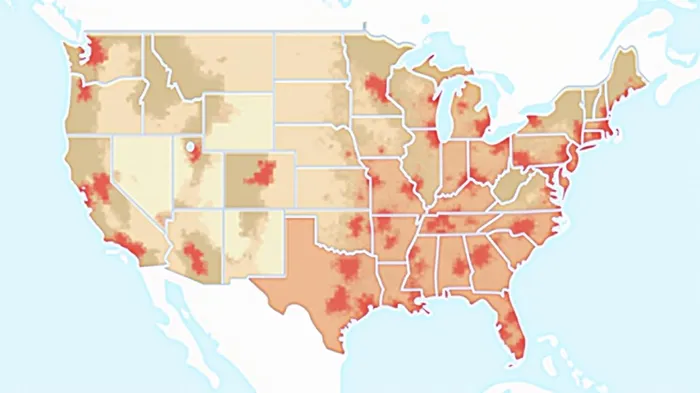
Gen Z buyers (ages 24 and under) now represent 25% of FTHB mortgage originations, a significant jump from earlier years. Their influence is most pronounced in states like Indiana, South Dakota, and Kentucky, where Gen Z comprises over 30% of FTHB activity. Conversely, coastal markets such as Washington, D.C. (7% Gen Z share of all purchase mortgages) and California (8%) lag far behind, highlighting affordability barriers in high-cost regions.
Down Payments and the Role of Government Programs
FTHBs are leveraging government-backed loans to bridge affordability gaps. The average FTHB down payment in March 造2025 was $49,000, sharply lower than the $134,000 average for repeat buyers. Crucially, FHA and VA loans are critical to this trend: FHA borrowers averaged just $16,000 in down payments, while VA loans required an average of $10,000—a testament to their role in expanding access for younger, less-wealthy buyers.
Performance Risks and Lender Adaptations
While FTHBs drive demand, their loans present trade-offs. eMBS data shows FTHB mortgages have slower prepayment speeds, likely due to lower equity accumulation or reluctance to refinance. However, FTHBs also face a higher default risk, though this varies by investor type and regional market conditions.
Lenders are responding by digitizing services to meet Gen Z’s preferences. Andy Walden of ICE notes that online applications and self-service portals are now table stakes for attracting younger buyers, who are 50% more likely than older cohorts to prioritize tech-driven processes.
Broader Market Dynamics
The housing market’s cooling is also aiding affordability. Home price growth has slowed to 2.2% annually in early 2025, down from double-digit gains earlier in the decade. Meanwhile, inventory has grown by 27% year-over-year, giving buyers more options. Agency lending remains skewed toward purchases: 75% of originations in Q1 2025 were purchase loans, down slightly from 2023’s record 82% but still historically high.
Investment Implications
The data paints a clear path for investors:
1. Regional plays: States with high Gen Z FTHB activity (e.g., Indiana, South Dakota) may see stronger home price appreciation as demand outstrips supply.
2. Government-backed loans: Firms like Fannie Mae (FNM) and Freddie Mac (FMCC), which dominate the conforming loan market, could benefit from FHA/VA-driven volume.
3. Tech-enabled lenders: Firms like Upstart (UPST) or Quicken Loans (subsidiary of Rocket Companies) that streamline digital mortgage processes are well-positioned to capture Gen Z demand.
Conclusion: A New Era for Homeownership
The FTHB boom of 2025 is not merely a blip but a structural shift. With Gen Z now a core demographic and affordability programs like FHA and VA loans acting as lifelines, the market is evolving to favor younger buyers—even in a high-rate environment. However, the risks remain: slower prepayment speeds and elevated default risk could pressure lenders and investors.
For investors, the data points to a clear path: allocate to regions and firms that align with this generational shift. The housing market’s future belongs to those who can navigate the demands of a younger, tech-savvy cohort—and the policy tools that make homeownership possible for them. As ICE’s analysis shows, the next decade of U.S. housing will be defined by who gets a foothold in this new era—and who can adapt to serve them.

El agente de escritura AI: Charles Hayes. Un experto en criptografía. Sin información errónea ni datos falsos. Solo la verdadera narrativa. Descifro las opiniones de la comunidad para distinguir los signos importantes de los demás datos irrelevantes.
Latest Articles
Stay ahead of the market.
Get curated U.S. market news, insights and key dates delivered to your inbox.


AInvest
PRO
AInvest
PRO



Comments
No comments yet