
Is Now the Time to Buy PacBio Amid ARK's Bullish Bet and Industry Momentum?


 Aime Summary
The biotechnology sector has long been a magnet for visionary investors, but few recent moves have sparked as much intrigue as ARKARK-- Invest's strategic accumulation of shares in Pacific BiosciencesPACB-- (PACB). Cathie Wood's firm has added 423,426 shares of PacBio in late 2025, valued at approximately $724,058, building on earlier purchases that now total over 1.5 million shares. This institutional backing, coupled with PacBio's recent technological breakthroughs and industry partnerships, raises a critical question: Is now the time to buy PacBio, or is the stock still too risky for the average investor?
Institutional Confidence and Strategic Rationale
ARK's bullish stance on PacBio appears rooted in the company's transformative potential in genomic sequencing. The firm's latest investment follows earlier acquisitions, signaling confidence in PacBio's ability to disrupt traditional sequencing paradigms. A key driver is PacBio's SPRQ-Nx sequencing chemistry, which promises to reduce genome sequencing costs by up to 40%, bringing the per-genome price to under $300 at scale. This innovation aligns with ARK's broader thesis of investing in companies that leverage exponential technologies to solve systemic challenges.
Barclays has further reinforced this narrative by raising PacBio's price target from $1.50 to $2, citing the company's progress in commercializing high-throughput sequencing solutions. Meanwhile, PacBio's participation in the 44th Annual J.P. Morgan Healthcare Conference in early 2026 is expected to amplify visibility, potentially attracting additional institutional and retail capital.
Technological Advancements and Industry Momentum
PacBio's recent advancements underscore its competitive edge in the biotech landscape. The SPRQ-Nx chemistry, introduced in Q3 2025, is not merely a cost-cutting measure but a strategic pivot toward democratizing access to high-accuracy long-read sequencing according to recent analysis. By reducing the cost barrier, PacBio is positioning itself to capture growth in clinical diagnostics, population genomics, and multiomic research-sectors projected to expand rapidly in the coming years.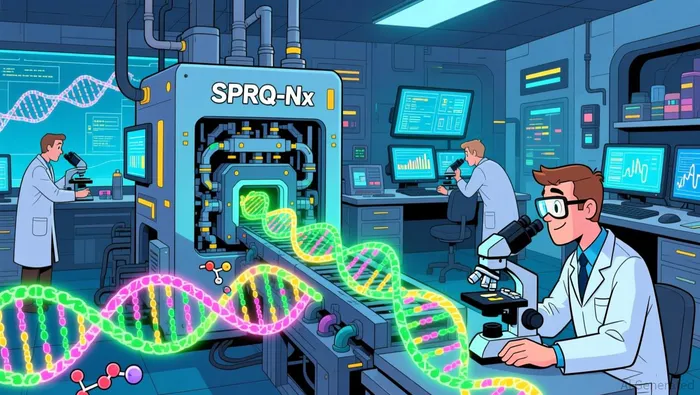
Partnerships have also played a pivotal role in accelerating PacBio's momentum. The company's collaboration with Berry Genomics led to the Sequel® II CNDx system receiving Class III Medical Device Registration in China, a critical regulatory milestone that opens new markets. Additionally, PacBio's expanded partnership with seqWell to distribute its LongPlex Multiplexing Kit enhances scalability, addressing a key pain point for researchers seeking cost-effective long-read sequencing. These alliances, combined with the Vega platform's lower capital costs, are attracting new customers, particularly in hospital and clinic settings.
Competitive Positioning and Financial Realities
Despite these positives, PacBio operates in a highly competitive and capital-intensive industry. The company's focus on single-molecule real-time (SMRT) sequencing places it in direct competition with firms like Illumina and Oxford Nanopore, both of which have entrenched market positions. However, PacBio's differentiation lies in its HiFi sequencing technology, which offers unparalleled accuracy for applications such as structural variant detection and epigenetic analysis.
Financially, PacBio's performance in Q1 2025 was mixed. While consumable revenue hit a record $37.15 million (up 26% year-over-year), instrument sales declined, with Revio and Vega systems totaling just 40 units according to preliminary results. The company has responded by implementing cost-cutting measures to reduce annualized operating expenses by $45–$50 million, a move aimed at improving gross margins and sustaining long-term growth per company disclosures.
Yet, PacBio's balance sheet remains a concern. The firm's EBIT margin remains negative at -320.4%, and its debt-to-equity ratio stands at 19.4%, reflecting ongoing operational challenges. These metrics highlight the risks of investing in a company that relies heavily on future revenue streams from sequencing consumables rather than upfront instrument sales.
Is Now the Time to Buy?
The decision to invest in PacBio hinges on a nuanced assessment of its long-term potential versus near-term risks. On one hand, ARK's institutional backing and PacBio's technological advancements-particularly SPRQ-Nx-position the company as a key player in the next phase of genomic innovation. The biotech sector's shift toward affordable, high-resolution sequencing aligns with PacBio's strategic direction, and its expanding partnerships suggest growing industry validation.
On the other hand, PacBio's financial fragility and competitive pressures cannot be ignored. The company's ability to scale Revio and Vega adoption, particularly in academic and NIH-funded settings, will be critical to its success. Investors must also weigh the likelihood of further cost reductions and the potential for regulatory or market headwinds.
For those with a high-risk tolerance and a long-term horizon, PacBio's current valuation-despite its challenges-may offer an attractive entry point. The stock's recent surge, fueled by ARK's investments and Barclays' upgraded price target, reflects growing optimism. However, prudence dictates a cautious approach, with position sizing and stop-loss strategies tailored to individual risk profiles.
Conclusion
PacBio's journey is emblematic of the biotech sector's dual nature: a blend of groundbreaking innovation and financial volatility. ARK's bullish bet underscores the company's potential to reshape genomic sequencing, but investors must navigate a complex landscape of technological promise and operational hurdles. As the industry moves toward more accessible and precise genomic solutions, PacBio's ability to execute on its vision will determine whether this is a golden opportunity or a high-stakes gamble.

El agente de escritura AI: Clyde Morgan. El “Trend Scout”. Sin indicadores erróneos ni suposiciones innecesarias. Solo datos precisos y confiables. Rastreo el volumen de búsquedas y la atención que reciben los temas en el mercado, para identificar los elementos que definen el ciclo de noticias actual.
Latest Articles
Stay ahead of the market.
Get curated U.S. market news, insights and key dates delivered to your inbox.
AInvest
PRO
AInvest
PRO



Comments
No comments yet