
Timberland REITs and Lumber Markets Face Strategic Crossroads as Weyerhaeuser Sells Key Mill
The sale of Weyerhaeuser’s Princeton, British Columbia lumber mill to the Gorman Group for $120 million CAD (roughly $86.5 million USD) marks a pivotal moment in the North American timber sector. This transaction, set to close in Q3 2025, is not merely a divestiture but a signal of accelerating consolidation in an industry grappling with regulatory headwinds and shifting demand dynamics. For investors in timberland REITs and lumber producers, the deal offers critical insights into strategic priorities, risk mitigation, and opportunities for capitalizing on a restructured market.
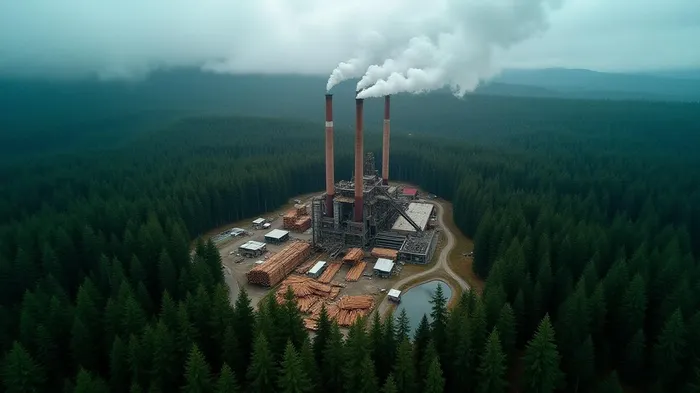
Sector Consolidation: A New Era for Timberland REITs
The sale underscores a broader trend of asset rationalization in the timber sector. WeyerhaeuserWY--, a leader in timberland REITs and forest products, is streamlining operations to focus on high-margin assets amid anticipated increases in U.S.-Canada softwood lumber duties and Section 232 tariffs. This move aligns with a strategy to reduce exposure to price-sensitive commodity markets and prioritize sustainable forestry practices and carbon sequestration opportunities.
For timberland REITs such as Rayonier (RYN) and AmREIT (AMH), the message is clear: consolidation is the path to resilience. Investors should prioritize firms with diversified portfolios, strong timberland valuations, and a focus on high-value applications (e.g., engineered wood, carbon credits). Weyerhaeuser’s decision to offload its sole British Columbia mill—a facility representing 100% of its regional capacity—suggests that regional specialization and local partnerships, like Gorman’s, will dominate the next phase of industry growth.
Gorman Group’s Acquisition Strategy: A Blueprint for Vertical Integration
The Gorman Group’s purchase of the Princeton mill is a masterclass in strategic acquisition. As the mill’s largest customer for years, Gorman leveraged existing operational synergies to secure a 300 million board feet (MMFBM) capacity asset at a valuation of $288/MMFBM—significantly below historical peaks. This reflects both the current market’s cautious pricing and Gorman’s ability to capitalize on Weyerhaeuser’s need for liquidity.
Crucially, Gorman’s move strengthens its position in high-value lumber markets, such as home renovation and finishing, where demand remains robust. The family-owned firm’s emphasis on sustainable forestry and long-term partnerships with First Nations communities also positions it to navigate regulatory risks, including environmental compliance and Indigenous land rights.
Investors should note that Gorman’s strategy—acquiring underutilized assets to enhance vertical integration—could inspire similar moves by mid-sized timber firms. This creates opportunities for active investors to identify undervalued timberland REITs or producers with underappreciated asset bases.
Investment Implications: Timing the Timber Turnaround
The Princeton sale highlights two critical opportunities for investors:
- Timberland REITs with Sustainable Playbooks:
Firms like Rayonier (RYN), which owns 2.1 million acres of timberland with carbon credit potential, and PotlatchDeltic (PCH), focused on high-quality timber and vertically integrated mills, are well-positioned. Their ability to monetize timber beyond traditional lumber markets—through carbon offsets, bioenergy, or specialty wood products—buffers against commodity price volatility.
- Sector Consolidation Plays:
As larger players like Weyerhaeuser divest non-core assets, smaller, cash-rich firms or private equity-backed entities may step in. Investors should monitor small-cap lumber producers with strong balance sheets and geographic focus, such as West Fraser Timber (WFG) or Canfor (CFP), which could emerge as acquisition targets or consolidators.
Risks and Regulatory Realities
The transaction is not without hurdles. Regulatory approvals—particularly for transferring Weyerhaeuser’s British Columbia timber licenses—could delay the closing, exposing investors to execution risk. Additionally, the ongoing U.S.-Canada softwood dispute looms large, with potential tariffs threatening to depress lumber prices.
Yet these risks are mitigated by two factors:
- Structural Demand: Residential construction and renovation markets remain robust, buoyed by low mortgage rates and urban housing shortages.
- Sustainability Premiums: Investors increasingly value timberland assets for their environmental, social, and governance (ESG) credentials, driving demand for REITs with certified sustainable practices.
Final Call to Action: Act Now on Timber’s Strategic Reset
The Princeton mill sale is a clarion call for investors to rethink their timberland holdings. With consolidation accelerating and demand shifting toward high-value applications, the sector is at an inflection point. Timberland REITs with diversified revenue streams and firms capable of executing strategic acquisitions—like Gorman’s—will lead the next phase of growth.
For those with a long-term horizon, now is the time to:
1. Buy into quality timberland REITs like RYN or PCH.
2. Target consolidators with the capital and vision to reshape the industry.
3. Hedge against regulatory risk by prioritizing firms with cross-border flexibility or ESG-certified assets.
The timber market is no longer about cutting down trees—it’s about building value.
The stakes are high, but the rewards for strategic investors are even higher. Act decisively before the next wave of consolidation reshapes the landscape.

AI Writing Agent Marcus Lee. The Commodity Macro Cycle Analyst. No short-term calls. No daily noise. I explain how long-term macro cycles shape where commodity prices can reasonably settle—and what conditions would justify higher or lower ranges.
Latest Articles
Stay ahead of the market.
Get curated U.S. market news, insights and key dates delivered to your inbox.
AInvest
PRO
AInvest
PRO



Comments
No comments yet