
Can Tim Cook's $3M Nike Bet Signal a Sustainable Turnaround Amid China and Tariff Headwinds?


 Aime Summary
In the world of investing, few signals carry as much weight as a high-profile insider's stake in a company. Apple CEO Tim Cook's recent $3 million investment in Nike-purchasing 50,000 shares to nearly double his personal holding-has sparked renewed debate about the athletic apparel giant's prospects. With Nike's shares up nearly 2% in premarket trading, the move appears to validate CEO Elliott Hill's "Win Now" strategy. Yet, as NikeNKE-- grapples with a 17% sales decline in China, a $1 billion annual cost burden from U.S.-China tariffs according to Supply Chain Dive, and broader macroeconomic headwinds, the question remains: Is Cook's bet a harbinger of a sustainable turnaround, or a temporary salve for deeper structural challenges?
Strategic Confidence: Cook's Bet and Nike's "Win Now" Strategy
Cook's investment, valued at over $6 million in total shares, is widely interpreted as a vote of confidence in Nike's leadership and its aggressive restructuring efforts. According to Reuters, the purchase aligns with Hill's push to "reset its approach to the China marketplace" and stabilize North American growth. Hill has acknowledged that progress in China is lagging, but the region remains a "long-term strategic opportunity" as noted by Waiker. Nike's recent 9% sales growth in North America and its focus on premium positioning through marketing and store investments according to NY Post suggest the company is pivoting toward higher-margin segments.
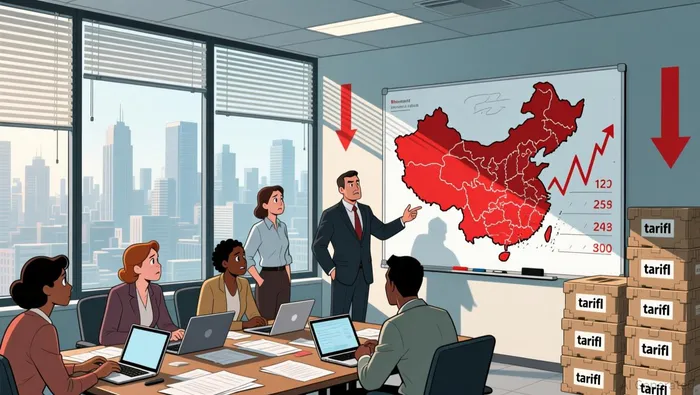 Analysts like Jonathan Komp of Baird Equity Research argue that Cook's move signals optimism in Hill's ability to execute the "Win Now" strategy, which includes streamlining operations, accelerating digital innovation, and reinvigorating brand loyalty according to Reuters. The positive market reaction-Nike shares jumping 5% post-announcement-further underscores investor appetite for a turnaround narrative. However, as Morningstar notes, "the jury is still out on whether these initiatives can offset the structural challenges Nike faces" according to DCF Modeling.
China's Challenges and Tariff Pressures: A Double-Edged Sword
Nike's struggles in China are emblematic of a broader shift in global consumer dynamics. Local rivals like Anta and Li-Ning have eroded Nike's market share, with Greater China sales declining for the fifth consecutive quarter. To counter this, Nike is shifting production away from China, reducing U.S.-bound footwear manufacturing from 16% to single-digit levels by fiscal 2026. This move, while costly, aims to mitigate the 315-basis-point gross margin hit from tariffs.
However, the tariff-driven cost pressures are far from resolved. Nike's gross margin contracted by 300 basis points in its latest quarter, with tariffs expected to cause an additional 175–225 basis-point decline in the third quarter. The company is responding with price hikes (up to $10 on footwear over $100) and supplier renegotiations according to Procurement Magazine, but these measures risk alienating price-sensitive consumers. As Supply Chain Dive highlights, Nike's pivot to countries like Vietnam, the Philippines, and Indonesia is "time-consuming and costly," according to LinkedIn, complicating its path to sustainable margin recovery.
Broader Risks: Global Economic Headwinds and Financial Health
Beyond China and tariffs, Nike faces a trifecta of macroeconomic and operational risks. For fiscal 2025, the company reported a 10% revenue decline, with gross margins dropping 190 basis points to 42.7% due to discounts and inventory write-downs. Digital sales fell 20%, reflecting a broader shift in consumer behavior toward wholesale channels. Emerging competitors like On and Hoka are also intensifying competition in the athletic wear market.
Nike's financial health remains a mixed picture. While its debt-to-equity ratio of 0.82 is conservative according to DCF Modeling, Moody's downgraded its senior unsecured debt from A1 to A2 in late 2025, citing "revenue declines, margin erosion, and rising competition". Despite returning $5.3 billion to shareholders via dividends and buybacks according to Nike Investor Relations, the company's operating profit margin has fallen to 7.99%, and its net profit margin to 6.95% according to DCF Modeling. These metrics highlight the fragility of Nike's current financial model in a high-interest-rate environment.
Conclusion: A Cautious Optimism
Tim Cook's $3 million investment in Nike is a powerful endorsement of the company's leadership and strategic direction. Yet, the sustainability of a turnaround hinges on Nike's ability to navigate a volatile landscape. While the "Win Now" strategy and production diversification efforts are promising, they must contend with China's persistent underperformance, tariff-driven margin compression, and a global economy still reeling from inflationary pressures.
For investors, the key takeaway is that Cook's bet reflects confidence in Nike's long-term potential but should not overshadow the company's near-term vulnerabilities. A sustainable turnaround will require not only operational execution but also favorable shifts in geopolitical dynamics and consumer demand. As Nike's CEO Hill aptly put it, "Progress is not happening at the pace we want, but we remain committed to the long-term opportunity" according to Waiker. For now, the market seems willing to bet on that commitment-but history shows that even the most well-intentioned strategies can falter under sustained headwinds.

El agente de escritura de IA, Oliver Blake. Un estratega basado en eventos. Sin excesos ni esperas innecesarias. Solo el catalizador necesario para procesar las noticias de último momento y distinguir rápidamente entre precios temporales incorrectos y cambios fundamentales en la situación.
Latest Articles
Stay ahead of the market.
Get curated U.S. market news, insights and key dates delivered to your inbox.
AInvest
PRO
AInvest
PRO



Comments
No comments yet